


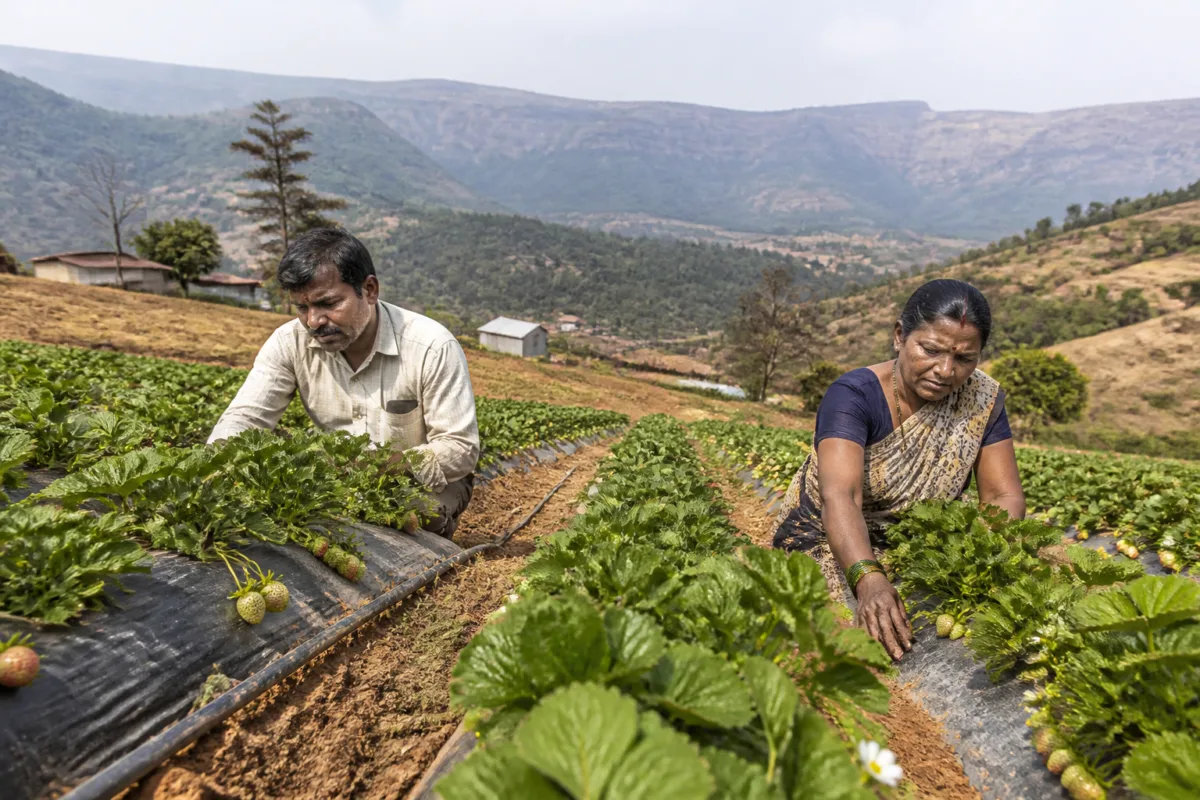
Mahabaleshwar strawberry production could fall by up to 40% this season as warmer temperatures, inadequate cold conditions, water shortages and the reported influence of El Niño disrupt cultivation in Maharashtra’s Satara district, according to Sakal’s Agrovan report. The potential decline threatens the economics of thousands of farmers and could reduce supplies for local markets and fruit-processing businesses.
Mahabaleshwar taluka accounts for nearly 80% of the region’s strawberry production. About 2,000 farmers cultivate the crop across approximately 3,000 acres each year, generating an average output of 50,000 tonnes and an annual turnover of around Rs 250 crore, the report said.
Strawberries are generally planted in September and October, with fresh fruit reaching markets from early December. Farmers in the taluka import mother plants from the United States, California, Spain, Italy and Egypt for the annual crop. However, the report said only about 60% of the planned area had been planted at the time of publication, with the remaining work expected to be completed by the end of October.
The crop requires cold conditions to develop and ripen naturally. According to the report, temperatures have risen significantly since October while the expected cold has been absent. This could cause fruit to ripen before reaching full size, affecting both quality and market demand. Smaller fruit and lower quality could disrupt the balance between supply and demand during the season.
Water scarcity is also slowing planting activity. The report said farmers are facing severe shortages of water in addition to unfavourable temperatures. Although early-season prices could reach Rs 500 to Rs 600 per kilogram, a production decline of up to half could make it difficult for growers to recover their cultivation costs.
The effects would extend beyond farms. Lower output could push up market prices and leave businesses producing jam, syrup and other processed products short of raw material. The local fruit market and associated processing activity therefore remain exposed to the same climate conditions affecting cultivation.
Kisansheth Bhilare, president of the Mahabaleshwar Taluka Fruits, Flowers and Vegetables Cooperative Marketing Society, said strawberry cultivation was the main economic support for farmers in the taluka. He said adverse weather and a resulting production decline could have long-term effects on the finances of farmers in the region.
The report’s production estimate remains a seasonal assessment rather than a confirmed final outcome. The extent of the impact will depend on whether weather conditions become more favourable during the remaining cultivation and fruiting period. Farmers, markets and processing units are now awaiting the season’s crop performance as the planting window moves towards completion.

