


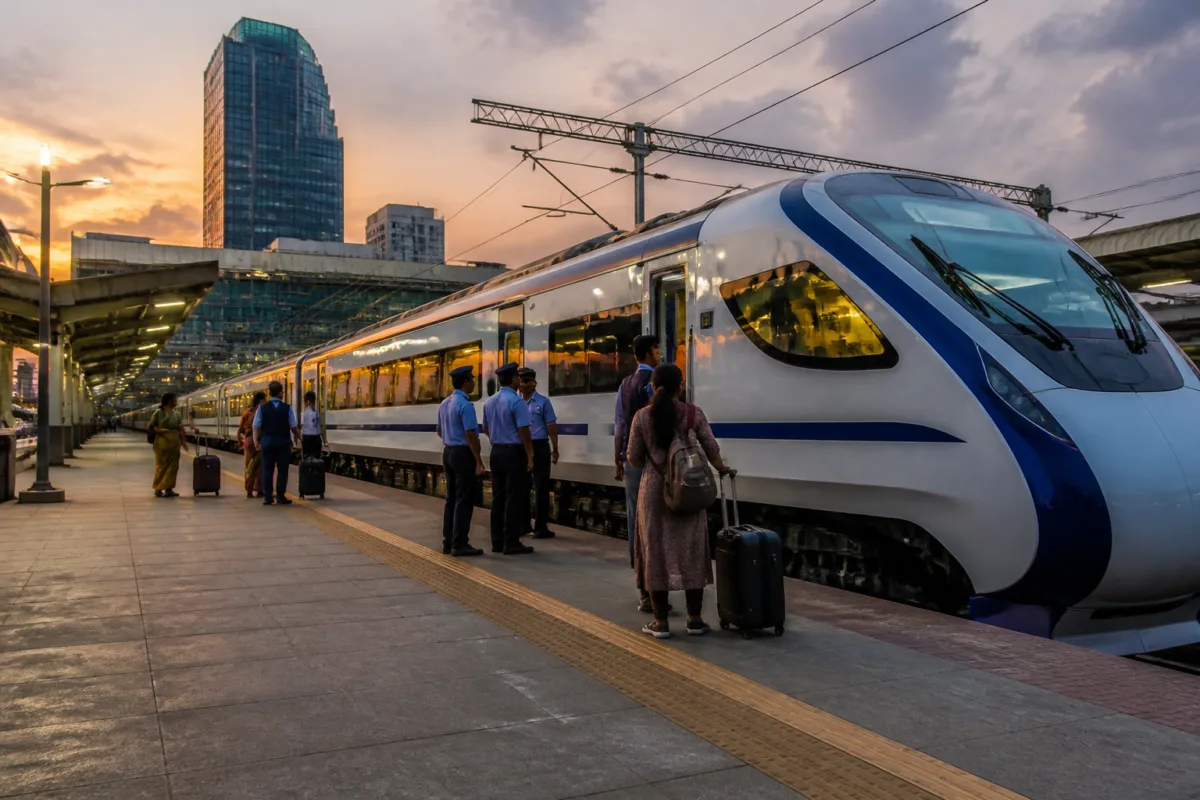
The Bengaluru-Mumbai Vande Bharat sleeper train is scheduled to begin commercial operations on November 3, offering a faster overnight rail connection between the two cities, according to sources cited by Deccan Herald. Railway Minister Ashwini Vaishnaw is scheduled to flag off the service from Sir M Visvesvaraya Terminal Bengaluru on November 1 at 10.30 am.
The overnight air-conditioned service will connect SMVT Bengaluru with Chhatrapati Shivaji Maharaj Terminus in Mumbai. It is expected to become South India’s first overnight air-conditioned Vande Bharat service. The Railway Board is expected to issue the formal notification covering the timetable, operating days and other details on November 1, according to the report.
A tentative schedule indicates that the train will depart from SMVT Bengaluru at 7.50 pm and arrive at CSMT Mumbai at 11.55 am the following day. In the return direction, it is expected to leave Mumbai at 8.10 pm and reach Bengaluru at 11.55 am. The Bengaluru-Mumbai journey would take 16 hours and five minutes, while the return journey is expected to take 15 hours and 45 minutes.
The proposed service is expected to operate six days a week, with primary maintenance based at SMVT Bengaluru. It will use the Guntakal route and is likely to stop at Anantapur, Guntakal, Raichur, Kalaburagi, Solapur, Pune and Kalyan. The tentative fare for a 3AC berth is about Rs 3,000, including onboard meals, though the final fare will be confirmed by the railway authorities.
The new train is intended to reduce travel time on a route where existing train services take between 22 and 24 hours in each direction. The Bengaluru-Mumbai corridor currently lacks a superfast train connection of this kind. The service will use two 16-coach trainsets manufactured by BEML. The railways have also conducted a trial run in the Ghat section between Mumbai and Pune.
The choice of SMVT Bengaluru as the train’s originating and terminating station has raised concerns among some railway enthusiasts and regular passengers. They have questioned whether the station’s present connectivity is adequate for a premium long-distance service and argued that the train should instead use KSR Bengaluru, the city’s main railway station.
The station issue adds an important operational dimension to the announcement. While SMVT Bengaluru offers a dedicated terminal for long-distance services, passenger access depends on road connectivity and links with the wider public transport network. The railway authorities’ final notification is expected to clarify the train’s operating schedule and other service details before commercial operations begin.

