


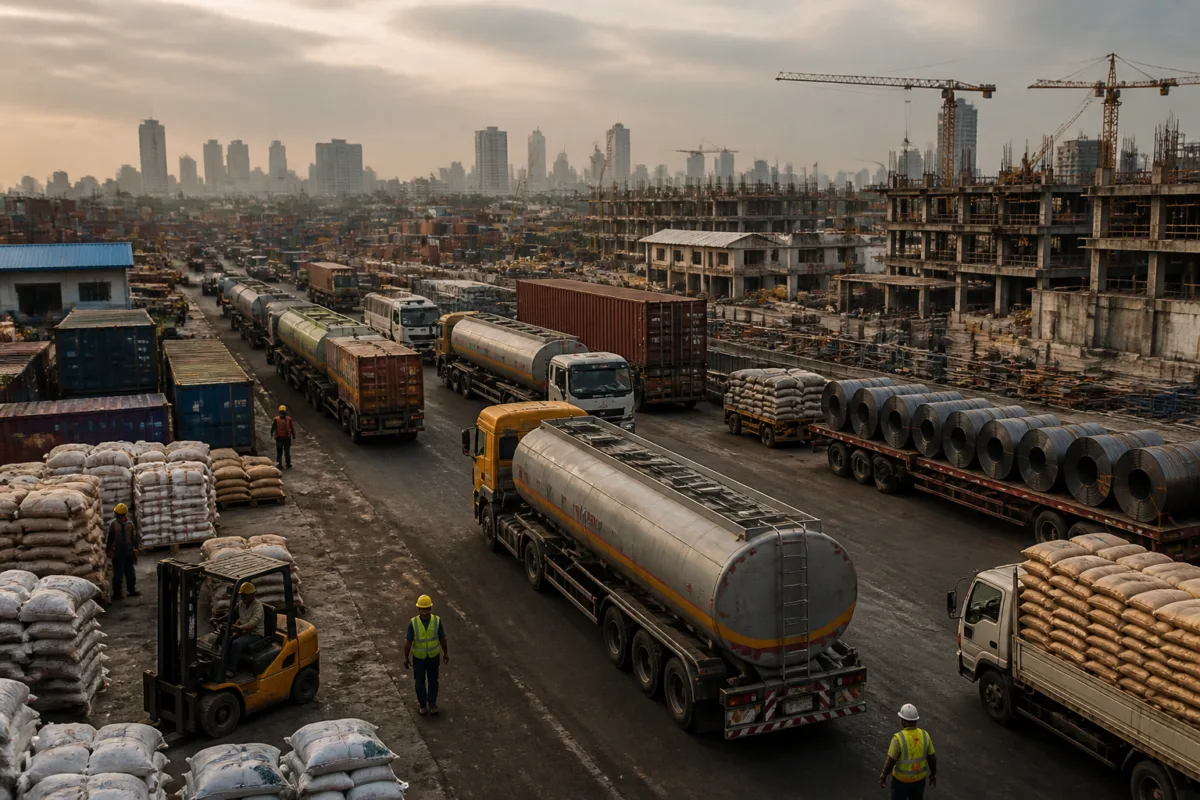
The World Bank’s projection that global commodity prices will rise 23% in 2026 is more than a market forecast. It signals a broad cost shock moving through the systems that keep cities supplied, built and operational: energy, food, metals, shipping and construction inputs. The immediate trigger is geopolitical conflict, but the urban consequence is a more difficult operating environment for governments, businesses and households.
The World Bank’s latest Commodity Markets Outlook, as reported by Economic Times, says the increase is being driven by several simultaneous disruptions. The Middle East war has affected energy supplies and shipping, fighting is disrupting grain shipments in the Black Sea, and demand for gold has increased as investors seek safe-haven assets. The result is not a single commodity spike but a broad-based rise across energy, food and metals.
That distinction matters for cities. A disruption confined to one commodity can often be absorbed by substitution, inventories or targeted support. A shock affecting fuel, food, industrial metals and freight at the same time can raise costs across multiple urban systems. Transport becomes more expensive when energy prices rise. Construction faces pressure when aluminium, copper, tin and other metals become costlier. Food inflation affects household budgets and the cost of running public institutions such as schools, hospitals and community kitchens.
The energy market is at the centre of the outlook. Global energy prices are projected to rise 32% in 2026, reaching their highest level since Russia’s invasion of Ukraine in 2022, according to the World Bank projection cited in the report. Global oil supply is expected to fall 5.2% this year, described as the largest decline in four decades outside the 2020 global recession. Brent crude is projected to average $92 a barrel, although a 2.5% decline in oil demand is expected to partly offset the supply shock.
For urban areas, energy costs do not remain confined to petrol pumps or fuel-import bills. They enter the operating costs of buses, trucks, construction equipment, generators, water pumping and waste collection. They also affect the cost of moving materials between ports, factories, warehouses and building sites. The available evidence does not establish how individual cities or countries will respond, but it shows why an energy shock can become an infrastructure and public-service issue rather than simply a financial-market event.
Ayhan Kose, the World Bank’s deputy chief economist, said commodity markets were being hit by several major shocks at once. Higher energy costs and trade disruptions, he said, were pushing prices across a broad range of commodities and threatening inflation, food security and economic growth. The combination is important because it reduces the room available to manage any one pressure in isolation. A city administration facing higher fuel costs may simultaneously be dealing with more expensive road materials, equipment and food procurement.
Metals add a second layer to the urban cost problem. The World Bank expects metals prices to rise 25% in 2026, with aluminium, copper and tin reaching new highs amid supply disruptions and demand from renewable energy, electric vehicles and data centres. These materials are embedded in the physical expansion and maintenance of cities. Copper is used in electrical systems and networks, aluminium in buildings, transport equipment and industrial components, while metals more broadly support construction, manufacturing and infrastructure delivery.
The outlook therefore contains a tension between supply disruption and technology-driven demand. Metals are becoming more expensive not only because supply chains are under pressure, but also because demand is being strengthened by the energy transition and digital infrastructure. Renewable energy systems, electric vehicles and data centres all require significant industrial capacity. The same transition that promises lower emissions and new infrastructure can, in the short term, intensify competition for critical materials.
That pressure can affect the timing and cost of urban projects. A metro extension, electrical upgrade, data facility or renewable-energy installation typically depends on multiple materials and logistics routes. When prices rise across several inputs, a project’s approved budget may no longer reflect current procurement conditions. The World Bank report cited by Economic Times does not quantify the impact on specific projects, but its commodity projections establish the wider market conditions in which public and private construction will operate.
Food prices present a separate but connected urban risk. Food commodity prices are expected to rise by just over 10% this year as fighting disrupts grain shipments in the Black Sea. Prices could rise another 7% or more in 2027, taking the cumulative increase to nearly 18%, according to the report. The World Bank has warned that a record El Niño, further Black Sea disruptions and an escalation in the Middle East could push food prices 12% above current expectations.
For cities, food inflation is closely linked to urban vulnerability. Households that spend a large share of their income on food have less capacity to absorb higher transport, rent or utility costs. Municipal and state agencies may also face higher procurement bills. The source material does not provide country-level food data or identify specific relief programmes, so the precise distributional impact remains unestablished. It does, however, identify a clear risk to food security and inflation at a time when urban economies depend on long and complex supply chains.
The strongest feature of the outlook is its emphasis on interconnected shocks. The Middle East conflict affects energy and shipping. The Black Sea disruption affects grain movement. Damage to Russian oil infrastructure could further reduce energy availability. A severe El Niño could add pressure to food markets. At the same time, safe-haven demand is expected to lift precious metals prices by 40%, while industrial metals face demand from renewable energy, electric vehicles and data centres.
These forces operate through different channels, but their effects can meet at the city level. Shipping disruption can raise the cost of imported inputs. Higher fuel prices can raise the cost of inland transport. More expensive metals can increase the cost of electrical and construction work. Food inflation can reduce household purchasing power. The urban economy is therefore exposed not only through formal commodity markets but also through the everyday cost of keeping people, goods and services moving.
The outlook also highlights the limits of relying on short-term price relief. The World Bank expects commodity prices to ease 7% in 2027, but it has warned that fresh supply shocks could keep inflationary pressures elevated. That projected decline does not necessarily mean that prices will return to earlier levels. It indicates an expected moderation after a sharp rise, while the underlying exposure to conflict, climate conditions, infrastructure damage and demand for new technologies remains.
For governments, the institutional question is how much of this risk is visible before it reaches citizens. Commodity prices are shaped by global events, but their urban consequences are managed through budgets, procurement contracts, transport operations, food systems and infrastructure planning. The available report does not detail policy responses or country-specific fiscal measures. It does show that the ability to monitor supply chains and manage exposure across departments will become more important when multiple commodities rise together.
The same evidence also complicates the idea that the energy transition is insulated from geopolitical volatility. Demand from renewable energy, electric vehicles and data centres is contributing to higher metals prices even as energy systems seek to reduce dependence on fossil fuels. This does not invalidate the transition, but it makes the material base of that transition more visible. New infrastructure requires minerals, manufacturing capacity, shipping and reliable energy before it can deliver any future benefits.
The World Bank’s forecast ultimately describes a city-facing problem without being a city-specific report. A 23% rise in global commodity prices, a 32% increase in energy prices, a 25% rise in metals and more than 10% food inflation together point to a broad inflationary environment. The figures do not establish the exact effect on any one urban region, project or household. They do establish that the next phase of urban development will be shaped not only by local planning decisions, but also by the resilience of global supply chains.
What happens next will depend on whether the Middle East conflict escalates, whether damage to Russian oil infrastructure continues, how grain shipments develop, and whether an El Niño event intensifies food-market pressure. The World Bank expects some easing in commodity prices in 2027, but its warning about fresh supply shocks leaves the central issue unresolved: cities may face lower prices later, yet remain exposed to a global system capable of producing several disruptions at once.

