


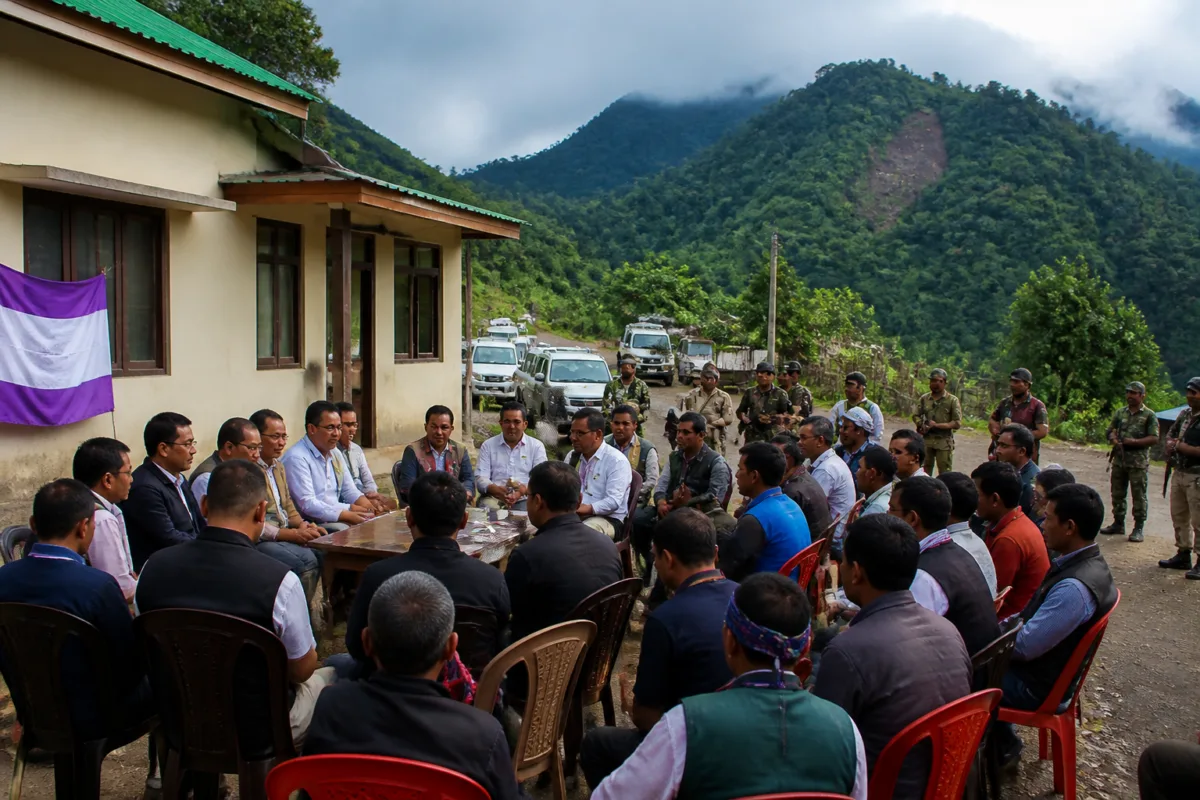
Two Arunachal Pradesh organisations have stepped in to seek talks between the state government and the Siang Indigenous Farmers Forum (SIFF), as protests and clashes over pre-feasibility work for the proposed Siang Upper Multipurpose Project continue to strain relations in the region.
The Arunachal Indigenous Tribes Forum (AITF) has announced a high-level peace committee comprising representatives of different indigenous communities. The forum said the committee would engage with stakeholders, help address the communication gap with affected families and support efforts to reduce tensions.
AITF general secretary Tapi Tai announced the initiative while addressing reporters on Wednesday. He said the forum had taken the decision on its own initiative after recent violence in Pasighat and Geku. The organisation also opposed the heavy deployment of security personnel in Pasighat and nearby areas, and urged the government to prioritise dialogue with groups opposing the project.
Separately, the Arunachal Christian Forum (ACF) has offered to facilitate preliminary talks between the government and SIFF. In a representation to Chief Minister Pema Khandu, the forum said it was willing to mediate if both sides agreed to the proposal. It asked the chief minister to nominate a government representative who could coordinate the discussions.
The ACF said its proposed role should not be interpreted as support for or opposition to the Siang project. That distinction is significant because the immediate dispute concerns not only the proposed infrastructure but also the process through which surveys and pre-feasibility activities are being carried out in areas where families and local communities may be affected.
The initiatives follow protests against pre-feasibility work for the project. Clashes with security personnel were reported at Yingkiong on September 30 and at Uggeng on October 4, with several people injured. The incidents have increased pressure on the administration to communicate more directly with residents and organisations involved in the protests.
The state government has maintained that the pre-feasibility exercise does not amount to approval to build the project. The current stage, as described by the government, is therefore separate from a final construction decision. However, the protests show that the presence of project-related teams and security forces has already become a major point of contention for local stakeholders.
The AITF peace committee and the ACF mediation offer now create two separate channels for engagement: one led by an indigenous organisations’ forum and another proposed through a faith-based civil society body. Neither initiative has yet resulted in confirmed talks, and the ACF’s proposal remains subject to agreement from the government and SIFF.
The next step will depend on whether the chief minister nominates a representative and whether SIFF accepts the proposed preliminary dialogue. The government’s position that pre-feasibility work is not project approval remains the stated basis for its response, while the two organisations seek discussions to address concerns among affected communities.

