


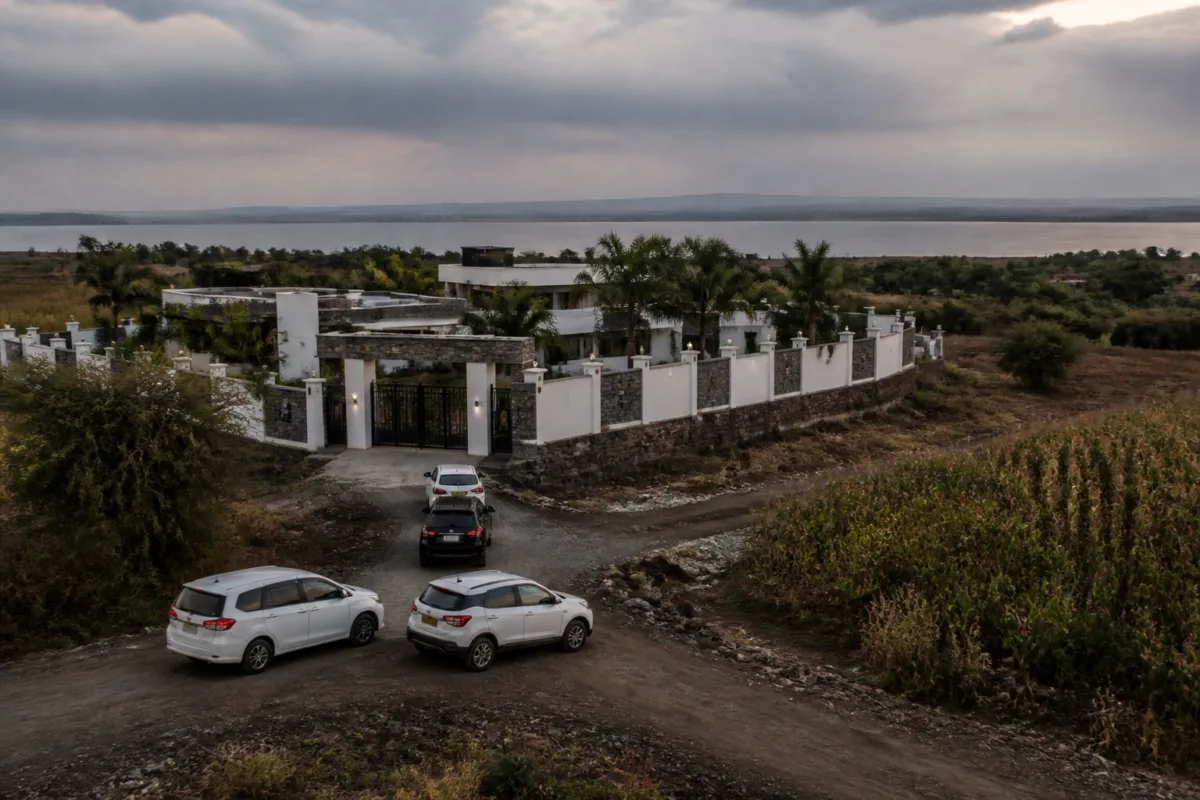
The Rana Suryavanshi farmhouse in Kalthan has emerged as a significant but unverified lead in a case involving an alleged assault near Baramati airport and Suryavanshi’s reported disappearance from Ruby Hall Hospital in Pune. A report by Lokmat – Pune says local residents have discussed late-night vehicle movements and alleged visits by senior officials, but the report also states that these claims have not been officially confirmed.
That distinction is central to understanding the case. The reported vehicle movements, the identities of people who may have visited the farmhouse and any possible connection between the property and the assault investigation remain matters requiring verification. The supplied report does not cite a police statement, hospital record, CCTV footage, vehicle log, land document or other primary material confirming these claims.
According to the report, Suryavanshi complained to police on October 18 that he had been attacked near Baramati airport. During the investigation, he was reportedly admitted to Ruby Hall Hospital in Pune and was reported missing from the hospital on October 25. The report says his whereabouts remained unknown at the time of publication. It also says that suspects in the alleged assault case had been arrested, although the supplied material does not provide their names, the charges invoked or the police account of the case.
The Kalthan property is located in Kalthan No. 1 in Indapur taluka, near the Ujani reservoir, according to the report. Local accounts cited by Lokmat describe the property as having a large compound, high security walls and privately armed guards. The report also refers to local discussion about a helipad at the site. None of these details is independently established in the supplied material, and no official property, construction or security record is cited.
The report further says that six to seven four-wheelers allegedly arrived at the farmhouse at night after Suryavanshi was reported missing from the hospital. It says the movements supposedly took place over about 20 to 25 minutes and that only two vehicles were later seen leaving. The account does not establish the date through an official record, identify the vehicles or occupants, or explain how the information was obtained. It also does not say whether investigators collected CCTV footage, toll records, mobile-location data or other evidence to test the claim.
A second line of discussion concerns alleged visits by senior officials from Solapur and Baramati during the week before the reported assault. Lokmat says the purpose of these alleged visits is not known and that their possible connection with the assault has not been established. The report itself says these visits require verification. Without confirmation from the concerned departments, travel records, witnesses or investigators, the alleged visits cannot be treated as evidence of a link to the case.
The property’s ownership is another unresolved issue raised in the report. It refers to local claims that the farmhouse was built on land owned by Suryavanshi’s in-laws and that the land may have been taken over. These are serious claims about land ownership, transfer and construction, but the supplied report provides no land records, registration documents, revenue extracts, planning permissions or statements from the alleged owners. Establishing the facts would require examination of official records rather than reliance on local discussion.
The case also raises questions about the responsibilities of the investigating authorities. If the farmhouse is relevant to the alleged assault or disappearance, investigators would need to establish whether it was examined, whether vehicle movements were recorded and whether the alleged visits by officials were checked. The report says there is no clarity on whether such steps were taken. That is a reported gap in public information, not proof that investigators failed to act.
The reported disappearance from a hospital introduces a separate institutional question involving access control and protection arrangements. Lokmat says Suryavanshi had been provided Y-plus security after the alleged assault and asks who controlled that security, how he left the hospital and whether any lapse occurred. The supplied material does not include a statement from the hospital, the security detail, the police or the authority responsible for the protection arrangement. As a result, the circumstances of his departure remain unconfirmed.
The sequence described by the report has therefore produced several distinct investigative questions: what happened near Baramati airport on October 18; what was recorded when Suryavanshi was reported missing from Ruby Hall Hospital on October 25; whether the Kalthan farmhouse was visited that night; who, if anyone, travelled in the alleged vehicles; and whether the property has any documented connection to the assault case. These questions should not be collapsed into a single narrative before the evidence is established.
From an urban governance perspective, the episode illustrates how private properties, policing, hospital security and local administrative records intersect in a fast-moving investigation. A farmhouse located outside a major urban centre can still become relevant to a case involving Pune, Baramati and Solapur because transport routes, private security arrangements, hospitals and police jurisdictions connect these places. But that institutional complexity also makes documented coordination important: evidence must be collected across jurisdictions and verified through records rather than informal accounts.
The supplied report does not establish whether the farmhouse is legally connected to Suryavanshi, whether any official visited it, whether the alleged vehicles arrived or what occurred during the reported 20-to-25-minute period. It also does not provide an official account of Suryavanshi’s current whereabouts, the police theory of the alleged assault or the status of the investigation. Those gaps are material because the central claims in the report concern events that have not been confirmed by the authorities identified in the story.
The next developments to monitor are an official police account of the assault and disappearance, confirmation of whether investigators searched or examined the Kalthan property, verification of vehicle and CCTV records, and documentary clarification of the farmhouse’s ownership and construction history. Until such evidence is made available, the reported activity at the property and its alleged connection to the case should remain treated as unverified claims.

