


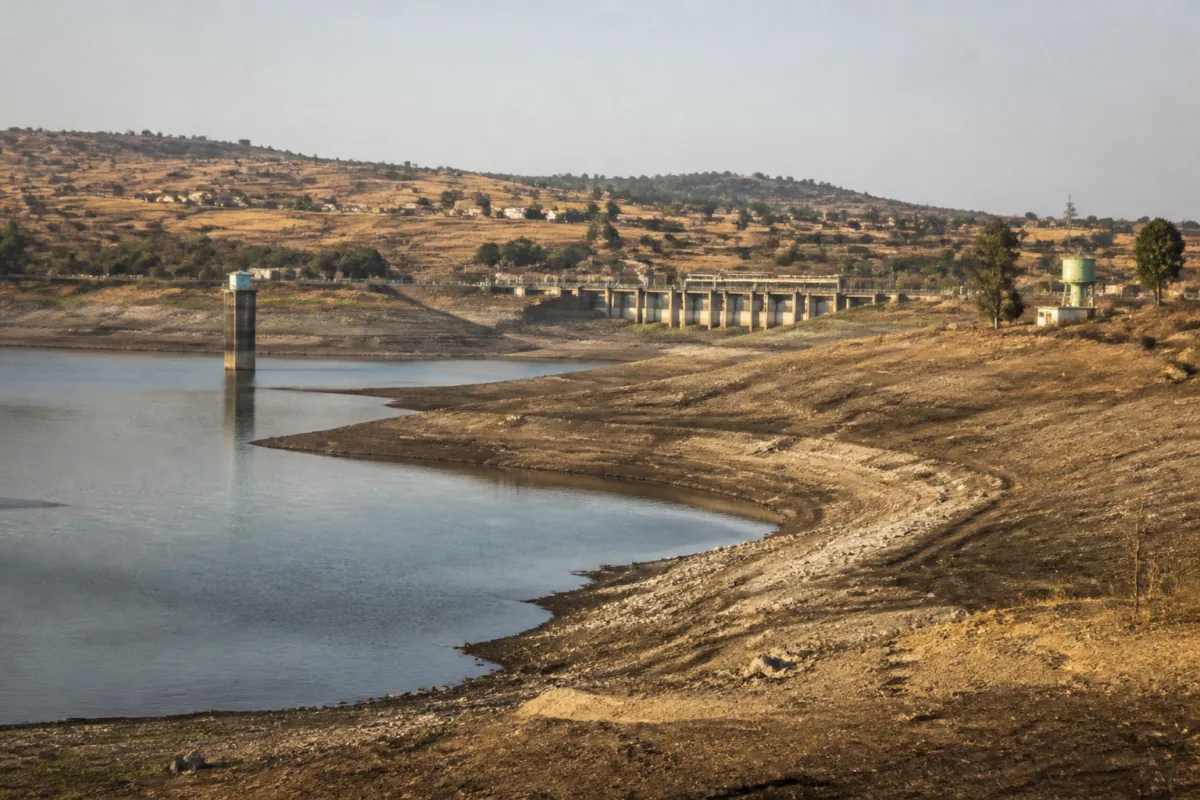
The Nazare Dam water crisis has intensified in Pune district after storage in the Malharsagar reservoir fell by 100 million cubic feet, or 12.69%, in a month, raising concerns over drinking-water supplies to Jejuri and around 30 to 40 villages in Purandar and Baramati talukas.
The decline was attributed to drought conditions and rising temperatures. Vishwas Pawar, a senior clerk with the irrigation department, provided the storage information, according to the report. Nazare Dam is the principal water source for a large area of the two talukas and supplies Jejuri city as well as several regional water-supply schemes.
The affected schemes include those serving Nazare, Kolvihire and Morgaon, along with the Malshiras scheme. The report said approximately 30 to 40 villages connected to these schemes depend on the dam for regular drinking-water supply. With other local water sources in the area reported to have dried up, these settlements are increasingly dependent on the reservoir for their basic water needs.
The reservoir currently holds 688 million cubic feet against a total capacity of 788 million cubic feet. Including dead storage, the reported level is 87.31%; excluding dead storage, it is 82.99%. The report also estimates that about 100 million cubic feet of the stored water is mixed with silt, making the distinction between total storage and practically usable water important for supply planning.
The immediate administrative challenge is to maintain drinking-water availability until the next monsoon, identified in the report as July. Increasing heat could accelerate evaporation and reduce the usable stock more quickly. Local residents have called for regular monitoring of the reservoir, coordinated planning among the concerned agencies and a water-supply schedule designed around the available stock.
The situation places pressure on a water system that serves both a town and multiple rural settlements through interconnected regional schemes. The storage percentage alone does not fully indicate the quantity that can be supplied to households, because dead storage and silt-affected water reduce the practically available volume. This makes operational decisions on allocation, scheduling and wastage control central to maintaining continuity.
Residents have urged the administration to give drinking water the highest priority and to begin conservation and supply planning immediately. The report said the authorities are expected to ensure that the available water lasts until the next monsoon while coordinating measures to reduce the severity of any emerging shortage.

