


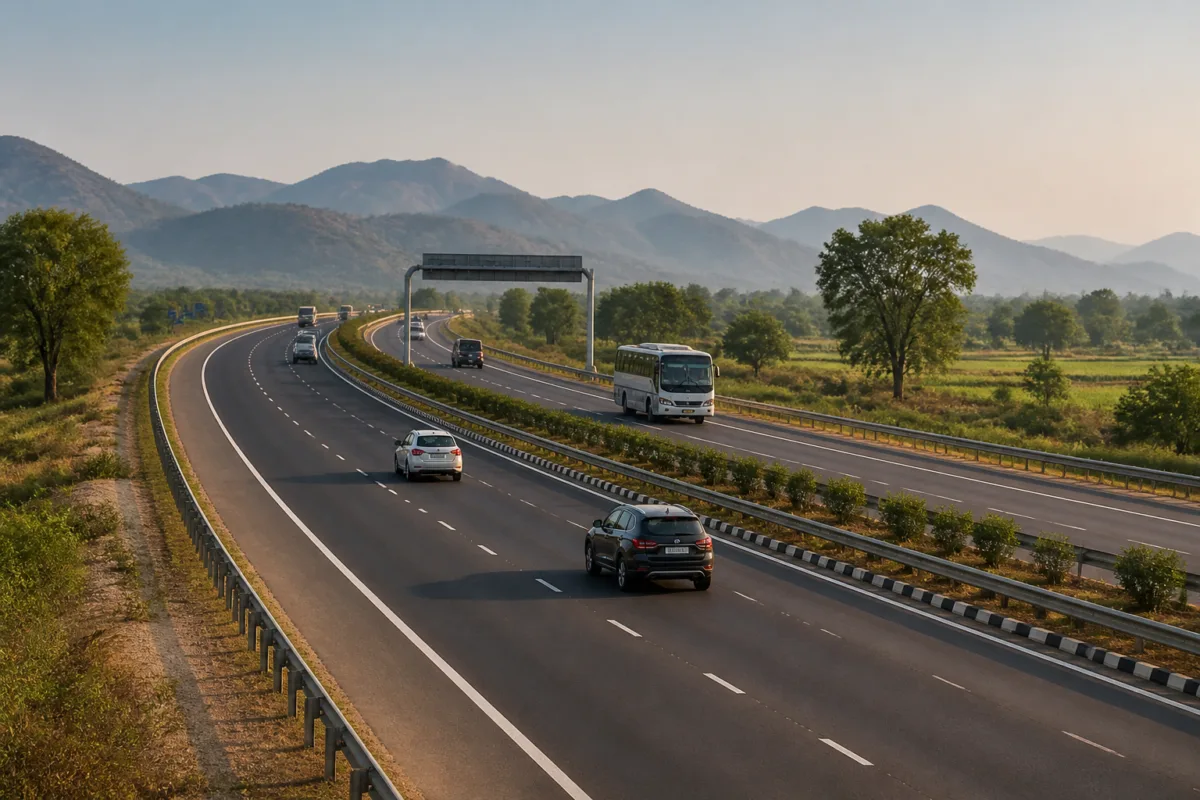
The Delhi-Haridwar Expressway is expected to open next month and reduce travel time between the national capital and Haridwar to about 90 minutes, Union Road Transport and Highways Minister Nitin Gadkari said at an industry conference. The announcement points to a major shift in road connectivity between Delhi and Uttarakhand’s gateway city, although the project’s formal name, exact route, toll structure and opening date were not specified in the report.
Gadkari made the announcement at the Confederation of Indian Industry’s national conference, titled ‘Highways of India’s Future: Smart, Safe and Sustainable’. He said a new road project would improve connectivity to Haridwar and enable the journey to be completed in about one and a half hours from next month.
The minister compared the proposed travel time with earlier improvements on the Delhi–Meerut and Delhi–Dehradun routes. According to his statement, the journey from Delhi to Meerut, which previously took around three and a half hours, can now be completed in 40 to 50 minutes. He also said a newly opened route to Dehradun had reduced travel time from seven hours to two hours.
The announcement places Haridwar within a faster road-travel network linking Delhi with major religious and tourism destinations in Uttarakhand. Haridwar is both a pilgrimage centre and an important gateway to the state, making travel-time reductions significant for visitors, commercial transport and residents travelling between the two regions. The supplied report, however, does not specify how the new route will connect with existing expressways or whether the stated 90-minute travel time will depend on traffic, entry points or other operating conditions.
Gadkari also said that 80 to 85 per cent of the Char Dham road project had been completed. He attributed a threefold increase in the number of travellers visiting religious destinations in Uttarakhand to improved road connectivity. The minister said infrastructure spending would support tourism and create employment, while road construction would also increase demand for materials such as cement and steel.
The statement reflects the government’s broader focus on expressways and green expressways as tools for connecting cities, tourism centres and economic regions. Gadkari cited road projects in Ayodhya and Maharashtra, including the Pandharpur Palkhi route, as examples of infrastructure intended to improve pilgrim movement and support local economies. He also referred to the Delhi–Mumbai Expressway and its potential to connect tribal areas with larger economic centres.
Gadkari described infrastructure expenditure as a foundation of the Indian economy and said every ₹100 spent on infrastructure generates an economic impact of ₹325. The report does not provide the methodology or source for this multiplier, and no project cost, land-acquisition details, construction agency or capacity information was disclosed for the Delhi–Haridwar route.
The next confirmed milestone is the government’s stated plan to open the Delhi–Haridwar route next month. Further details on the project’s exact alignment, operational arrangements and official opening schedule remain to be announced.

