


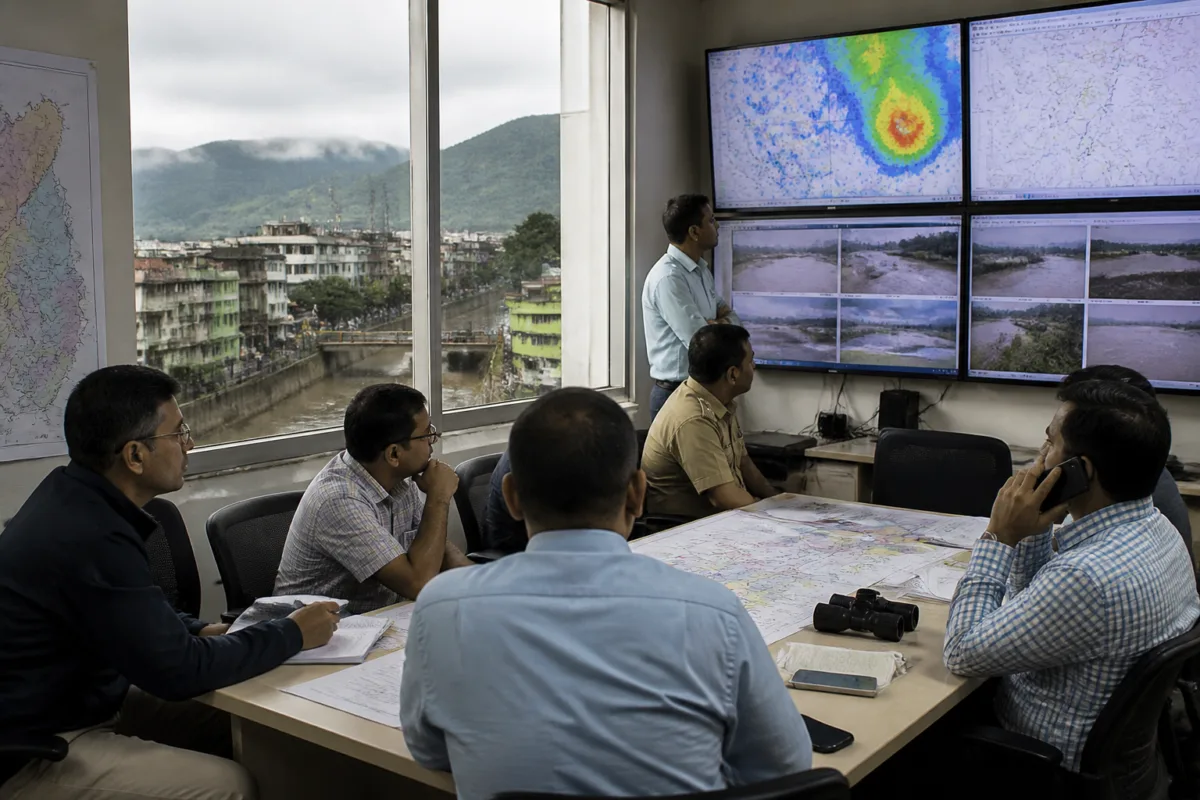
North Bengal’s flood preparedness has been placed on alert after forecasts of rainfall linked to Cyclone Arnab raised concerns within the West Bengal irrigation department, which is considering extending the operation of its regional flood control room in Jalpaiguri beyond its scheduled closure on November 1.
The control room has been operating round the clock since the onset of the monsoon. Officials are now reviewing whether it should remain functional for a few additional days, particularly ahead of Kali Puja, Diwali and Chhath Puja, when movement and public activity are expected to increase across the region.
Krishnendu Bhowmik, chief engineer of the irrigation department’s northeast division, visited the regional flood control room in Jalpaiguri on Tuesday with other engineers to assess the situation. He said the state government had instructed the department to remain alert in North Bengal because of the cyclone’s potential impact.
“We are monitoring the anticipated rainfall in coordination with the Central Water Commission (CWC) and the meteorological department. Our officials are also keeping track of data from four rain gauge stations in Bhutan,” Bhowmik said, according to the report.
The department has not yet taken a final decision on extending the control room’s operation. Bhowmik said the possibility of heavy rainfall linked to the cyclone meant that officials were keeping the option open. The control room’s scheduled closure comes as the region’s flood-monitoring arrangements approach the end of their seasonal operating period.
The status of the CWC’s flood control rooms in Sikkim, North Bengal and Assam beyond October 31 also remains unclear. The CWC had earlier directed that more than 100 rain gauge stations across the three regions remain operational until October 31 this year. These stations are used to monitor rainfall and river water levels.
Anil Kumar Arya, executive engineer of the CWC’s lower Brahmaputra division, said the forecast indicated that North Bengal could receive rainfall until October 30 because of Cyclone Arnab. He said most rivers in the region were currently almost dry, making a significant rise in water levels less likely from the forecast rainfall alone. However, officials were maintaining vigilance from Sikkim to the plains.
The monitoring effort covers a river system that connects the hills and plains, making rainfall data from Bhutan and Sikkim relevant to flood preparedness in North Bengal. The irrigation department and the CWC are coordinating with meteorological agencies while officials assess whether operational arrangements need to continue beyond the existing deadlines. A decision on the extension of the Jalpaiguri control room is expected as officials review the rainfall forecast and river data.

