


A consumer commission’s order directing South Western Railway to compensate a family after a train’s toilets reportedly ran without water does more than resolve one passenger dispute. It places a basic question before India’s railway system: when an essential service fails during a journey, who is responsible for responding, reducing the disruption and paying for the consequences?
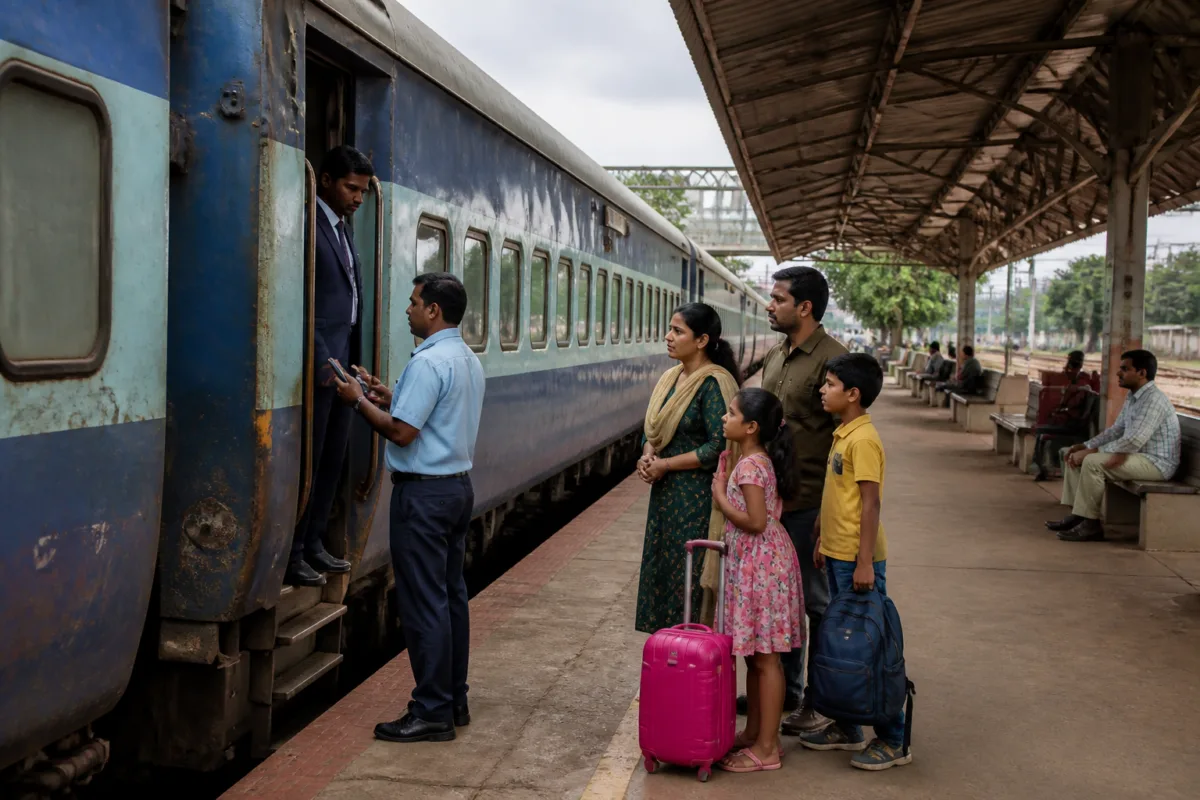
The case arose from a journey between Bengaluru and Shivamogga involving 24 members of one family. The group travelled from Yesvantpur on train No. 66575 after purchasing general tickets worth Rs 1,000. According to the complaint reported by the Times of India, passengers discovered that the train toilets had no water and alerted the station master at Tumakuru. After receiving no response, they got off at Tumakuru and purchased tickets on another train, spending an additional Rs 1,760.
The Shivamogga District Consumer Disputes Redressal Commission has now ordered South Western Railway officials to refund the original fare of Rs 1,000 with 6% annual interest calculated from April 15, 2025. It also directed the railway authorities to pay Rs 10,000 as compensation for the inconvenience and Rs 5,000 towards litigation expenses. The order was issued by a bench comprising commission president T Shivanna and member BD Yoganand Bhandya, according to a release issued by the information department.
The order is significant because the immediate service failure was relatively simple: water was unavailable in the train’s toilets. But the passenger impact was not limited to inconvenience inside a coach. The family abandoned its original train at an intermediate station, incurred a second fare and was left to manage the disruption after its reported attempt to alert railway staff did not produce a response. The case therefore links three parts of passenger service that are often treated separately: onboard maintenance, station-level communication and financial liability.
The complaint was filed by Nagendra, a resident of PWD Quarters in Basavanagudi, Shivamogga, who was travelling with 23 family members and relatives. After the reported failure to receive a response, he sent a legal notice to railway authorities. The article states that no response was received, after which he approached the consumer commission. The sequence shows how an operational problem can move from a train coach to a formal dispute when the first level of grievance handling does not resolve it.
The numbers in the order also reveal the uneven distribution of costs after a public transport failure. The family’s original ticket expenditure was Rs 1,000, while the additional tickets cost Rs 1,760. The commission’s award includes a Rs 10,000 payment for inconvenience and Rs 5,000 for litigation expenses, apart from the refund with interest. The monetary award is not simply a reimbursement of the second journey; it recognises that the consequences included disruption and the need to pursue the complaint.
The case does not establish how the water supply failed, whether the problem affected the entire train or particular coaches, how long the deficiency lasted, or why the station master did not respond. Those operational details are not provided in the supplied report. The commission’s order, as described, focuses on the passenger experience and the remedy rather than setting out a technical audit of the train’s maintenance system.
That limitation matters. A consumer remedy can compensate an affected passenger, but it does not by itself explain whether the failure resulted from inadequate pre-departure checks, a breakdown during the journey, a replenishment problem at a station or a communication failure between train and station staff. Without that information, the case cannot be used to identify a single systemic cause. It can, however, show where the passenger-facing system broke down: the service was reported as unavailable, the escalation attempt was said to have failed, and the passengers paid again to continue their journey.
Railway journeys depend on a chain of routine services that are easy to overlook precisely because they are expected to work without attention. Toilets, water, ticketing, station assistance and complaint mechanisms are not separate conveniences from the passenger’s perspective. Together, they determine whether a long-distance journey remains usable, particularly for families travelling in groups. In this case, the absence of water turned an ordinary trip into an unscheduled transfer at Tumakuru.
The case also highlights the administrative complexity of accountability. The commission directed station masters of South Western Railway in Bengaluru and at Tumakuru railway station to refund the fare and make the additional payments. The reported order therefore places responsibility across the railway establishment rather than treating the incident only as a personal dispute between one passenger and an unnamed employee. At the same time, the supplied material does not specify the internal division of responsibility between the originating station, the train’s operating staff, the destination-side administration or the station where the family sought help.
The 45-day compliance period adds a further institutional test. The railway authorities have been directed to make the payments within that period. If they fail to comply, the amount will attract annual interest of 10% until full payment, according to the report. This provision gives the order a clear implementation milestone: the remedy is not complete when the decision is issued; it must be delivered to the passenger within the stated deadline.
The case is also a reminder that the effectiveness of public transport is measured at the point of use, not only through route maps, train schedules or infrastructure investment. A train can connect Bengaluru and Shivamogga, but the journey remains deficient if a basic onboard facility fails and a passenger cannot obtain assistance. The order brings that everyday service dimension into the same accountability frame as the larger railway network.
There is no evidence in the supplied material to determine whether this was an isolated incident or part of a wider pattern on the route or within South Western Railway. It would therefore be inappropriate to generalise from one complaint to the performance of the entire railway system. What the case does establish is narrower and more concrete: a family reported a basic facility failure, said its request for assistance went unanswered, incurred additional travel costs and secured a consumer commission order for refund, compensation and litigation expenses.
For passengers, the practical significance lies in the recognition that a transport service is not limited to movement from one station to another. The quality of the journey includes the conditions in which that movement takes place and the response available when those conditions fail. For railway administrators, the order places the focus on the full service chain—from maintenance and replenishment to complaint escalation and compliance with remedies.
The next important development is whether South Western Railway complies with the commission’s directions within 45 days. The order requires payment of the original Rs 1,000 fare with 6% annual interest from April 15, 2025, along with Rs 10,000 compensation and Rs 5,000 in litigation expenses. If payment is delayed beyond the deadline, the higher 10% annual interest provision will apply until the amount is paid.

