


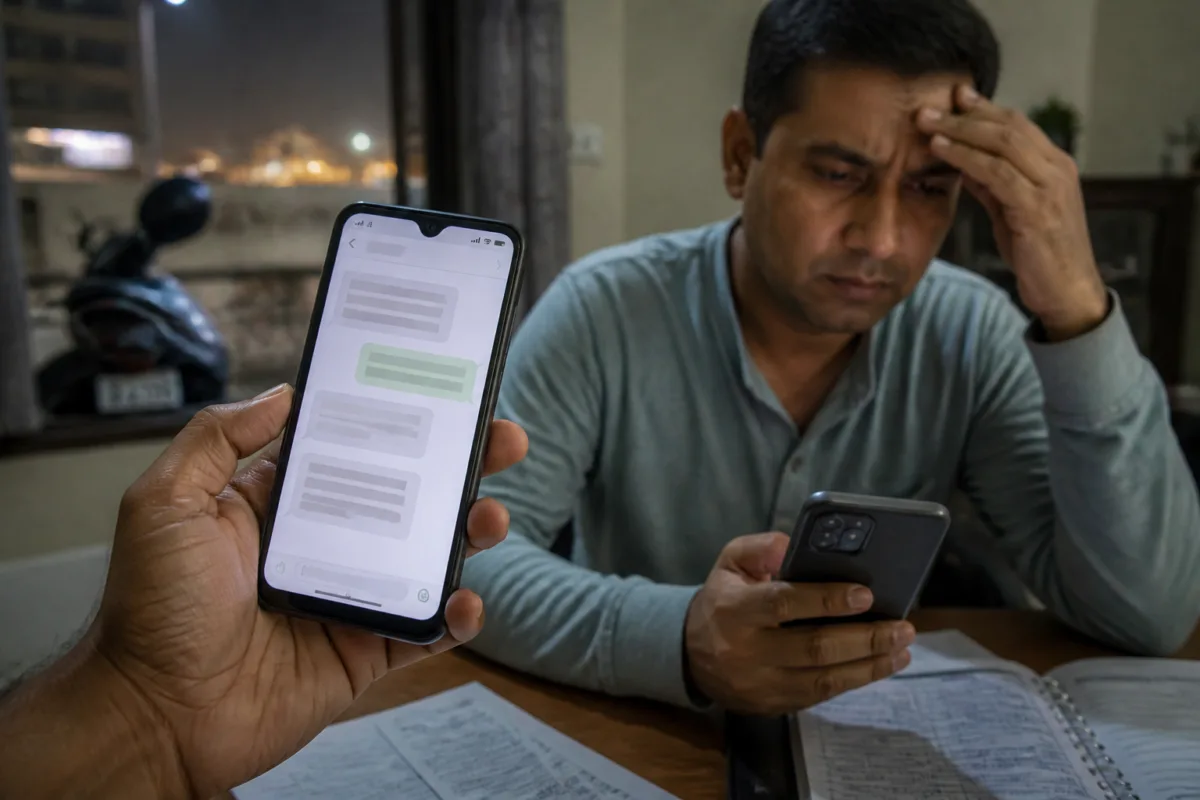
A Surat scrap dealer lost ₹57,000 after allegedly clicking a fraudulent link sent through a fake M-Parivahan e-challan message, according to an FIR registered at Amroli police station on October 26. The incident shows how a genuine pending traffic challan was used as the entry point for unauthorised access to a bank account.
The complainant, Vijay Parmar, learnt from his younger brother that he had received a message asking him to pay a traffic challan through an online link. The message appeared to come from M-Parivahan, making it seem like an official communication from the Regional Transport Office.
Because a challan was pending against his brother’s two-wheeler, Parmar asked him to forward the link. Parmar then received it on WhatsApp and clicked on it to make the payment. According to the complaint, no payment page appeared after the link was opened, and Parmar deleted the message.
The police complaint states that the fraudsters allegedly gained access to Parmar’s banking details despite the failed payment attempt. Several one-time passwords were subsequently sent to his phone, but Parmar deleted them because he did not realise that transactions were being carried out from his account.
He later discovered that ₹57,000 had been debited through multiple unauthorised transactions. The complaint has identified the use of a fake transport-related payment communication as the method through which the alleged fraud began. The supplied police complaint does not specify how the banking details were accessed or identify the person or group behind the transactions.
Parmar contacted the cybercrime helpline 1930 after discovering the loss and subsequently lodged the complaint at Amroli police station. The case places a familiar urban service—online payment of a traffic challan—at the centre of a wider digital-risk problem for vehicle owners and their families.
The incident also highlights the importance of treating unexpected payment links claiming to represent transport or government services with caution. In this case, the message gained credibility because it referred to an actual pending challan against a two-wheeler. The complaint and the reported transactions remain the basis of the case as police investigate the alleged fraud.

