


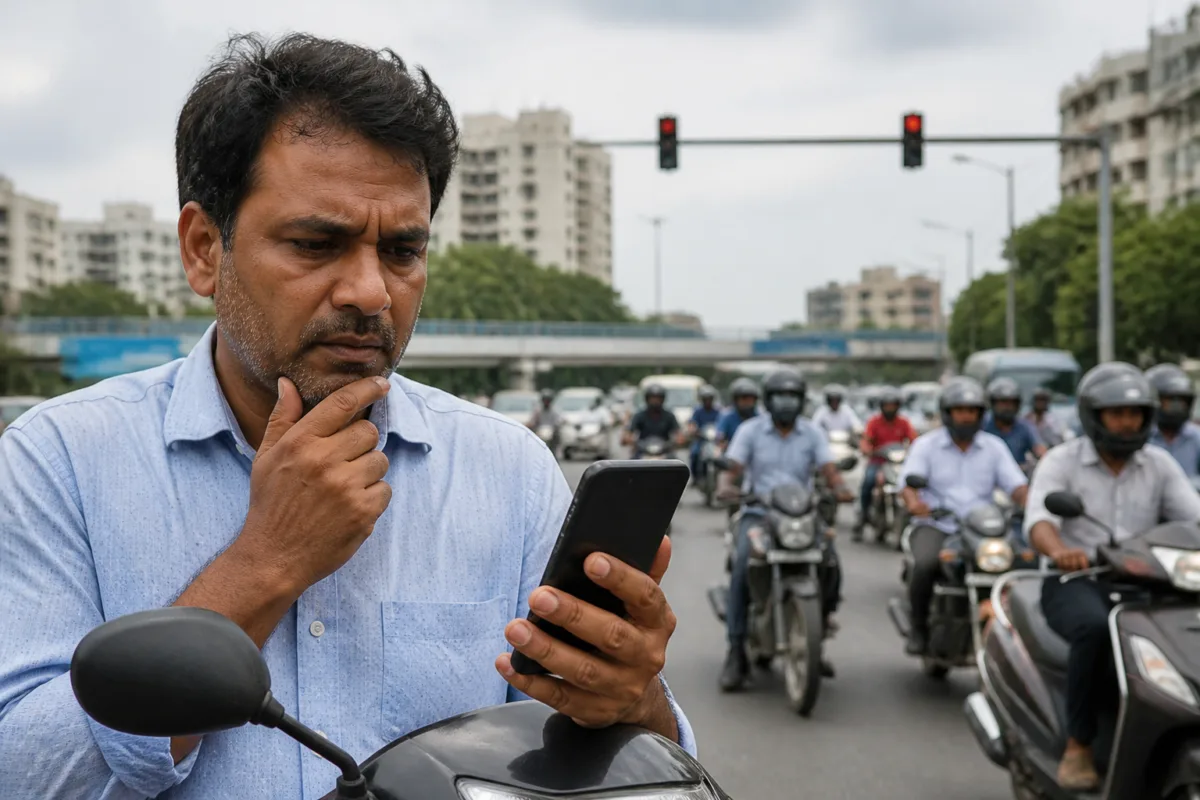
Ahmedabad residents are being targeted with fake WhatsApp messages demanding payment of a ₹500 helmet e-challan, with cybercriminals using links that can expose bank details and enable unauthorised withdrawals, according to a report by Gujarat Samachar – Ahmedabad.
The messages tell vehicle owners that they have violated traffic rules and must pay the fine immediately through an attached link. The reported scam is exploiting increased public attention around helmet enforcement in the city, where traffic police and Ahmedabad Municipal Corporation smart CCTV cameras are being used to monitor motorists.
The messages reportedly direct recipients to websites designed to resemble government payment portals. Once a user opens the link and begins the payment process, the page may seek banking information or other sensitive details. The report warns that entering such information could allow fraudsters to access accounts and withdraw thousands of rupees.
The reported fraud also involves the possible use of APK files. In some cyber-fraud methods, a link prompts users to download and install an Android application package on their phones. Installing an unknown file can compromise device security and expose one-time passwords, banking passwords and other sensitive information, the report said.
The scam comes amid confusion among vehicle owners over how to distinguish genuine and fake e-challan notices. The messages use the ₹500 helmet fine as an immediate payment demand and pressure recipients to act quickly. That urgency is a key feature of the reported tactic: users worried about penalties may click before independently checking whether a challan exists.
The report advised motorists not to open links received through WhatsApp from unknown sources and not to rely only on a domain ending in “.gov.in” as proof that a page is genuine. Instead, vehicle owners should type the address of the official government website themselves and check challan details through the official portal. They should not download or install suspicious APK files or share one-time passwords, banking passwords or card details through unfamiliar links.
The issue highlights a growing vulnerability in digital enforcement systems: a genuine public process such as traffic monitoring and online fine payment can be imitated through simple messaging platforms. While the underlying traffic violation and payment systems are digital, the report does not identify an official confirmation of the WhatsApp messages or specify how many residents have been affected.
Anyone who has shared banking details or noticed an unauthorised debit should contact their bank immediately and report the incident to the cybercrime helpline at 1930. The helpline remains the next reported step for victims seeking to flag suspected financial cyber fraud.

