


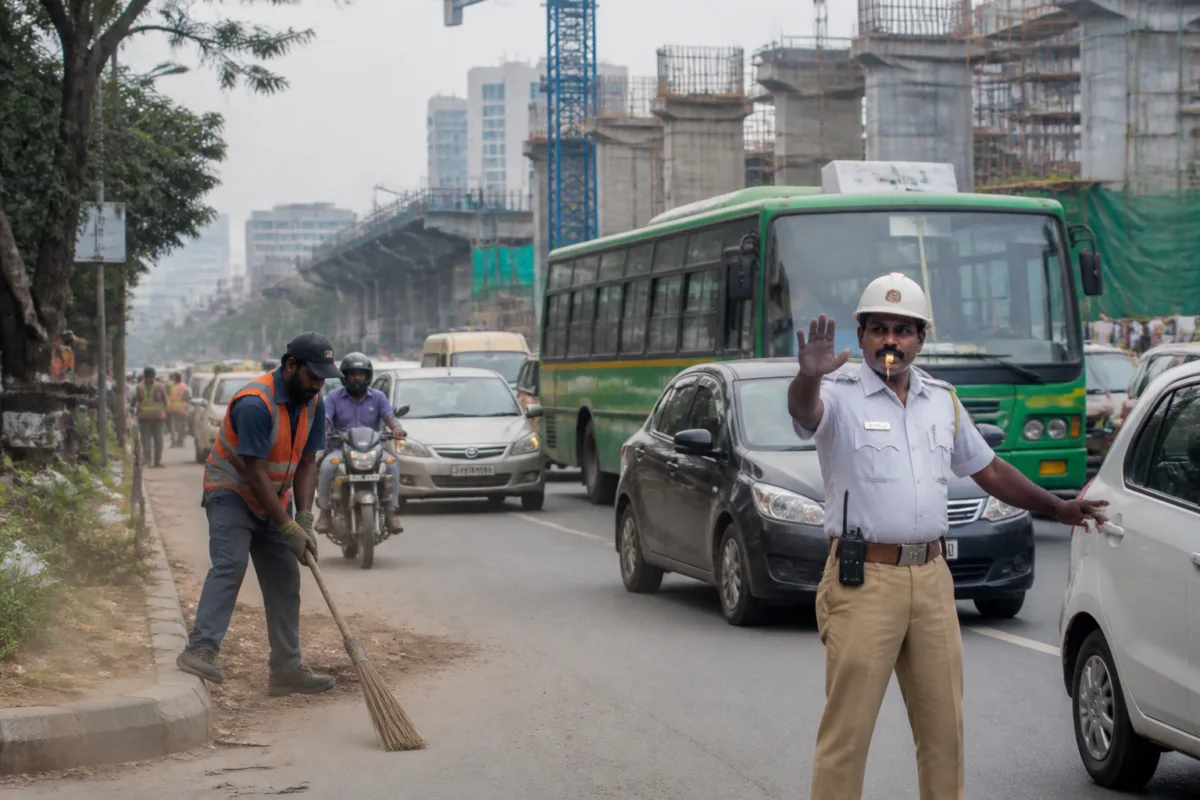
More than 45% of some frontline workers in Bengaluru have shown early signs of reduced lung function, according to findings presented by the Air Occupational and Environmental Respiratory Illness Clinic (VOERIC-Vayu) at a discussion on protecting the health of workers who keep the city running.
The workers screened include traffic police personnel, BMTC staff, pour workers and construction workers who face prolonged exposure to vehicle emissions, toxic dust and other pollutants during their daily duties. The VOERIC-Vayu report identified continuous exposure to air pollution and toxic dust as a major factor associated with the decline in respiratory function.
The organisation said more than 11,000 frontline workers across Bengaluru have undergone health screening under the initiative since November 2023. The findings were presented at a discussion titled ‘Protecting the Health of Those Who Protect the City’, held in Bengaluru on Monday.
The reported proportion of workers showing reduced lung function varied across occupational groups. The figure was 45% among pour workers, 29.5% among BMTC staff, 28% among traffic police personnel and 15% among construction workers.
Bengaluru Rural MP Dr C.N. Manjunath described air pollution as the “new tobacco” and said its effects may extend beyond the lungs to the heart and brain. He said air pollution could be associated with heart attacks, strokes, respiratory problems and adverse effects during pregnancy.
Manjunath also said many workers with reduced lung function may have no clear symptoms or only mild symptoms. This, he said, made early detection and regular health check-ups important for workers exposed to polluted environments over long periods.
The discussion also highlighted the limits of relying on medical screening alone. Experts and policymakers who attended the round-table said respiratory and lung-function checks should be built into occupational health programmes, particularly for workers who find it difficult to access healthcare during their working hours.
The findings place the health burden of urban air pollution in the workplaces of people who manage essential city services. Traffic police personnel work close to moving vehicles, BMTC employees spend long hours in the transport system, pour workers operate in waste-handling environments and construction workers are exposed to dust at active sites.
The report, however, does not establish a citywide prevalence rate for all workers or residents, and the supplied findings do not provide a detailed breakdown of the screening methods, diagnostic thresholds or medical follow-up. The immediate next step discussed by the experts was the integration of respiratory and lung-function examinations into regular occupational health programmes.

