


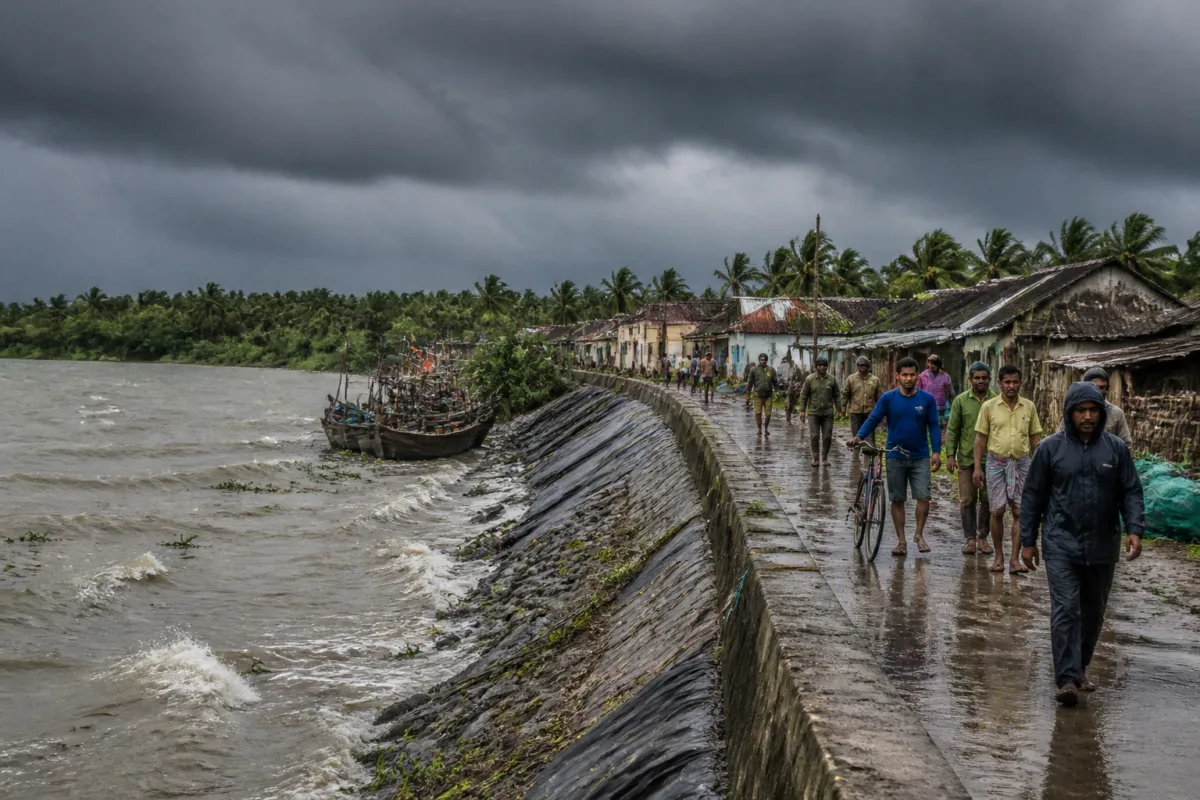
Cyclone Arnab is expected to bring heavy rain, strong winds and dangerous sea conditions to coastal West Bengal, prompting South 24 Parganas authorities to intensify public warnings across the Sundarbans, Namkhana and nearby islands. The administration is also monitoring river embankments and low-lying areas for possible water-level rises linked to the storm and the full-moon high tide.
According to the report, the cyclone is expected to make landfall on Wednesday, although its projected landfall location is far from West Bengal. The Alipore weather office has warned that wind gusts along the West Bengal coast and adjoining areas could reach up to 55 kilometres per hour from Tuesday through Thursday. The sea is expected to remain very rough during this period.
The weather system has already made the sea turbulent, with winds of around 100 kilometres per hour reported over the relevant part of the Bay of Bengal. The report states that the storm is expected to move further north-west and make landfall between Bapatla and Visakhapatnam along the Andhra Pradesh and Yanam coast. At landfall, sustained winds are expected to reach 115 to 125 kilometres per hour, with gusts potentially touching 140 kilometres per hour.
The risk for West Bengal’s coastal belt is being compounded by the full-moon high tide, locally known as bhara kotal. The combination of strong winds, heavy rain and elevated tides could raise water levels in rivers and the sea, increasing pressure on embankments and exposing low-lying settlements to inundation. The report does not specify the extent of any expected flooding.
District authorities have begun public-address announcements in large parts of the Sundarbans, including Namkhana and Mousuni Island. Coastal police stations in Namkhana and other parts of the district are carrying out the warnings. Fishermen operating in rivers and at sea have been instructed to return to safe shelters by Monday evening, while fishing in rivers and the sea has been prohibited from Tuesday until further orders.
Civil Defence personnel have been kept ready at Gangasagar, Bakkhali and Mousuni Island to respond to possible emergencies. Block administrations across the Sundarbans have also been directed to remain alert, with particular attention being paid to areas beside river embankments and settlements in low-lying terrain.
The response places local administration at the centre of coastal risk management, where early warnings must be converted into timely movement of fishers, public communication and surveillance of embankments. The immediate concern is not only the cyclone’s projected landfall but also the effect of its outer weather conditions on a densely inhabited and water-dependent landscape.
Authorities are continuing public announcements and coastal monitoring from Tuesday through Thursday. Fishing restrictions will remain in force until the administration issues further instructions.

