


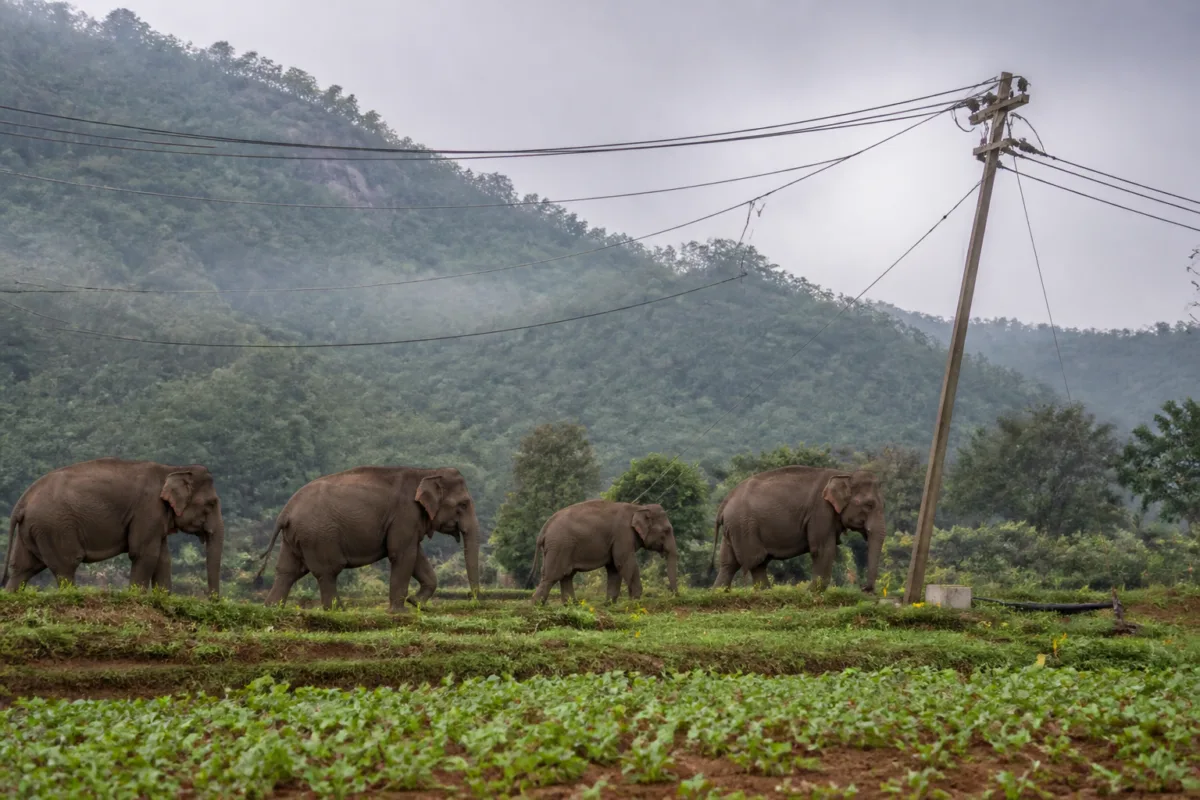
Six elephants have died from electrocution in the combined Chittoor district this year, turning what could appear to be a series of isolated accidents into a wider warning about how agricultural expansion, electricity infrastructure and wildlife movement are being managed together. The deaths were reported along routes used by elephant herds across several mandals, where farms, power lines and forest edges increasingly overlap.
The latest incident near Chakkavaripalle in Irala mandal has added to a sequence of fatal accidents. About two months earlier, an elephant died after being electrocuted in an agricultural field at Papireddigaripalle in Pulicherla mandal. Another died in Peddapanjani mandal after coming into contact with electric wires allegedly laid by poachers. A similar death was reported near Musalimadugu, close to Palamaner.
Taken together, the incidents point to a risk that is not confined to one defective wire or one farmer’s decision. The reported danger comes from several forms of electrical exposure: low-hanging power lines, leaning poles, exposed connections, improperly positioned electrical control panels and unauthorised live fencing. Each is located within a landscape where elephant herds move through or near agricultural areas in search of food.
The affected movement routes include Pakala, Bhakarapet, Chandragiri, Yerravaripalem, Pulicherla, Kalakada, Ramakuppam, Gudupalle and Kuppam. The geographic spread matters because it changes the administrative question. Preventing future deaths cannot depend only on responding after an elephant is found near a field. It requires identifying movement routes, inspecting electrical assets along them and ensuring that measures taken by farmers do not create a lethal barrier.
The report describes agricultural fields as conflict zones where elephants enter farms in search of food and damage crops, borewell motors and electrical control panels. These incidents create a direct incentive for farmers to protect their land. Electric fencing can appear to offer an immediate deterrent, especially where crop damage is recurring, but an unauthorised fence carrying live current can kill wildlife and expose people to the same danger.
This is the central infrastructure problem behind the Chittoor deaths: electricity systems designed for agricultural supply are operating inside a moving wildlife corridor. A power line or connection that may be considered routine from an electrical-supply perspective can become a high-risk obstruction when it is low enough for a large animal to touch. The same applies to temporary or illegal wiring installed without safeguards.
The distinction between authorised and unauthorised infrastructure is important. The reported deaths involve both low-hanging power lines and wires allegedly laid by poachers. They also involve farmers’ use of electric fencing. These are different sources of risk, but they meet at the same point: inadequate control over live electrical equipment in areas frequented by elephants.
Wildlife expert J.J. Naidu said the deaths could be prevented through better coordination between the forest and electricity departments. He called for regular inspections along elephant movement routes, repairs to leaning electricity poles and loose wires, and the raising of power lines that hang dangerously close to the ground. His recommendations place maintenance and interdepartmental coordination at the centre of the response rather than treating each death as an unavoidable consequence of human-wildlife conflict.
The proposed actions also show why this is a governance issue. The forest department can identify elephant movement patterns and work to reduce the reasons herds enter farms. The electricity department controls the inspection and rectification of power infrastructure. Farmers experience the crop losses and equipment damage directly, but may resort to protective measures that are unsafe or unauthorised. Without a mechanism linking these responsibilities, each department can address only part of the risk.
Following the Irala incident, the electricity department is reported to have initiated measures to rectify low-hanging electrical control panels and wires. The report does not specify the number of locations covered, the completion deadline or whether inspections will be repeated across all the identified routes. Those details will determine whether the response remains an incident-specific repair exercise or becomes a district-wide safety programme.
The forest department is also working to improve food availability inside forest areas. Officials have begun scattering seed balls using drones, with the stated aim of encouraging vegetation that can provide additional food for elephants and reduce their movement into agricultural fields. This measure addresses one factor driving the animals towards farms, but it does not remove the immediate electrical hazards along the routes they already use.
That separation is important. Improving food availability in forests may reduce pressure on agricultural fields, but elephant movement cannot be treated as fully predictable or limited to a fixed boundary. The report identifies several mandals through which herds move, suggesting that safety planning must account for a landscape rather than a single incident site. Power-line inspections and wildlife protection measures therefore need to operate together.
The reported damage to crops, borewell motors and electrical control panels also shows that the conflict has an economic dimension for rural households. Farmers are not only encountering wildlife; they are absorbing losses when elephants enter fields. At the same time, measures adopted to protect crops can create risks for elephants and people. This creates a cycle in which inadequate prevention increases economic pressure, and economic pressure encourages unsafe protection methods.
A safer response would depend on making the alternatives identified by experts practical for farmers. Naidu referred to solar fencing supported by subsidies and protective barriers at locations frequently used by elephants. The supplied report does not establish the scale of any subsidy programme or whether such barriers are currently available across the district. It does, however, make clear that the proposed alternatives are intended to reduce dependence on live-wire fencing.
The six deaths also raise a basic question about inspection regimes. If low-hanging wires, leaning poles and exposed connections are recurring hazards, the relevant standard cannot be limited to installation or complaint-based repair. Inspections would need to reflect the presence of elephant herds and the seasonal or shifting nature of their movement. The report specifically calls for regular checks along movement routes, but does not provide evidence on how frequently such checks currently occur.
This information gap is itself significant. The reported number of deaths establishes the scale of the immediate tragedy, while the list of affected locations indicates the breadth of the risk. What remains unclear from the supplied material is how many dangerous power points have been mapped, how many illegal fences have been removed, whether farmers have received safety guidance, and how the forest and electricity departments share information when herds approach farms.
The issue also illustrates the limits of treating wildlife protection as a matter confined to forest land. Elephants move through a working landscape containing farms, electrical distribution networks, borewells and access roads. Their safety depends partly on decisions made by departments whose primary mandates are electricity supply, agricultural protection and infrastructure maintenance. The built environment around forests is therefore part of the conservation system.
For Chittoor, the immediate evidence confirms a preventable interaction between elephant movement and unsafe electrical infrastructure. It also shows that the response is beginning on two tracks: the electricity department is addressing low-hanging wires and control panels, while the forest department is attempting to improve food availability within forest areas. The developments that require monitoring are whether inspections cover all identified movement routes, whether unsafe fencing is replaced with safer alternatives, and whether the two departments establish a sustained joint prevention mechanism.

