


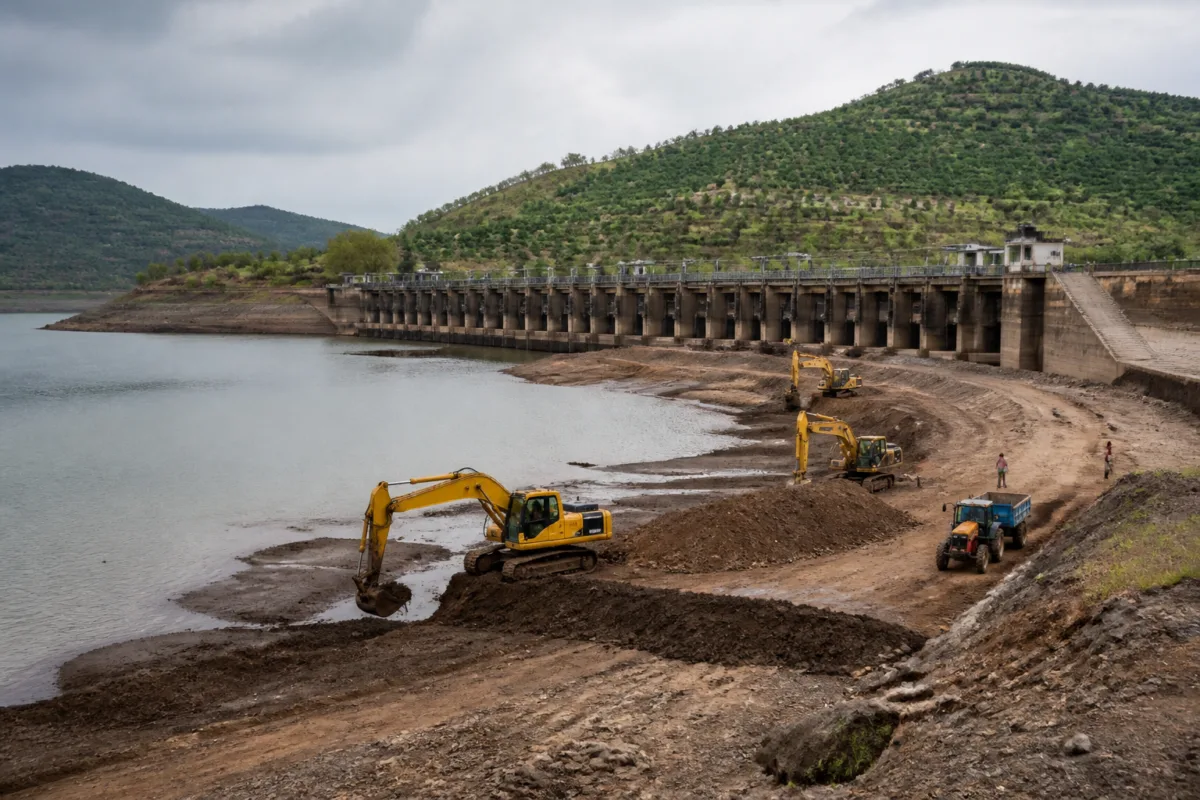
Maharashtra water resources minister Radhakrishna Vikhe-Patil has urged authorities in Nashik to begin desilting dams early to increase storage capacity, support irrigation and strengthen the district’s response to drought conditions caused by insufficient rainfall.
Vikhe-Patil made the statement at a symposium organised jointly by the Waghad Project-Level Water Users Association at Mohadi in Dindori taluka and the Palkhed Irrigation Division in Nashik. He said desilting should be treated as a priority in locations where reduced storage could affect farming and water availability.
The minister described Nashik as a leading agricultural district, citing its orchard cultivation, adoption of modern technology and innovative farming practices. He said better water management and the effective functioning of water users’ associations were essential for sustaining agricultural development.
“Proper water management and the effective functioning of water users’ associations are crucial for agricultural development. The departments concerned should focus on increasing the storage capacity of dams through desilting,” Vikhe-Patil said, according to the report.
He said some dams had good water storage, but water stocks were lower in other bodies. Starting desilting earlier, he added, would help increase water storage and bring fertility to farms through the use of removed silt. The minister also said the state government was supporting farmers facing drought-related difficulties, with drinking water and livestock fodder identified as immediate priorities.
Vikhe-Patil directed irrigation department officials to reactivate water users’ associations that had stopped functioning and ensure that existing associations met regularly. He also called for the recovery of water tariffs and the use of those collections for canal repairs and maintenance in the respective command areas.
The minister emphasised the need for detailed water accounting and more effective use of available storage. Officials, he said, should monitor water released from dams, its distribution and actual consumption to prevent errors in allocation and wastage. The statement places responsibility not only on dam capacity but also on the systems that determine how stored water reaches farms and other users.
For farmers affected by inadequate rainfall, the government plans to start fodder depots to protect livestock, Vikhe-Patil said. Tanker water supply will also be planned in areas where shortages emerge. The report did not specify the dams or water bodies to be desilted first, the volume of silt to be removed, a project schedule, or the funding arrangements for the proposed work.
The next steps will depend on irrigation officials identifying priority water bodies, reactivating local water users’ associations and monitoring water availability and distribution as drought-response measures are implemented.

