


Basar IIIT in Telangana has extended its Dasara holidays until November 17 after a breakdown in its Godavari water supply system reduced pumping capacity and left the campus with only about 10 per cent of its emergency reservoir filled, according to campus officials. The shortage affects nearly 9,000 students and 1,000 staff who require between 20 lakh and 22 lakh litres of water a day for drinking and other uses.
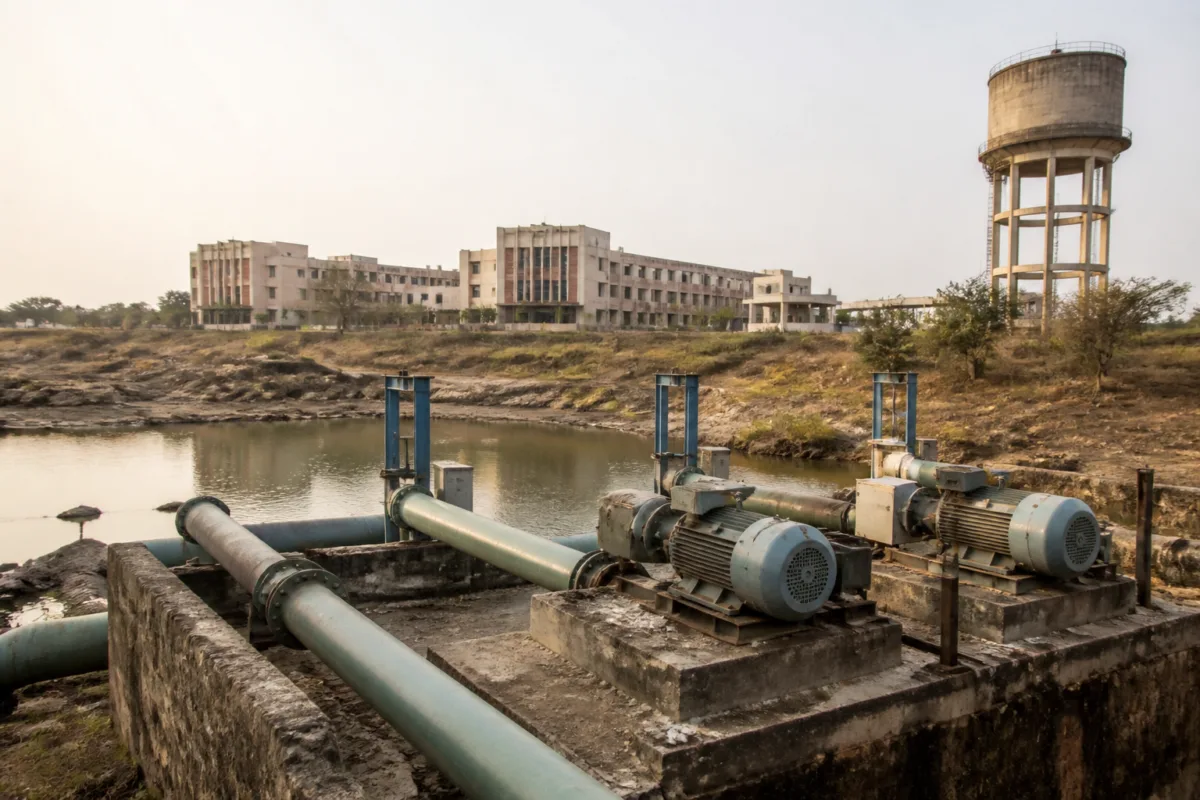
Only one of the three pumping motors at the intake well supplying the campus under Mission Bhagiratha has been functioning in recent days, while repairs to the other two have been delayed. The interruption has prevented the institute from adequately filling its existing 800-million-litre reservoir, which is intended to provide drinking water during emergencies.
Basar IIIT vice-chancellor Prof A Govardhan said the campus was receiving about 10 lakh litres of water daily against its estimated requirement of 20 lakh to 22 lakh litres. He said the institute had extended the student holidays because it could not provide sufficient water and did not want to supply muddy water to students.
The campus administration has also linked the shortage to declining water levels in the Godavari and the absence of inflows from Maharashtra following the closure of the Babli gates. The institute is not receiving water from the Sriram Sagar Project, or SRSP, and is currently relying on its backwaters, according to officials cited in the report.
Basar IIIT dean Rajeshwar said each student requires about 136 litres of water a day, putting the students’ requirement at roughly 15 lakh litres daily. He said the SRSP water level was falling and that the intake-well system could pump about 2 million litres a day using two motors to fill the campus reservoir.
The immediate infrastructure problem is the condition and capacity of the pumping system. Mission Bhagiratha officials have proposed installing three new 65-horsepower motors at the intake well, and the proposal has been sent to district officials. The report does not specify when the replacement motors will be approved, procured or commissioned.
The water shortage also exposes the dependence of a large residential educational campus on a single intake and reservoir system. The institute has warned that the situation could become more severe in March and April if the present supply constraints continue, although the report does not provide a confirmed summer supply plan or a timeline for restoration.
For now, the next administrative step is consideration of the Mission Bhagiratha proposal for three new motors by district authorities. The campus’s ability to rebuild its reserve will depend on the pumping equipment being restored or replaced and on water availability in the Godavari-SRSP system.

