


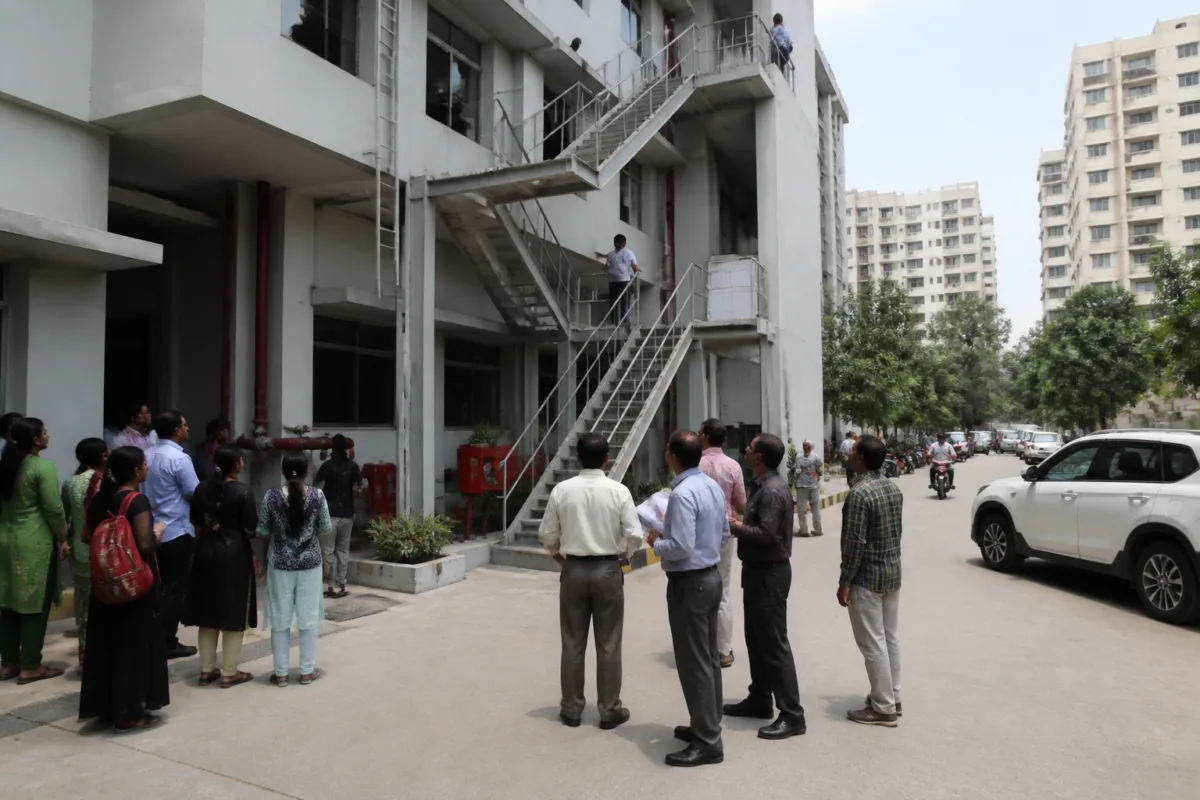
The dispute over Telangana junior colleges denied affiliation for 2026-27 is not only an argument between private college managements and the education authorities. It is also a test of how urban institutions are permitted to operate when academic recognition depends on compliance with building and fire-safety requirements. According to the Telangana Private Junior Colleges Managements Association (TPJMA), 156 private colleges have not received affiliation from the Telangana Board of Intermediate Education (TGBIE), including 27 placed in the zero-admissions category.
The issue has a direct institutional consequence. Without TGBIE affiliation, a college cannot operate as a Board-approved institution for the relevant academic year. The dispute therefore sits at the intersection of education access, regulatory administration and the physical safety of buildings used by students and staff. The available report does not establish that every college on the list faces the same deficiency. It says the remaining colleges have other affiliation-related issues, including fire-safety compliance.
The geographical concentration in the list also gives the matter an urban character. Of the 27 colleges categorised under “not affiliated” and “nil admissions”, 14 are in Rangareddy, seven in Medchal and six in Hyderabad district. These districts contain a significant concentration of private educational institutions, and the distribution indicates that the affiliation process is affecting more than one municipal setting. However, the supplied material does not provide the total number of junior colleges in Telangana or establish whether the listed institutions are concentrated in particular neighbourhoods.
The immediate dispute began after the Board’s affiliation process resulted in the colleges being denied approval or placed under zero admissions. TPJMA president Satish Gowri said the association’s members met at Sundarayya Vignana Kendram and opposed the Board’s actions. The association alleged that smaller colleges were being targeted while corporate institutions were being favoured. That allegation remains the position of the association; the report records that TGBIE did not respond despite repeated attempts to obtain its comment.
The fire-safety component is central because it moves the matter beyond a procedural disagreement over paperwork. The Hyderabad Disaster Response and Asset Protection Agency, or HYDRAA, reportedly found that 75 Fire No Objection Certificates submitted by junior colleges for 2025-26 and 2026-27 were either not issued by its office or were non-genuine. HYDRAA recommended cancellation of permission or affiliation for the concerned colleges. The report does not identify how many of the 156 colleges are included in this group, nor does it specify how many certificates were found non-genuine as opposed to not being issued by the agency.
That distinction matters for governance. A Fire NOC is not merely an administrative attachment to an affiliation application. It is evidence used by an authority to assess whether a building has met the required fire-safety conditions. If a certificate is not genuine, the problem concerns the reliability of the documentation submitted to the regulator. If a certificate was issued but later questioned, the matter raises a different question about inspection, record-keeping or communication between agencies. The supplied report does not provide the individual case files or inspection findings needed to distinguish between these situations.
The affiliation system therefore appears to be carrying several functions at once. TGBIE determines whether an institution can operate as a Board-approved college for the academic year. Fire-safety authorities assess a physical risk connected to the building. College managements must provide documentation and comply with requirements. When one part of this chain fails, students and parents encounter the result as an admissions restriction, even though the underlying cause may lie in a building certificate, an unresolved penalty or another affiliation condition.
The reported figure of 27 colleges under zero admissions illustrates the sharpest form of regulatory intervention. The order does not simply impose a cost on managements; it prevents new admissions under that category. TPJMA said more than 95 colleges had been fined lakhs of rupees and demanded that the penalties and zero-admission orders be withdrawn. The association described the measures as unlawful and called for the requirements relating to Fire NOCs and affiliation to be simplified.
The competing public interests are clear from the material available. Colleges need a functioning affiliation process and claim that smaller institutions provide budget-friendly education. Students and parents need certainty about whether an institution is authorised to operate and whether the premises meet safety requirements. Regulators must ensure that affiliation is not granted on the basis of documents that their own agencies cannot authenticate. The report does not supply the Board’s explanation of the orders, so it cannot establish whether the measures were proportionate or whether the affected colleges had been given an opportunity to correct deficiencies.
The episode also exposes a coordination problem. The Board’s affiliation decision and HYDRAA’s findings are connected, but the report does not say how information moves between the two authorities. It is not clear whether colleges receive a standardised deficiency notice, whether there is a time-bound process for rectification, or whether an appeal mechanism exists before zero-admission orders take effect. These missing details are important because regulatory compliance becomes difficult to navigate when institutions must satisfy more than one authority without a transparent sequence of checks.
The available numbers show the scale of the dispute but not yet its full operational impact. There are 156 colleges without affiliation, 27 in the zero-admissions category, 75 Fire NOCs reportedly questioned by HYDRAA and more than 95 colleges that TPJMA says were fined. These figures may overlap, and the source does not state whether they refer to the same institutions or separate groups. Treating them as cumulative would therefore risk overstating the number of affected colleges.
The district breakdown provides a more precise signal. The 27 colleges listed under “not affiliated” and “nil admissions” include 14 in Rangareddy, seven in Medchal and six in Hyderabad district. This means that more than half of the institutions in those two categories are located in Rangareddy, based on the list cited in the report. The figure suggests a substantial concentration in the Hyderabad metropolitan region, but the supplied evidence does not explain whether this reflects the number of colleges in each district, enforcement activity, or the distribution of the private education market.
The dispute is also a reminder that safety regulation is experienced differently by institutions of different sizes. TPJMA says smaller colleges are being targeted and that corporate institutions are being favoured. That allegation has not been independently established in the supplied material. Still, it identifies a structural question for the authorities: whether compliance requirements are applied through a uniform process that smaller operators can understand and meet, and whether enforcement decisions are based on comparable evidence across institutions.
Simplification, however, cannot mean weakening the underlying safety requirement. The source material does not establish what specific fire-safety deficiencies were found at the affected colleges. It does establish that HYDRAA reported 75 submitted certificates as either not issued by its office or non-genuine. Any administrative reform would therefore need to address both the integrity of certificates and the clarity of the process through which colleges obtain them. The available report does not describe a proposed replacement system.
The institutional roles now require clearer public explanation. TGBIE has the authority relevant to affiliation, while HYDRAA’s findings concern fire-related documentation and permissions. TPJMA represents the affected managements and has called for a high-level inquiry into the conduct of Board officials. The Board had not responded to the newspaper’s queries at the time of publication, leaving a significant gap in the public record about the reasons for the orders and the steps available to colleges.
For students and parents, the central issue is not simply whether a college appears on a list. It is whether the institution is authorised for the academic year, whether admissions will be recognised by the Board and whether the premises meet the relevant safety requirements. The report does not detail how students already enrolled in the affected colleges will be treated, whether transfers are available or whether fee and examination arrangements are affected. Those questions remain unresolved in the supplied material.
The association has warned of statewide protests involving students, parents and faculty if its demands are not addressed. That is a stated threat of future action, not evidence that protests have already occurred. The immediate administrative questions are whether the fines and zero-admission orders will be reviewed, whether the disputed Fire NOCs will be investigated individually, and whether TGBIE will publish its response and the basis for the affiliation decisions.
What the case confirms is that affiliation is functioning as a point where academic recognition, building safety and regulatory documentation meet. What remains uncertain is the institution-level evidence behind the 156 non-affiliation decisions, the overlap between the 75 questioned Fire NOCs and the affected colleges, and the Board’s response to the association’s allegations. Those details will determine whether the dispute is primarily a documentation failure, a safety-enforcement action, an administrative process problem or a combination of all three.

