


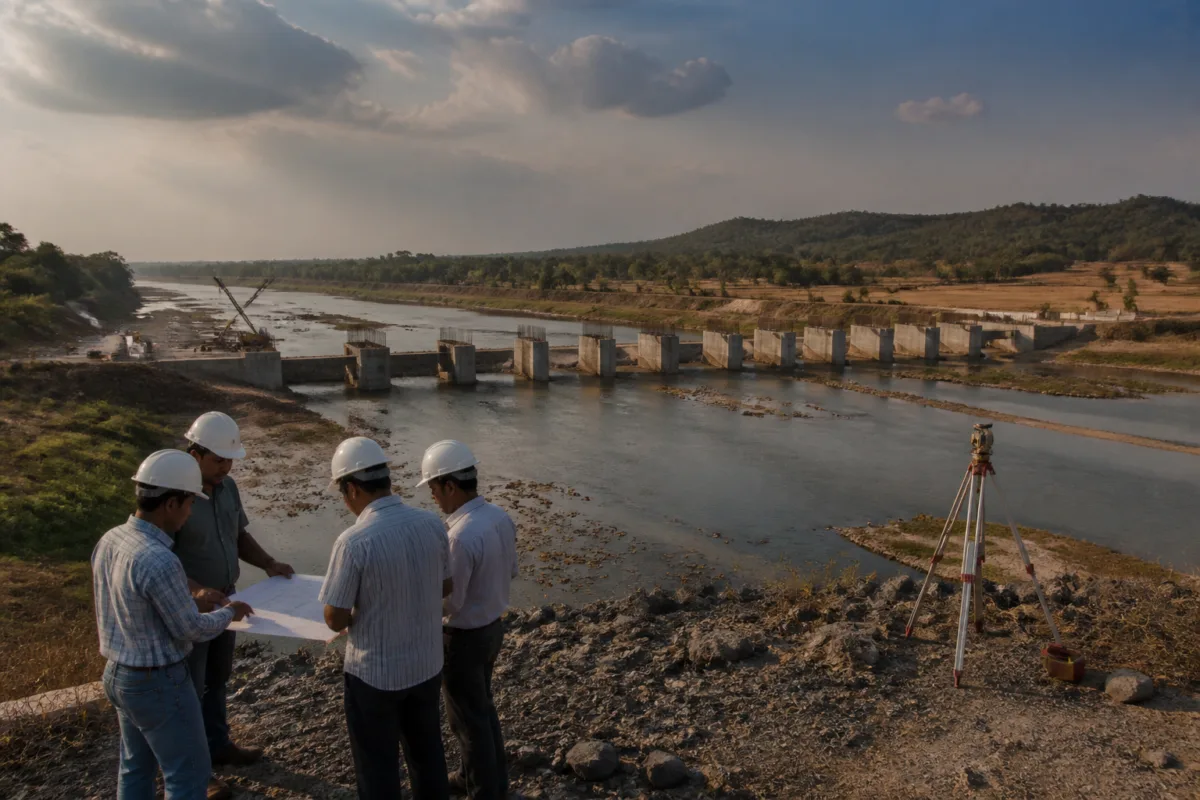
Telangana’s attempt to revive the Tummidihatti barrage has moved from a stalled infrastructure proposal to an interstate negotiation over water, land and the design of northern Telangana’s irrigation system. Chief Minister A Revanth Reddy is scheduled to meet Maharashtra Chief Minister Devendra Fadnavis in Mumbai to seek approval for constructing the barrage on the Pranahita river at a height of 152 metres. The proposed structure is intended to address irrigation and drinking water needs in northern Telangana, but its final form will depend on how the two states resolve the competing demands of water diversion and land submergence.
The issue is significant because Tummidihatti is not an isolated barrage proposal. It is connected to the original design of the Pranahita-Chevella project, a scheme conceived before the bifurcation of the undivided Andhra Pradesh. That original plan envisaged diverting water from the Pranahita through gravity canals, with limited dependence on pumping, to serve upland areas including parts of Adilabad and eventually extend towards tail-end areas of Rangareddy district through the Yellampalli reservoir.
The project’s revival therefore reflects a continuing debate over how Telangana should build and operate large water infrastructure. The state’s current position is that a barrage at a revised height could restore the importance of the Pranahita as a source for irrigation in the north. The previous BRS government redesigned the project as the Kaleshwaram lift irrigation scheme, which included the Medigadda, Annaram and Sundilla barrages and extensive pumping infrastructure. The Congress government is now seeking to refocus attention on Tummidihatti and the original project logic.
That shift matters because the choice between gravity-based diversion and lift irrigation is also a choice about long-term infrastructure dependence. The material supplied for the proposal does not establish the comparative operating costs or eventual performance of the alternatives. It does, however, show that Telangana’s irrigation planning has moved through substantially different engineering and administrative approaches. The current negotiations are intended to determine whether the Tummidihatti option can be made viable through Maharashtra’s consent, technical assessment and compensation for affected land.
The immediate disagreement concerns the barrage height. Telangana has sought a structure at 152 metres, arguing that the additional height would allow a larger volume of water to be diverted from the Pranahita. State officials have also examined alternatives at 150 metres and other height options in relation to the quantity of water that could be directed towards the Yellampalli project. The height is therefore not a minor design detail. It affects both the area that can potentially receive water and the extent of land that would be submerged upstream.
According to a senior official quoted in the report, construction at 152 metres would submerge approximately 2,300 acres in Maharashtra. A 150-metre structure, by comparison, would limit submergence to less than 1,000 acres. These estimates place the central institutional problem in clear terms: Telangana’s preferred engineering option could generate a larger land and compensation burden in Maharashtra, while a lower height could reduce that burden but alter the project’s water-diversion potential.
Telangana has offered to bear the entire cost of land acquisition and compensation for the affected land in Maharashtra. That offer is intended to address one part of the interstate dispute, but the supplied material indicates that consent will also depend on technical findings, water requirements and the final submergence assessment. Compensation can address the monetary cost of affected land; it does not by itself settle questions about the location of submergence, the interests of affected communities or the technical consequences of changing the barrage height.
The project’s proposed beneficiaries are concentrated in a region with a substantial tribal population and significant socio-economic challenges. The Telangana government estimates that the barrage could provide irrigation to around two lakh acres in the erstwhile united Adilabad district alone. The government has also linked the project to drinking water needs and to improved living conditions for forest-dwelling communities. These are important public-interest claims, but the supplied report does not provide a detailed beneficiary map, a phased irrigation schedule or an assessment of how many households would receive water directly.
That absence is important in understanding what the negotiations can and cannot establish. An interstate meeting may secure political agreement to examine or advance the project, but it does not in itself demonstrate that the proposed irrigation benefits will be delivered. The final public value of the barrage will depend on the technical design, canal or conveyance arrangements, the operation of the Yellampalli link and the ability of the implementing agencies to complete the wider system. The report establishes that these questions are under review, not that they have been resolved.
The institutional structure is also layered. Telangana’s chief minister is leading the political engagement with Maharashtra, accompanied by Irrigation Minister N Uttam Kumar Reddy and senior irrigation officials. The state has previously sought intervention from Prime Minister Narendra Modi and the Union Jal Shakti Minister to facilitate negotiations. This indicates that the project is being treated as an interstate water and infrastructure matter rather than solely as a Telangana irrigation department decision.
Maharashtra’s role is decisive because the proposed barrage and its upstream effects involve land within that state. The communication from the Maharashtra government inviting Telangana for talks provides the immediate trigger for the meeting, according to the report. But the outcome remains open: Maharashtra may agree to the proposed 152-metre structure, seek a lower height or require further technical and economic assessment before giving consent. The supplied material does not report a final position from Maharashtra on any of these options.
The proposal also shows how legacy infrastructure projects can remain active in public policy long after their original design has changed. Tummidihatti was linked to a pre-bifurcation irrigation concept, while Kaleshwaram represented a later restructuring around multiple barrages and pumping infrastructure. Telangana’s current government is not merely announcing a new project; it is revisiting an earlier model and attempting to re-establish its relevance under different political and administrative circumstances.
The numbers in the proposal reveal the scale of the trade-off. Around two lakh acres are identified as the potential irrigation area in the former Adilabad district. The land-submergence estimates range from less than 1,000 acres at 150 metres to approximately 2,300 acres at 152 metres in Maharashtra. These figures should be read together rather than separately. The proposed increase in barrage height is being justified through a larger potential water diversion, while the cost of that increase is expressed through a substantially larger affected land area.
The report also indicates that engineers have examined how different height options would affect the volume of water that could be diverted towards Yellampalli. That technical comparison is central because the barrage cannot be assessed only by its height or its nominal irrigation target. The relevant question is how the selected height changes the quantity of water available, the areas that can be served, the extent of pumping or conveyance required and the land affected in the neighbouring state. The source material confirms that such assessments are being presented, but it does not provide their detailed findings.
For northern Telangana, the project’s importance arises from the region’s stated irrigation and drinking water requirements and from the government’s description of a long-standing water crisis. For Maharashtra, the issue is linked to land that could be submerged by infrastructure designed primarily to serve Telangana. The disagreement therefore demonstrates the administrative reality of large water projects: benefits and costs do not necessarily fall within the same state or on the same communities.
The project also raises a broader question about how inter-state infrastructure is negotiated. Political meetings can create a framework for cooperation, but durable agreement requires a common technical basis for evaluating water availability, submergence, compensation and downstream or linked-project implications. The presence of senior officials in the delegation suggests that the talks are expected to address these details rather than remain at the level of political intent.
At this stage, the evidence confirms that Telangana is seeking Maharashtra’s approval for a 152-metre Tummidihatti barrage, that lower-height alternatives are under consideration and that the state has offered to pay compensation for land affected in Maharashtra. It also confirms that the project is being presented as a potential irrigation and drinking water solution for northern Telangana, particularly the former Adilabad district. What remains unsettled is whether Maharashtra will consent to the proposed height, whether a lower structure will be technically and economically preferred, and how the final design would translate into delivered water for the intended beneficiaries.
The Mumbai discussions are therefore an important administrative milestone, but not the completion of the project. The next stage will depend on the technical findings, the submergence estimates, the compensation framework and the decision on whether the 152-metre proposal can secure interstate agreement. Those details will determine whether Tummidihatti becomes a revived irrigation system or remains another unresolved chapter in Telangana’s changing water-infrastructure strategy.

