


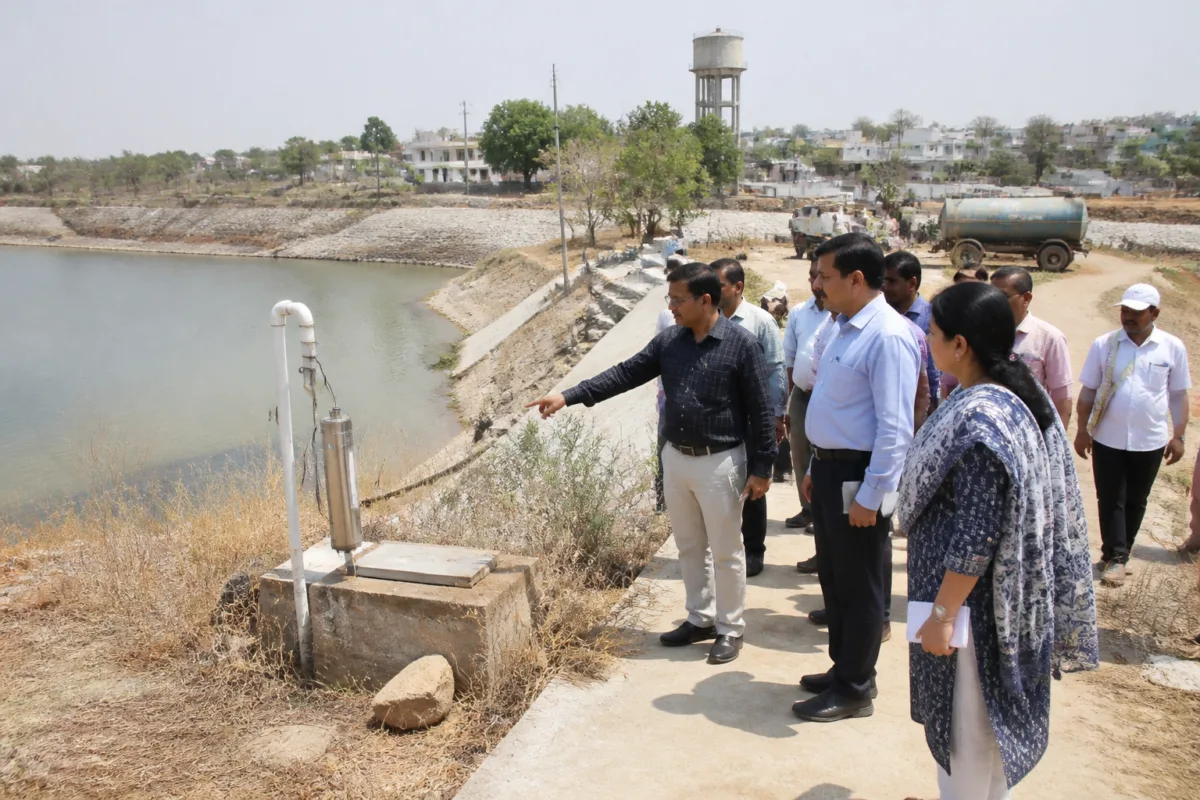
Nizamabad district has formed a multi-department monitoring committee to assess possible El Nino-related drought conditions, track water resources and coordinate preventive measures amid concerns over deficient rainfall.
District collector Ila Tripathi constituted the committee, which will review drought conditions, coordinate action between departments and monitor the implementation of mitigation plans. The additional collector (revenue) will lead the panel, while the district agriculture officer will serve as its member-convener.
The committee includes sub-collectors, revenue divisional officers, the district irrigation officer, the Mission Bhagiratha superintending engineer, the NPDCL superintending engineer, the district animal husbandry officer, the district medical and health officer, the district panchayat officer, tahsildars, mandal parishad development officers and municipal commissioners.
Its responsibilities will include a weekly assessment of rainfall deficits, groundwater levels and reservoir storage. Members will also visit villages considered vulnerable to drought and record ground-level conditions, allowing departments to prepare action plans for emerging problems.
The district administration has identified crop diversification, drinking water supply, fodder availability for livestock and uninterrupted electricity supply as priority areas. These responsibilities bring agricultural, irrigation, rural development, utility and municipal agencies into a single monitoring framework rather than leaving drought response to one department.
The committee will visit drought-vulnerable mandals and initiate preventive measures based on field assessments. According to Tripathi, members will submit daily reports on ground-level conditions so that the government can intervene in a timely manner.
The arrangement places district administration at the centre of coordinating risks that extend beyond farm output. Falling groundwater or reservoir storage can affect drinking water supply, irrigation and livestock, while electricity interruptions can disrupt water pumping and other essential services. The committee’s membership reflects these overlapping administrative responsibilities.
The announcement does not establish that a drought has already been declared in Nizamabad. It sets up a monitoring and response mechanism in anticipation of possible El Nino impacts and deficient rainfall. The immediate focus will be on collecting regular local information and identifying vulnerable villages and mandals.
The committee’s next operational steps are weekly reviews of rainfall, groundwater and reservoir conditions, visits to vulnerable areas, daily field reporting and the preparation of mitigation plans across the identified priority sectors.

