


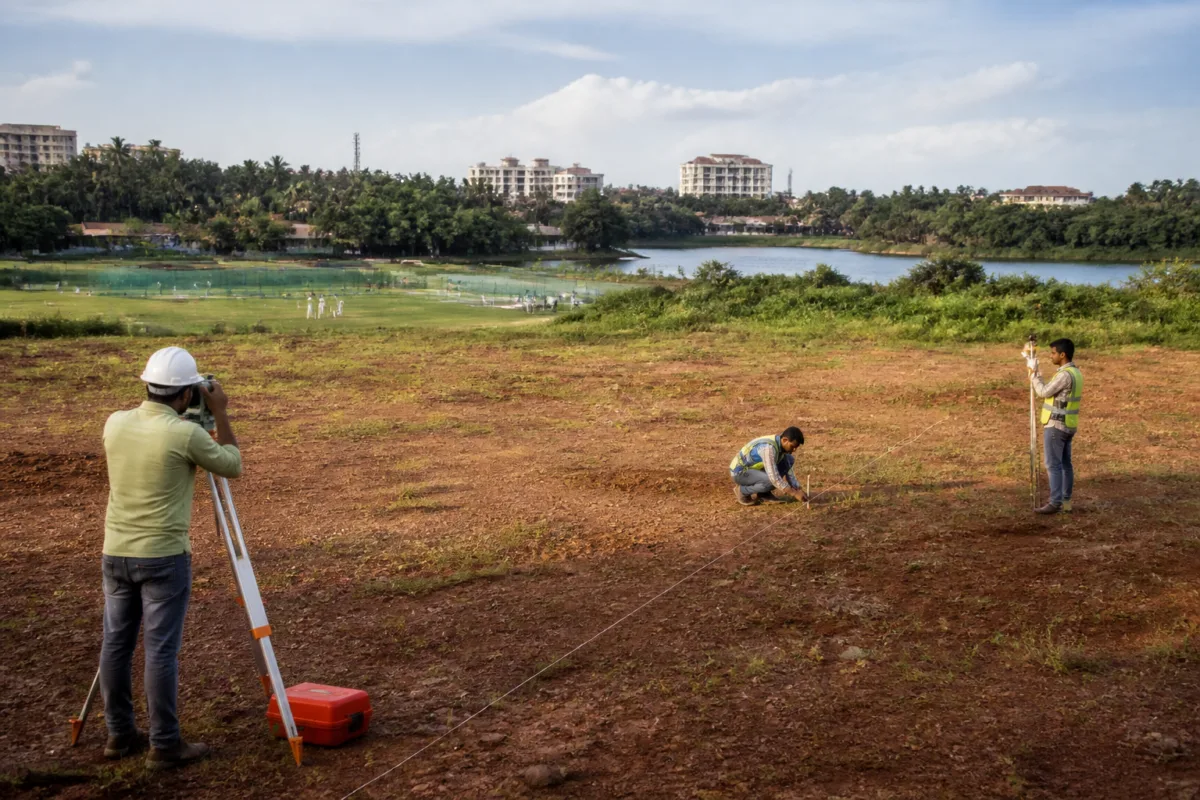
The long-running demand for a cricket stadium in Mangaluru has moved from aspiration to preliminary land identification, but the project remains at an early institutional stage. The Mangaluru Urban Development Authority (MUDA) is looking for parcels of more than 35 acres, with preference reportedly being given to a site of around 50 acres, after the Karnataka State Cricket Association (KSCA) indicated that it would build a stadium if suitable land were provided.
That distinction matters. The current development is not a construction approval, a sanctioned project or a confirmed site. It is an attempt to assemble the land and administrative support required before the KSCA can be formally invited to proceed. The report published by Prajavani on October 24 attributes the land-identification effort to MUDA chairman Santosh Kumar Shetty, who said surveyors had been assigned the task and that a communication from the KSCA had been sent to the deputy commissioner.
The proposal therefore places MUDA in a coordinating role rather than that of the stadium’s builder. Shetty said MUDA has no direct role in constructing the facility, but can act as a bridge between the government and the KSCA. This points to the central governance question surrounding the project: who will identify and secure public land, which authority will approve its use, and how will the cricket association’s construction commitment be converted into a formal implementation arrangement?
The report says land is being examined around Mangaluru and that areas near rivers are receiving attention because a cricket ground requires substantial water availability. At present, no final parcel, acquisition process, ownership structure, environmental clearance, financing arrangement or construction schedule has been identified in the supplied material. Those unanswered questions will determine whether the stadium proposal advances beyond a land search.
A full-scale stadium also requires more than a large open parcel. The proposed 35-to-50-acre range indicates the scale of land-use decision involved, although the report does not provide a final design or a list of planned facilities. A modern cricket complex could require playing and practice areas, player facilities, spectator infrastructure, parking, access roads, drainage, water systems and maintenance operations. None of those components has been formally detailed in the material available for this report.
The case for the project is being made primarily through the region’s existing cricket ecosystem. Coach Samuel Jayaraj Muthu said training is already taking place in the area, but that players face limitations because many available pitches are soil-based, while others use cement, concrete astro-turf or coconut-fibre matting. Indoor facilities are also being used, but he said they cannot substitute for an outdoor ground with a turf wicket.
That infrastructure gap has a direct effect on the type and quality of cricket that can be played. A turf wicket provides conditions different from indoor surfaces, concrete pitches and matting. Muthu argued that an equipped stadium could support better training, including access to a gym, physiotherapists and trainers. He also said the region’s climate is suitable for producing fast bowlers and for hosting four- and five-day matches after the monsoon season.
The report’s account suggests that the stadium is being presented as a talent-retention project as much as a sporting venue. Shetty said the absence of a well-equipped cricket ground means that some local talent misses opportunities, while travelling to Bengaluru for better training is not financially or practically possible for everyone. The proposed facility could therefore reduce the dependence on distant training centres, although no assessment of the number of affected players or the region’s existing facility capacity is provided.
The potential benefits would extend beyond elite cricket if the facility is planned as a wider sports and employment asset. Muthu linked the project to women’s cricket and to the hosting of Under-19 and ‘A’ team matches. He also identified jobs associated with curating pitches, marking the field, operating machinery and maintaining turf. These are specialised roles that are often overlooked when sports infrastructure is discussed only in terms of seating capacity and match hosting.
The economic argument is similarly broader than ticketed events. According to Muthu, a stadium could support activity in the hotel and transport sectors. That impact, however, would depend on the frequency and scale of matches, the facility’s connectivity, and whether the venue is used regularly for training and competitions rather than only for occasional events. The supplied report does not include projections for visitor numbers, revenue or local employment, so those benefits remain a stated expectation rather than an established outcome.
The proposed location also raises an infrastructure-planning issue. Prioritising river-side land because of water requirements may help address ground maintenance, but it makes site assessment especially important. The source material does not state whether any shortlisted land lies within a flood-prone area, an environmentally sensitive zone or an existing development-control restriction. It also does not explain whether water would come from a public supply, a local source or a dedicated management system. These details will be important before any site can be considered suitable.
The institutional arrangement described so far involves several actors. MUDA is identifying potential land and communicating with the district administration. The deputy commissioner has received the stated proposal. The district in-charge minister is reported to be interested, while KSCA president Venkatesh Prasad has indicated that the association is willing to construct a stadium if land is made available. Former India fast bowler Javagal Srinath has also reportedly encouraged the effort.
This broad political and institutional support may help move the proposal through the initial coordination stage, but support is not the same as a project sanction. A stadium would still require clarity on the land’s legal status, the transfer or lease mechanism, planning permissions, construction responsibilities, operating arrangements and long-term maintenance costs. The report does not establish that any of these steps has been completed.
The project’s present status is therefore best understood as a land-and-governance initiative. The immediate milestone is not the start of construction, but the identification of a viable site and the creation of a documented arrangement between the public authorities and the KSCA. The proposal to prioritise around 50 acres suggests that officials are considering the stadium as a substantial sports complex rather than only a cricket field, but the final land requirement remains unsettled.
For Mangaluru, the larger question is whether a long-standing demand can be converted into accountable public infrastructure planning. A stadium can support athletes, women’s cricket, local employment and visitor activity, but only if the land decision is transparent and the operating model is capable of sustaining the facility. The evidence currently confirms political and administrative interest, a search for land and a stated willingness by the KSCA to build if land is provided. It does not yet confirm a site, a budget, approvals or a construction timeline. Those are the developments that will determine whether Mangaluru’s stadium proposal becomes a project or remains an aspiration.

