


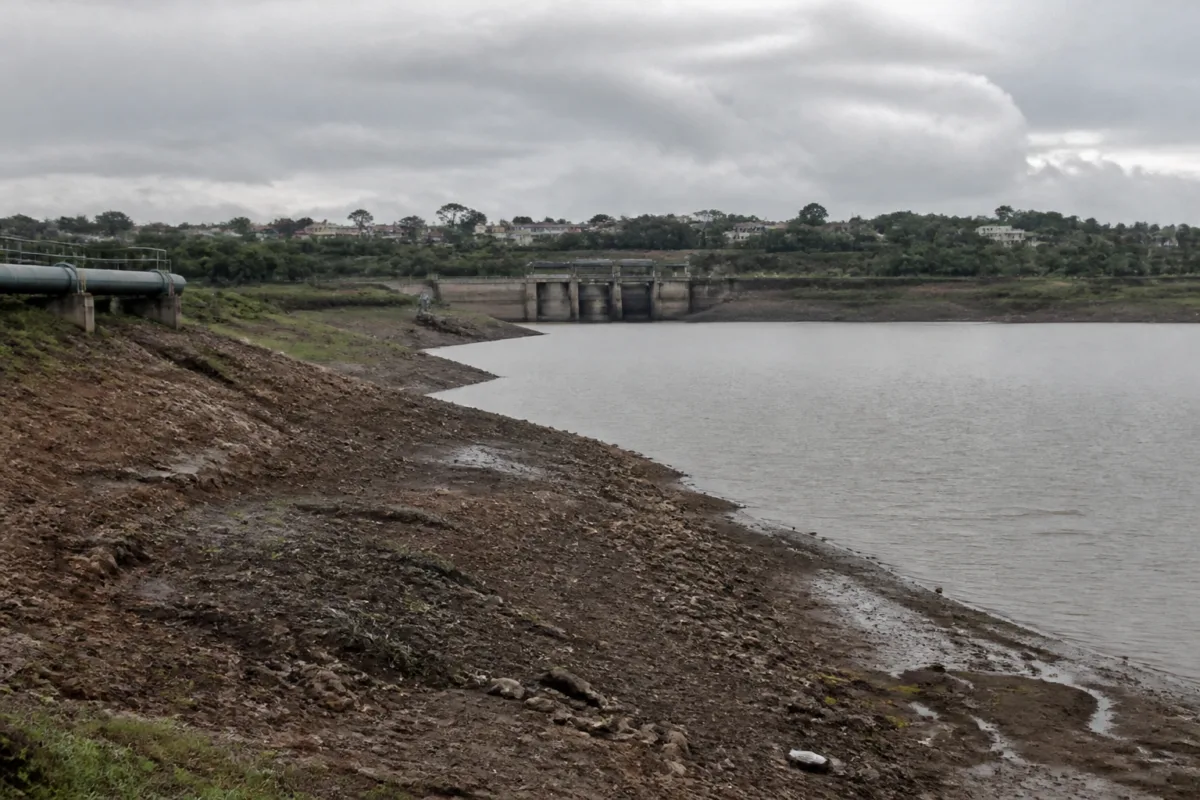
Uran will face water cuts every Tuesday and Friday after falling levels in the Ransai dam forced the Maharashtra Industrial Development Corporation (MIDC) to restrict supply until the next monsoon, affecting residents, defence installations, industrial establishments and government facilities across the taluka.
The restrictions have started earlier than usual and are likely to continue until June next year, according to a report by the Times of India. Uran typically faces water-supply restrictions from December or January, but the current decline in the reservoir has prompted MIDC to bring forward the cuts.
Ransai dam, located at Dighode village in Uran taluka, supplies about 35 million litres of water daily to Uran township, 20 gram panchayats, Nhava Sheva and government establishments. These include ONGC, the Indian Navy and Jawaharlal Nehru Port Authority. The twice-weekly interruption therefore extends beyond household supply and affects a wider network of residential, institutional and port-linked users.
The reservoir has fallen to 112 feet, with 4.650 million cubic metres of water remaining against its total capacity of 10 million cubic metres. The dam had overflowed in July, but the available storage has since declined significantly. The figures underline the uneven nature of water security in the region: a reservoir can fill during the monsoon and still face supply pressure before the following monsoon if demand and usable storage are not adequately managed.
The Maharashtra government has announced a 10% reduction in water supply across the state. Uran, however, is expected to face greater restrictions because its local supply depends substantially on Ransai dam. MIDC is planning to secure an additional 5 million litres per day from the City and Industrial Development Corporation’s Hetawane network as a supplementary source.
Sources cited in the report said accumulated sludge had reduced the effective capacity of Ransai dam. MIDC had reportedly prepared a proposal for desilting, but the work had not been carried out. The gap between the dam’s stated capacity and its usable storage has consequently become an important part of the current supply problem, although the report does not provide a revised capacity estimate after accounting for the sludge.
Residents have objected to the extended disruption and the decision to impose two fixed cut days each week. Uran resident Harish Gharat said residents had earlier faced a Friday water cut for weekly maintenance and would now have to manage a second weekly interruption. He said MIDC should have made arrangements to maintain daily supply, as Navi Mumbai Municipal Corporation had done.
The restrictions will require households and institutions to plan storage around the Tuesday and Friday cuts, while the impact on port, defence and industrial establishments will depend on the availability of alternative supply. MIDC’s proposed connection to the Hetawane network is the stated immediate response, while the timeline for securing the additional 5 million litres per day has not been specified in the supplied report.
MIDC’s restrictions are scheduled to remain in place until the next monsoon, with the additional Hetawane supply identified as the next planned measure. The duration of the cuts will depend on water availability and the implementation of the supplementary supply arrangement.

