


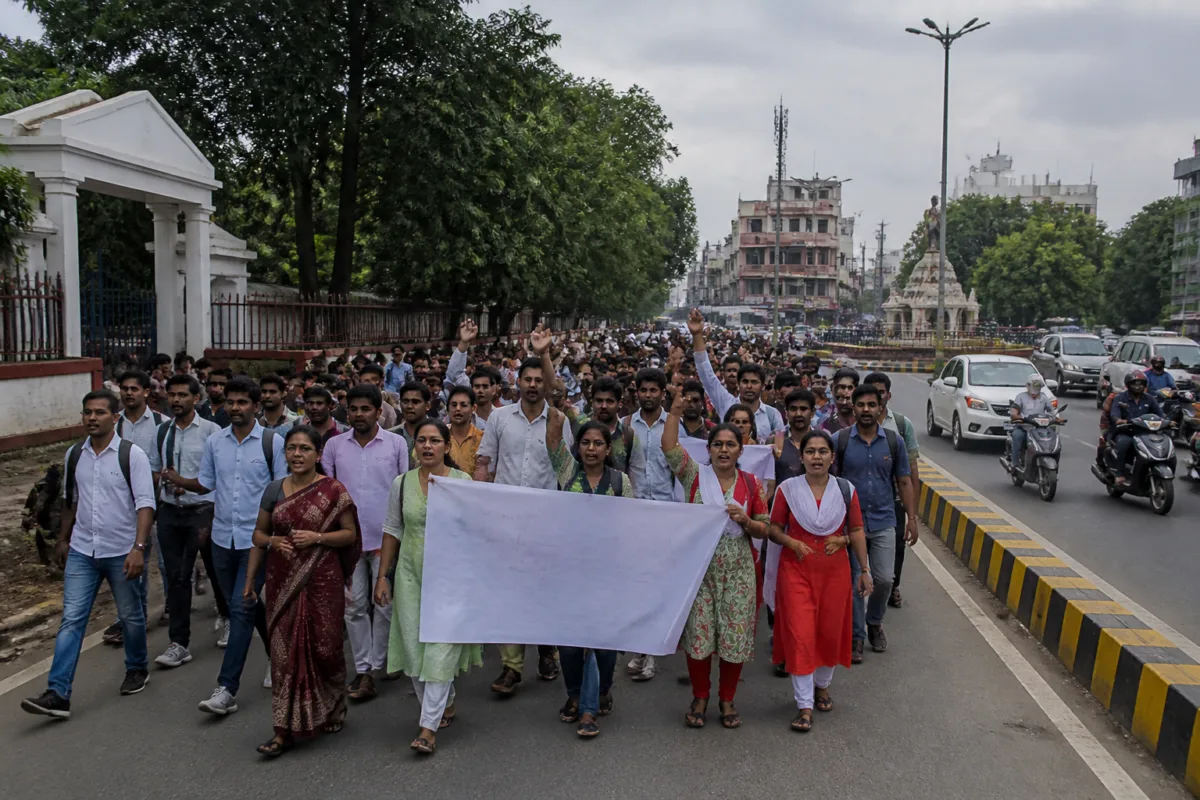
Protests against the Special Intensive Revision (SIR) of electoral rolls continued in Ranchi on Friday as student, women’s, youth and trade union groups marched from the Ranchi University gate to Albert Ekka Chowk, demanding the resignation of Chief Election Commissioner Gyanesh Kumar over alleged irregularities in the exercise.
The demonstration was organised as part of an all-India call by People Against SIR. Participants included members of Citu, Jharkhand State Kisan Sabha, the All India Lawyers Association, AISA, SFI and SUCI, among other organisations. Protesters accused the Election Commission of “vote theft” and called for Kumar’s removal and prosecution.
The groups also demanded that the Election Commission stop the SIR process and ensure that no genuine voter is excluded from the electoral rolls. Citu member Prakash Viplav said the exercise should not deprive eligible voters of their right to vote.
Protesters carried banners stating, “Har shahar Jantar Mantar, virodh hamara adhikar” — translated as “every town is now Jantar Mantar of Delhi, we have the right to protest”. Organisers said similar demonstrations had taken place in at least a dozen districts and that the campaign would continue until the Election Commission responds to concerns over transparency, alleged voter deletion and the claims-and-objections process in Jharkhand.
The Ranchi mobilisation is part of a series of protests in the state over the electoral-roll revision exercise. Congress workers had earlier marched to the Chief Electoral Officer’s office in Dhurwa, while the RJD and AISA separately held protests seeking the CEC’s resignation and a rollback of the SIR.
Concerns have also been raised about the effect of the verification process on voters in Ranchi. The city had earlier emerged among urban seats with a high share of voters marked absent or untraceable during door-to-door verification. Subsequent SIR hearings reportedly saw long queues, confusion and voters attempting to secure their names on the final roll.
The latest protest places the claims-and-objections stage at the centre of the dispute. Organisers are seeking answers from the Election Commission on how voters marked absent or untraceable can establish their eligibility and how objections to possible deletions will be handled. The report did not include a response from the Election Commission or details of any administrative action following Friday’s march.

