


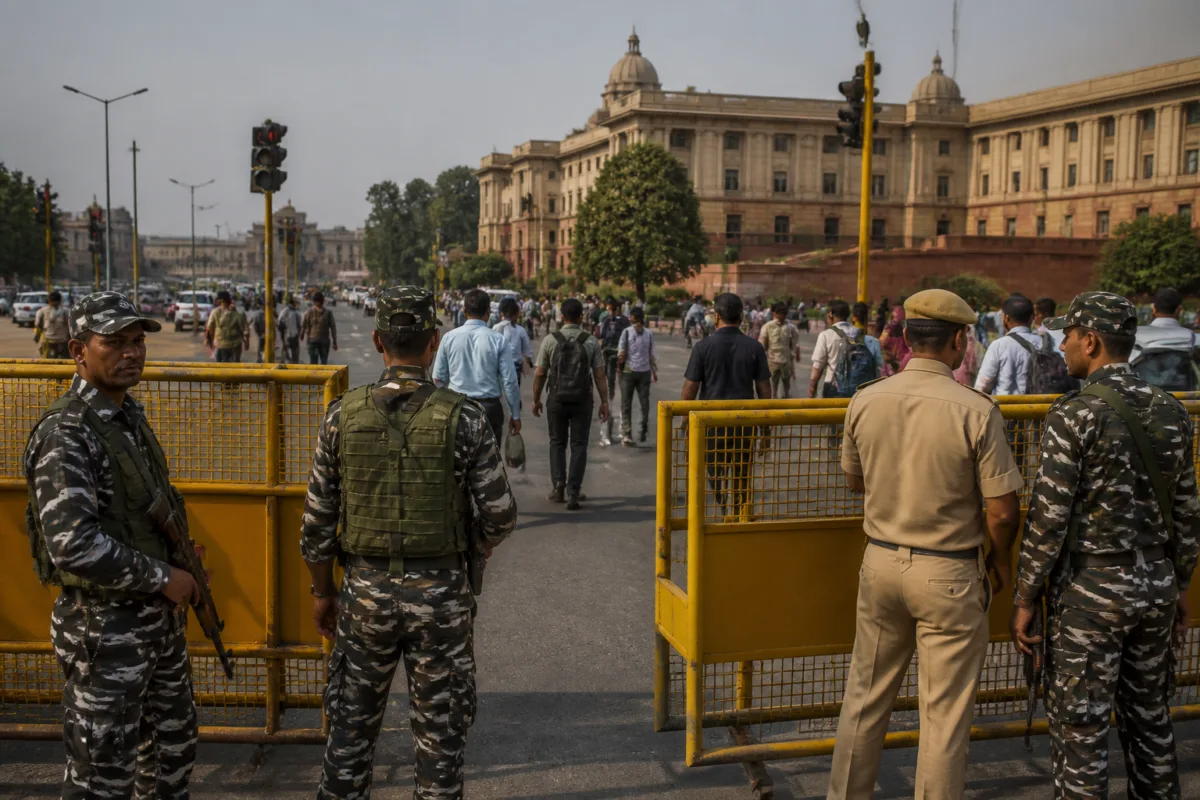
The deployment of 273 companies of the Central Armed Police Forces (CAPF) in Delhi has been extended until 31 October amid concerns over sudden protests by political and other groups, according to officials cited in a report by Live Hindustan – NCR. The extension was approved by the Union Ministry of Home Affairs on a request from the Delhi Police.
The ministry issued directions to the Delhi Police and the concerned central forces on 22 October, the report said. The deployment had already been extended once in October, and the latest decision keeps the additional central forces available in the national capital as authorities identify several locations as sensitive.
Officials cited in the report said the Delhi Police had informed the ministry that political and other organisations could organise sudden demonstrations at different locations. The extension was considered necessary to maintain law and order, according to the account. The report did not specify the locations classified as sensitive or provide details of any new restrictions associated with the deployment.
The forces were first brought to Delhi earlier this month in the wake of protests attributed in the report to the CJP over alleged irregularities in the Special Intensive Revision of electoral rolls. A protest on 10 October reportedly resulted in the detention of 7,000 demonstrators. Opposition parties subsequently held protests over the same demand, including a demonstration described as “Lahra Do Tiranga” on 16 October.
The 273 companies include 125 companies of the Central Reserve Police Force, including 20 units of women personnel. The deployment also comprises 20 companies of the Rapid Action Force, 46 of the Border Security Force, 39 of the Indo-Tibetan Border Police, 31 of the Sashastra Seema Bal and 12 of the Central Industrial Security Force. These forces are to remain deployed alongside the Delhi Police.
The extension places a large central-force presence within the city’s existing law-and-order system, in which the Delhi Police remains the local policing agency. The supplied report attributes the decision to the Delhi Police’s assessment and the Home Ministry’s approval; it does not state whether the deployment will affect routine policing, traffic management or access to public spaces outside protest-related arrangements.
The status of Jantar Mantar has also become part of the dispute over protest locations. The report said the site had been removed from the list of designated protest venues and that the government’s decision had drawn opposition. It did not provide the date of the change, the authority that issued it or details of any alternative venue.
The current extension will remain in force until 31 October, subject to any further direction from the Ministry of Home Affairs or request from the Delhi Police.

