


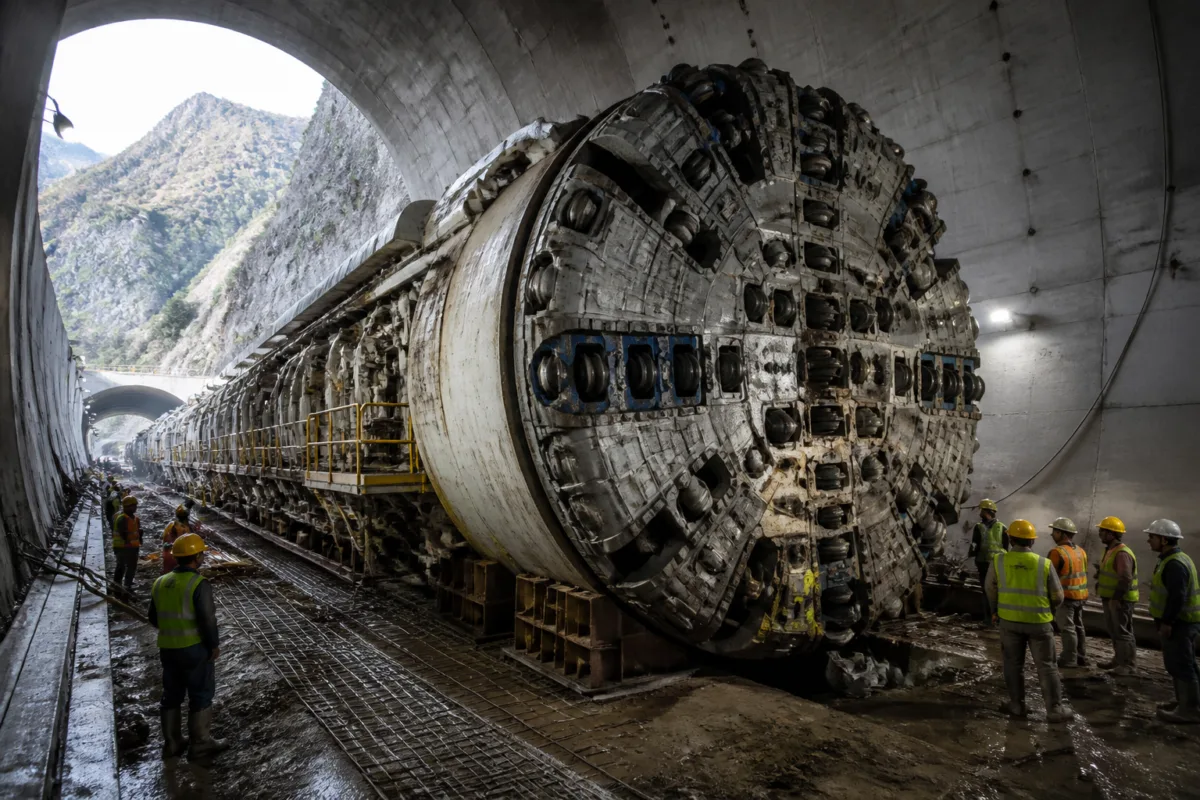
India is advancing domestic tunnel boring machine (TBM) manufacturing as construction progresses on the 125-km Rishikesh-Karnaprayag railway line in Uttarakhand, a Himalayan project where about 83% of the route is planned to run through tunnels. Railway Minister Ashwini Vaishnaw said the country now manufactures TBMs with diameters of 8 metres and 15 metres and is preparing to produce machines exceeding 16 metres.
Vaishnaw highlighted the manufacturing progress in social media posts on Thursday while discussing the engineering challenges involved in the railway line. The development comes after China introduced fresh global restrictions on TBMs, equipment used in metro rail, highway, railway and power infrastructure projects, according to the Economic Times.
India had previously depended on imported TBMs for large underground construction projects. The current effort is intended to build a domestic ecosystem covering the design, manufacturing and maintenance of the machines. TBMs are used to excavate tunnels through rock and soil while supporting the surrounding ground, making their size and engineering specifications central to the construction of long underground sections.
The Rishikesh-Karnaprayag railway line is being built through difficult Himalayan terrain and includes 16 tunnels and 19 bridges. The route’s tunnel-heavy design reflects the geographical constraints of the region, where steep slopes and complex geology make surface railway construction difficult. The line is expected to improve connectivity to several parts of Uttarakhand once completed.
The project also illustrates the scale of equipment required for infrastructure construction in challenging terrain. With 83% of the alignment passing through tunnels, the availability of suitable TBMs is directly linked to the pace and technical execution of the works. The machines must be matched to tunnel diameters, ground conditions and the specific requirements of railway construction.
The minister’s update indicates that India’s domestic capability currently covers 8-metre and 15-metre machines, while work is under way to develop equipment larger than 16 metres. No completion timeline for the expanded manufacturing capability was provided in the material available.
The railway project and the TBM manufacturing programme therefore represent two connected infrastructure efforts: building a difficult railway link in the Himalayas and reducing dependence on overseas suppliers for the equipment needed to construct it. The next milestones will be progress on the 16 tunnels and 19 bridges, alongside the development and deployment of larger domestically produced TBMs.

