


Pune’s rural water crisis is no longer being treated as a distant summer contingency. The Zilla Parishad has directed its administration to prepare a comprehensive plan for drinking water, fodder, groundwater assessment and other drought-mitigation measures, while members seek a formal role in decisions that determine how water is divided between urban and rural areas.
The immediate trigger is the possibility that water stress could intensify across the district in the months ahead. At a special meeting, Zilla Parishad members emphasised the need to reserve adequate water for villages through next summer. The administration’s proposed response will be submitted to the district collector, placing the plan within the district’s wider system of emergency coordination.
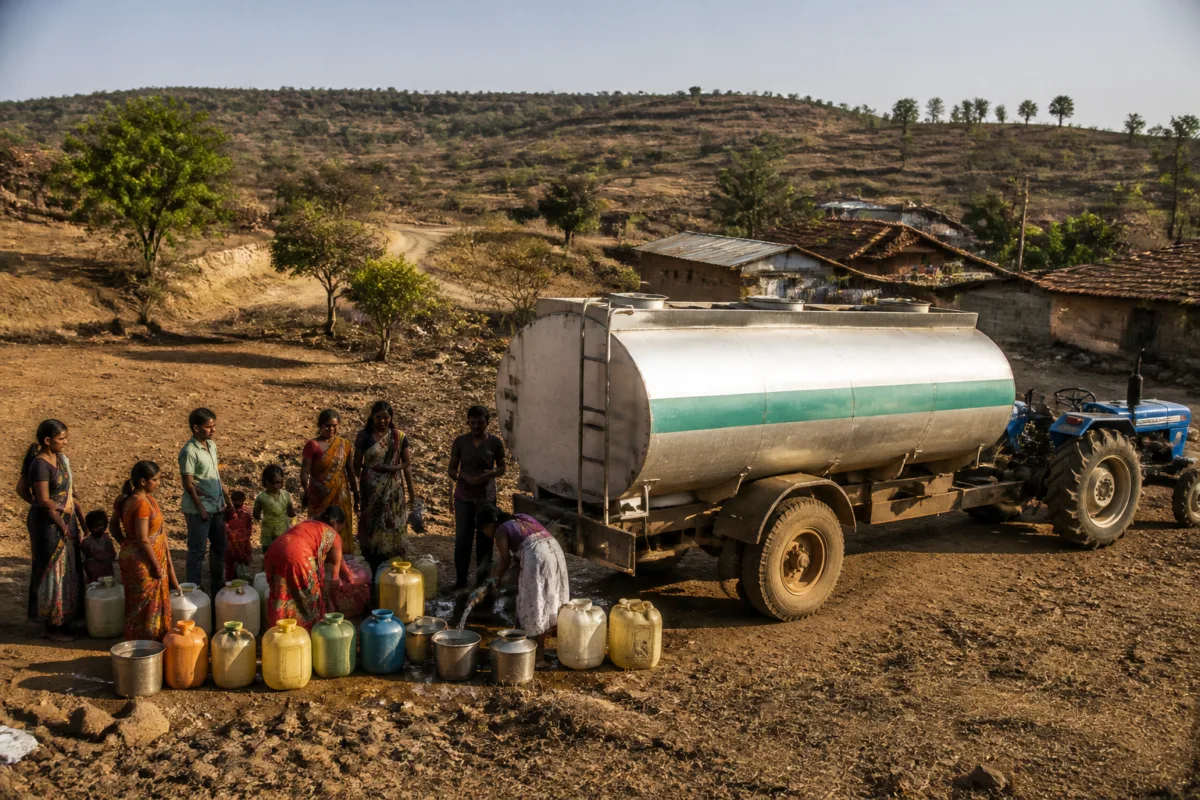
The significance of the decision is not limited to the number of villages currently receiving tankers. Eight villages are being supplied by tankers at present, according to Zilla Parishad officials. That number is expected to rise in the coming months. During the previous summer, tanker supply had to be extended to 168 villages across the district.
These figures show how quickly rural water administration can move from routine service delivery to emergency logistics. Tankers can provide an immediate supply, but their use also indicates that villages are relying on temporary arrangements rather than a fully dependable local network. The Zilla Parishad’s proposed plan therefore combines short-term measures, such as drinking water supply to scarcity-hit areas, with longer-term administrative tasks, including groundwater assessment and the acceleration of delayed tap-water schemes.
The institutional question is particularly important because the district’s water supply is connected to decisions made beyond individual villages. Zilla Parishad chairman Veerdhaval Jagdale said members wanted rural areas to receive adequate water until next summer. The Zilla Parishad has passed a resolution seeking his representation at the forthcoming Khadakwasla canal committee meeting, where water allocation for urban and rural areas is expected to be discussed.
That request reflects a division of responsibility within Pune’s water system. Rural drinking-water needs are handled through district and local administrative structures, but the availability of water is also shaped by allocation decisions involving canal systems. A rural authority may be responsible for ensuring supply to villages without controlling all the water resources needed to meet that obligation. The request for representation is an attempt to bring rural demand into the forum where allocation is discussed.
The reported decision also reveals a gap between planning for scarcity and delivering permanent infrastructure. Members raised concerns about delays in rural tap-water schemes and urged the administration to expedite pending projects. Until those schemes are completed and functioning, villages remain more exposed to seasonal shortages and dependent on emergency supply arrangements.
This creates a layered problem. A contingency plan is needed because water availability may fall short. But the need for repeated contingency planning is also connected to the incomplete implementation of assured supply projects. The two issues cannot be separated: emergency tankers address an immediate shortage, while delayed tap-water schemes prolong the conditions that make such shortages harder to manage.
The available figures also indicate that the scale of the challenge can change substantially between periods. Eight villages currently require tanker support, while 168 villages received such support during the previous summer. The difference is not a forecast of what will happen next, but it demonstrates the operational range that the district administration may have to prepare for. A plan designed only around current demand could become inadequate if conditions deteriorate.
The Zilla Parishad’s proposed framework is consequently broader than a tanker deployment schedule. It is expected to cover drinking water supply, fodder provision, groundwater assessment and other drought-mitigation measures. Fodder is included because rural water stress affects more than household consumption. The measure indicates that the district is preparing for pressures on village livelihoods and livestock alongside the immediate need for drinking water.
Groundwater assessment is another important component because it can determine whether local sources offer a viable supplement during periods of scarcity. The supplied report does not provide the findings of any assessment, nor does it identify the number or condition of groundwater sources. What it establishes is that the administration considers such an assessment necessary for planning the response.
The proposed submission to the district collector is also significant. It means the Zilla Parishad’s resolution is not, by itself, the final operating plan. The next stage is the preparation and submission of a district-level contingency document, followed by consideration within the administrative chain. The effectiveness of the response will therefore depend on how clearly the plan identifies affected villages, available sources, tanker requirements, fodder needs and responsibilities for implementation. Those details were not provided in the report.
The Khadakwasla canal committee meeting represents a separate but connected decision point. The Zilla Parishad wants its chairman to participate because the allocation discussion is expected to cover both urban and rural areas. The demand does not establish that a new allocation has been approved. It shows instead that rural representatives are seeking a seat in the process before allocation decisions are made.
This distinction matters in a water-stressed district. Contingency planning can organise the response after a shortage becomes visible, but allocation decisions influence how much water is available to different parts of the district in the first place. Without representation in that process, rural authorities may have to plan around decisions made elsewhere. With representation, they can formally present the requirements of villages before the allocation question is settled.
The report also places the current situation in the context of administrative delay. Members have urged faster implementation of pending tap-water schemes, but the supplied material does not specify which projects are delayed, their completion dates, their funding arrangements or the agencies responsible for the hold-up. These missing details are important because they determine whether the problem is one of construction, approvals, finance, source availability or coordination.
For residents, the practical consequence is a difference between an assured supply and a response that arrives only after scarcity has intensified. A tanker can protect access to drinking water in the short term, but it requires repeated deployment and does not remove the underlying dependence on emergency arrangements. A functioning tap-water scheme, by contrast, is intended to create a more regular delivery system, although the report does not provide performance information for completed schemes.
Pune’s rural water challenge therefore sits at the intersection of resource allocation and infrastructure delivery. The district must prepare for a possible increase in scarcity-hit villages while also addressing the delayed projects that could reduce dependence on emergency supply. The proposed plan acknowledges both pressures, but its success will depend on the administrative decisions that follow the resolution.
The evidence currently confirms three immediate developments: eight villages are receiving tanker water, the Zilla Parishad expects that number to rise, and a plan covering water supply, fodder, groundwater and drought mitigation is to be submitted to the district collector. It also confirms that the Zilla Parishad is seeking representation at the Khadakwasla canal committee meeting and pressing for faster completion of rural tap-water schemes. The next milestones are the preparation of the contingency plan, its submission to the collector and the canal committee’s discussion of urban and rural water allocation.

