


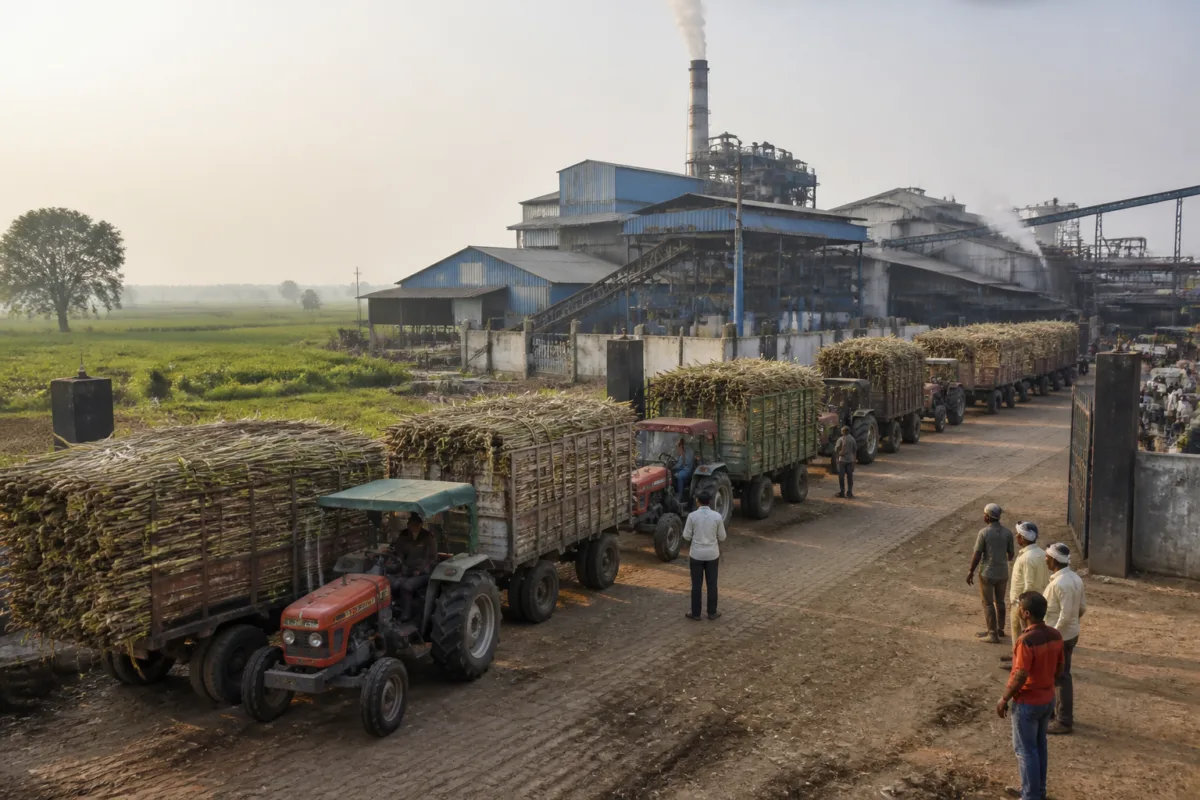
Maharashtra’s decision to restrict interest subsidies under its sugar-sector soft-loan scheme to cooperative mills has left 139 private sugar factories seeking equal access to financial support, warning that the move could affect farmer payments and preparations for the 2026-27 crushing season.
The West Indian Sugar Association (WISMA) has written to Chief Minister Devendra Fadnavis urging the state government to extend the interest subsidy to private sugar factories. The association said private mills also purchase sugarcane from farmers and face the same financial pressures as cooperative factories.
The state Cooperation Department issued the soft-loan scheme order on September 22, 2026. According to the order, banks can provide loans to cooperative sugar factories and the state will subsidise the interest on those loans until October 31, 2026. The order specifically states that private factories will not be eligible for the interest subsidy.
The scheme is intended to support long-term borrowing for clearing outstanding Fair and Remunerative Price (FRP) payments for the 2025-26 season and completing preparatory work for the ongoing 2026-27 season. Private factories have been allowed to obtain loans under the scheme, but WISMA said they would not receive the corresponding interest subsidy. The association described this as unequal treatment that could place both private mills and the farmers supplying them under financial strain.
WISMA general secretary Pandurang Raut and executive director Ajit Chougule said in their letter to the chief minister that private factories contribute substantially to Maharashtra’s sugar and ethanol production, co-generation of electricity and FRP payments. They urged the government not to differentiate between private and cooperative mills when extending financial assistance.
The association cited difficult operating conditions during the previous season. It said sugar sold at Rs 38 per kilogram, while the production cost was Rs 41.82 per kilogram. Sugarcane availability was also lower, increasing the burden of administrative and fixed costs because mills operated below their capacity. WISMA further said ethanol prices had not been increased, adding to the financial pressure on private factories.
Maharashtra had 210 factories crushing sugarcane during the previous season, including 108 private and 102 cooperative mills, according to the information cited by the association. Of the cooperative factories, 28 are operated by private entrepreneurs with government approval. The private sector has therefore argued that its role in the state’s sugar, ethanol, electricity co-generation and farmer-payment systems should be recognised in the design of the subsidy scheme.
The dispute places the state’s support mechanism at the intersection of industrial finance and farmer-payment obligations. The government order currently limits the interest subsidy to cooperative factories, while private mills are asking for the same benefit before the October 31 deadline specified in the scheme.

