


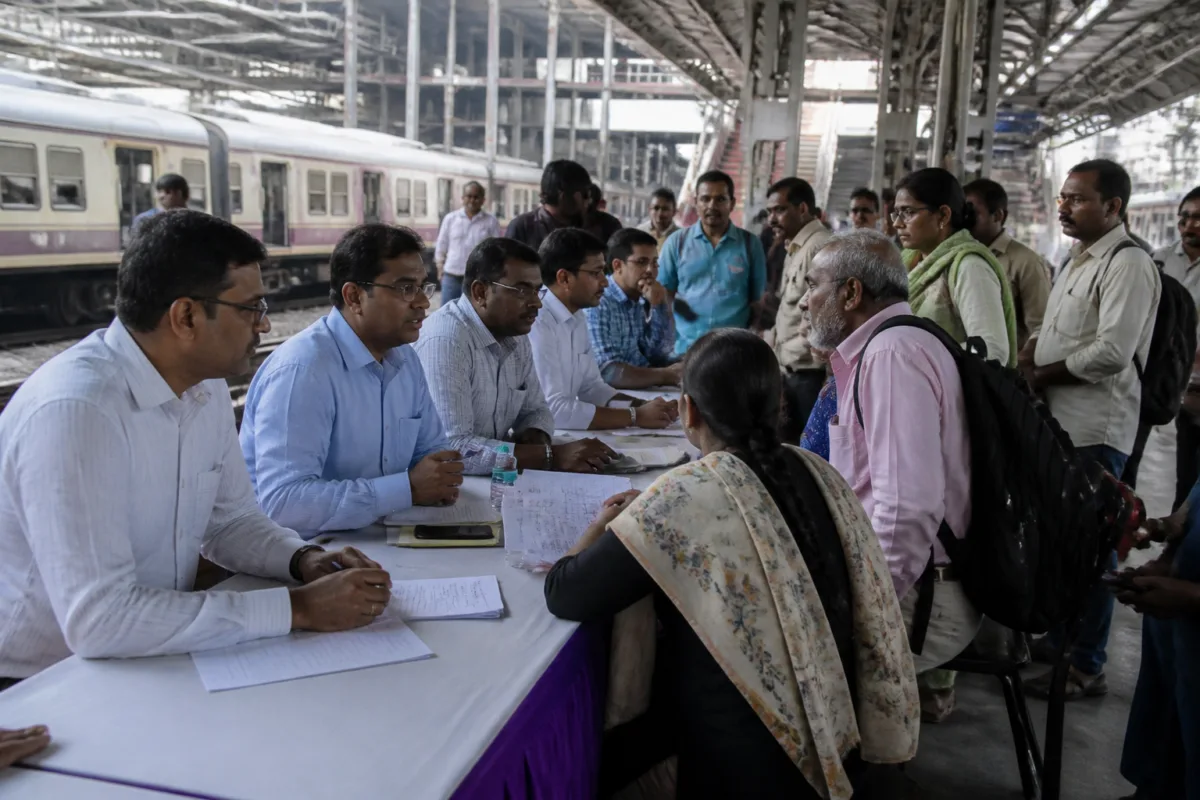
Rail Jan Samvaad will give Mumbai railway passengers an opportunity to submit grievances and suggestions directly to Central Railway officials on October 22, as the initiative is held across more than 7,000 stations nationwide.
The programme is part of Indian Railways’ campaign to strengthen passenger engagement and improve services through direct interaction with travellers. Central Railway said the event would be followed by cleanliness activities at stations on the same day.
In Mumbai, Central Railway General Manager Rajeev Shrivastava will lead the programme at Lokmanya Tilak Terminus. Nivedita Shukla Verma, Secretary of the Department of Administrative Reforms and Public Grievances and the Department of Pension and Pensioners’ Welfare, will participate in the programme at Chhatrapati Shivaji Maharaj Terminus.
Divisional Railway Managers, branch officers and staff will conduct the initiative in their respective divisions. More than 300 officers have been nominated to participate at various stations across Central Railway, according to a press release issued by the zone.
The passenger interaction is being held under the theme ‘Jan ki Awaaz Yuva ki Soch Rail ka Samadhaan’, which translates the programme’s focus into a formal effort to bring citizen feedback into railway management. Central Railway said particular emphasis would be placed on involving young people in discussions about railway facilities and services.
The initiative is part of the Special Campaign for Disposal of Pending Matters, or SCDPM6, being observed across railway zones and units from October 2 to 31. The campaign covers cleanliness, space management, disposal of scrap and electronic waste, citizen engagement and other activities linked to railway operations.
Passenger feedback collected during Rail Jan Samvaad will be divided into short-term, mid-term and long-term categories. Short-term issues will include matters that can be addressed immediately or within a brief period. Mid-term concerns will require coordination, planning and implementation by the departments concerned.
Long-term issues will involve policy changes, strategic planning or approvals from higher authorities. The categorisation is intended to help officials determine how each grievance should be handled according to its complexity and the level of administrative action required.
For passengers, the structure creates a formal route for raising concerns beyond individual complaints, although the source material does not specify the stations, departments or timelines attached to particular issues. Central Railway said the feedback would be systematically reviewed and used to encourage more responsive and citizen-centric services.
The programme will be conducted at stations across Central Railway on October 22, with senior officials and railway staff leading passenger interactions and the associated cleanliness activities.

