


Goa’s international charter season is expanding, but warmer weather in key overseas source markets is changing when tourists decide to travel. The result is a different kind of pressure on the state’s tourism economy: not an immediate collapse in demand, but delayed bookings, lower early-season prices and more uncertainty for airlines, hotels and operators planning capacity months in advance.
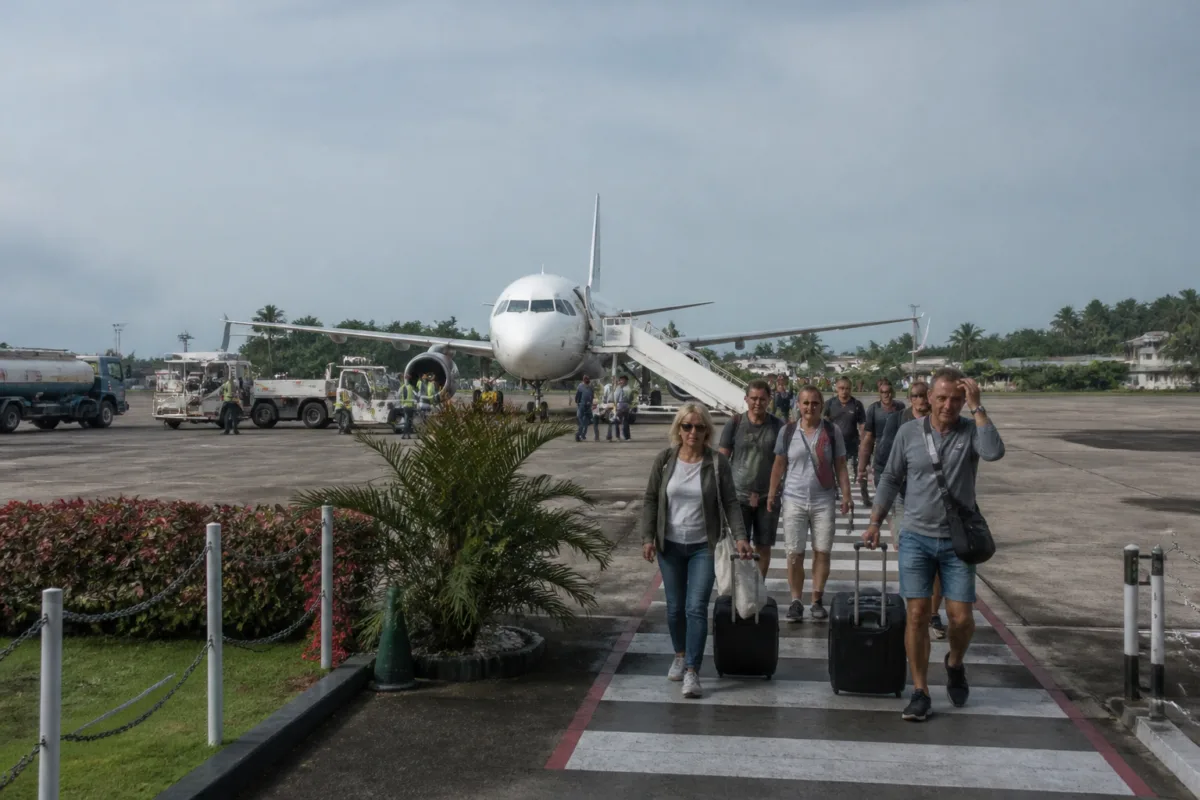
The pattern reported by the Times of India is visible in the opening of the 2026–27 charter season. An Aeroflot flight from Yekaterinburg landed at Dabolim with 162 passengers, followed by a Moscow flight carrying more than 285 passengers. Russian charter services have been operating five times a week and are expected to rise to nine weekly flights. Kazakhstan’s first charter is scheduled to arrive on October 26, with 177 passengers travelling from Almaty. Another flight from Nur Sultan is expected to bring 189 passengers to Goa International Airport.
Those numbers indicate that international connectivity is continuing. The issue is the timing and predictability of demand. Tour operators told the newspaper that many travellers from Russia, Kazakhstan and other European markets are booking only four or five days before departure. That late-booking behaviour complicates the way the tourism system normally prepares for the winter season, because airlines, accommodation providers and destination businesses must commit resources before final passenger demand is clear.
Abida Kumar, executive director of Caper Travels, attributed the slower booking pace to relatively mild conditions in source markets. “Because of El Nino, it is not very cold in their country. It is warm and pleasant. When it starts snowing, people start moving out and travelling,” Kumar said. She added that the footfall for flight bookings was slow because many foreign tourists were waiting until the last minute.
The distinction between weaker demand and delayed demand is important. Operators quoted in the report believe the warmth may change booking behaviour rather than eliminate the desire to visit Goa. Travellers who would ordinarily book early to escape harsh winter conditions may postpone their decision until temperatures fall. For Goa, that shifts the commercial risk from the peak period to the planning period: seats must be sold, rooms must be held and promotional campaigns must be funded even when the normal seasonal trigger has not arrived.
The reported weather conditions help explain why destination competition is intensifying. In parts of Europe, unusually warm October weather pushed temperatures 8°C to 12°C above seasonal averages in several western and southern regions, although the conditions varied between regions and cooler weather fronts were also moving in. Kazakhstan was also reported to be warmer than usual, with average temperatures across most regions running 1°C to 2°C above historical climatic norms after what was described as the hottest summer in the country’s history.
The article links these conditions to El Nino and a late-season heat dome. Those explanations are presented through the source report and operator comments; the immediate commercial fact is that prospective visitors are experiencing less urgency to leave home. Tourism demand is therefore responding not only to airfare, hotel rates and destination marketing, but also to whether winter feels sufficiently severe in the markets Goa depends on.
That makes Goa’s charter model particularly sensitive to timing. A charter programme concentrates travel demand into planned flights, often supported by tour operators and accommodation packages. When passengers book close to departure, the system has less time to optimise seat occupancy and room inventory. Operators may respond by cutting prices, adding promotions or changing the number of flights scheduled for particular months. Each response can protect passenger volumes, but it can also reduce the certainty and pricing power that businesses expect from a high-season market.
The first response described by operators is price competition. Flight prices are being reduced, while hotels are lowering tariffs and offering packages for the first charter arrivals through November. The objective is to persuade travellers to move before colder weather arrives in their home markets. This is not simply a discounting decision by individual hotels. It reflects how closely Goa’s airport activity, accommodation demand, tour operations and local visitor spending are connected.
The second response is a possible shift in capacity. Operators said additional Kazakhstan flights would be added in December because travellers appeared reluctant to fly in October and November. In practical terms, the charter calendar is being adjusted around a delayed winter signal. Capacity is not being withdrawn altogether; it is being moved towards the period when operators expect the underlying travel motivation to strengthen.
The third pressure comes from competing destinations. A tour operator focusing on Europe and Russia said China and Vietnam were using the warm spell to offer better deals. This adds a destination-marketing dimension to the weather change. Goa is not competing only against other beach destinations on scenery, hospitality or flight time. It is also competing against places that can use aggressive pricing when travellers are less motivated to escape the climate at home.
For Goa’s urban economy, the consequences extend beyond the airport. International charter passengers support accommodation, transport, restaurants, retail, entertainment and other tourism-linked services. The source material does not quantify the employment or local revenue associated with the charter season, but it shows how a change in booking timing can travel through the wider system. A passenger who books late affects the airline’s seat planning, the hotel’s room inventory and the timing of spending across the destination.
The airport geography also matters. Dabolim and Manohar International Airport are both part of the season’s operating pattern, with flights arriving from Russian and Kazakh cities. The existence of two international gateways gives operators room to distribute arrivals, but the report does not establish how passenger flows or airline schedules are divided between them. What is clear is that airport connectivity alone does not guarantee stable tourism demand. The usefulness of that connectivity depends on the timing, affordability and perceived value of travel.
Goa’s immediate policy and administrative challenge is therefore coordination. Airlines and charter operators set flight capacity, tour companies manage bookings, hotels determine packages and tariffs, and airports handle passenger flows. These decisions are commercially separate but operationally linked. A late shift in bookings can leave each participant responding independently, even though the underlying cause is shared across the market.
The reported increase in Russian flights and the planned Kazakhstan arrivals show that operators continue to see value in the winter market. At the same time, the use of discounts and the postponement of additional flights show that capacity growth is being accompanied by demand uncertainty. This combination is more complicated than a simple story of tourism expansion. Goa may receive more international flights while businesses still face pressure to fill seats and rooms at the right time and at viable prices.
The numbers in the report also show why small changes in booking behaviour can have operational significance. One Yekaterinburg charter carried 162 passengers, while the Moscow flight carried more than 285. The planned Kazakhstan flights are expected to carry 177 and 189 passengers. Repeated across five weekly Russian services, and potentially nine weekly services, these arrivals create a substantial flow of visitors. But the report does not establish the total number of passengers expected for the full season, final occupancy levels or the financial effect of the price reductions.
That missing information is important for assessing whether Goa is experiencing a temporary delay or a deeper change in seasonal demand. The source report records operator expectations, planned flights and weather patterns, but it does not provide a complete comparison with previous charter seasons. It also does not establish whether the late bookings will convert into equivalent total arrivals by the end of winter. The evidence therefore supports a clear conclusion about changing timing, but not a final conclusion about the season’s overall performance.
The larger urban question is how tourism-dependent destinations plan infrastructure and services when climate conditions alter demand signals. Goa’s airports, hotels and transport networks are built around recurring seasonal patterns. If those patterns become less predictable, businesses and authorities may need to manage a wider range of possible arrival schedules, price points and peak periods. The current charter season offers an early example of that adjustment, with warmer weather delaying decisions rather than removing the market altogether.
For now, the evidence points to a tourism system adapting through discounts, promotional packages and revised flight scheduling. Russian charter operations are continuing, Kazakhstan services are being added, and operators remain focused on converting late demand into bookings. What remains uncertain is whether colder weather will trigger the expected rush, how much capacity will ultimately be used, and whether competing destinations will retain their advantage through pricing. Those developments will determine whether Goa’s warmer start is a short-term booking delay or a more lasting change in the way its international winter market functions.

