


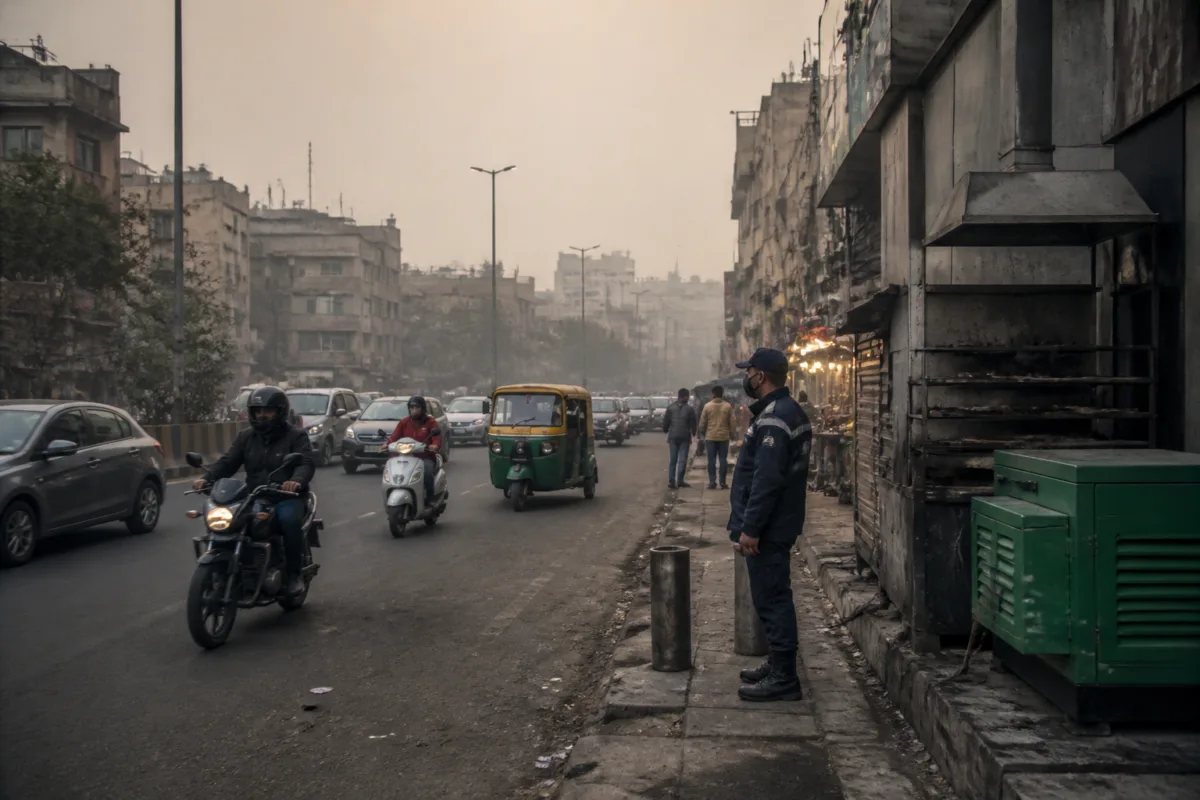
The Commission for Air Quality Management has imposed Stage 1 measures under the Graded Response Action Plan across Delhi-NCR after Delhi’s air quality deteriorated from the moderate to the poor category within a day, triggering restrictions aimed at preventing further pollution build-up.
The Air Quality Index in Delhi was recorded at 179, classified as moderate, on October 20. It rose to 244 at 2 pm on October 21, placing it in the poor category, according to a statement issued by the CAQM. The commission said forecasts from the India Meteorological Department and the Indian Institute of Tropical Meteorology indicated that air quality was likely to remain in the poor category over the coming days.
GRAP-1 applies when the AQI is between 201 and 300. The first-stage measures include a ban on the use of coal and firewood as fuel in tandoors at hotels, restaurants and open eateries. Establishments using these fuels will therefore need to shift to permitted alternatives while the restrictions remain in force.
The measures also limit the use of diesel generator sets. Under the Stage 1 curbs, diesel generators are allowed only for emergency or essential services. The restriction is intended to reduce additional emissions from backup power systems, particularly during periods when atmospheric conditions are already contributing to poor air quality.
GRAP is designed as a graded framework under which increasingly stringent measures are introduced as pollution levels worsen. Stage 2 is applied when the AQI reaches the very poor category, while further stages are intended for severe and more hazardous conditions. The framework allows authorities in Delhi-NCR to respond to changing air quality without waiting for pollution to reach its highest levels.
The latest deterioration highlights the speed at which conditions can change across the National Capital Region. Delhi’s AQI increased by 65 points between the reading recorded on October 20 and the afternoon reading on October 21. The CAQM’s decision was based not only on the recorded index but also on forecasts that the poor category would persist in the following days.
For residents, the immediate effect of GRAP-1 is likely to be most visible around restaurants, roadside eateries and commercial premises that rely on coal- or firewood-fired cooking equipment. Businesses operating diesel generators will also face tighter limits on when those systems can be used. The restrictions are part of a regional emergency response framework rather than a permanent change to operating rules.
The CAQM has not indicated in the supplied statement when the Stage 1 measures will be withdrawn. Their continuation will depend on subsequent air-quality readings and forecasts from the relevant monitoring and forecasting agencies.

