


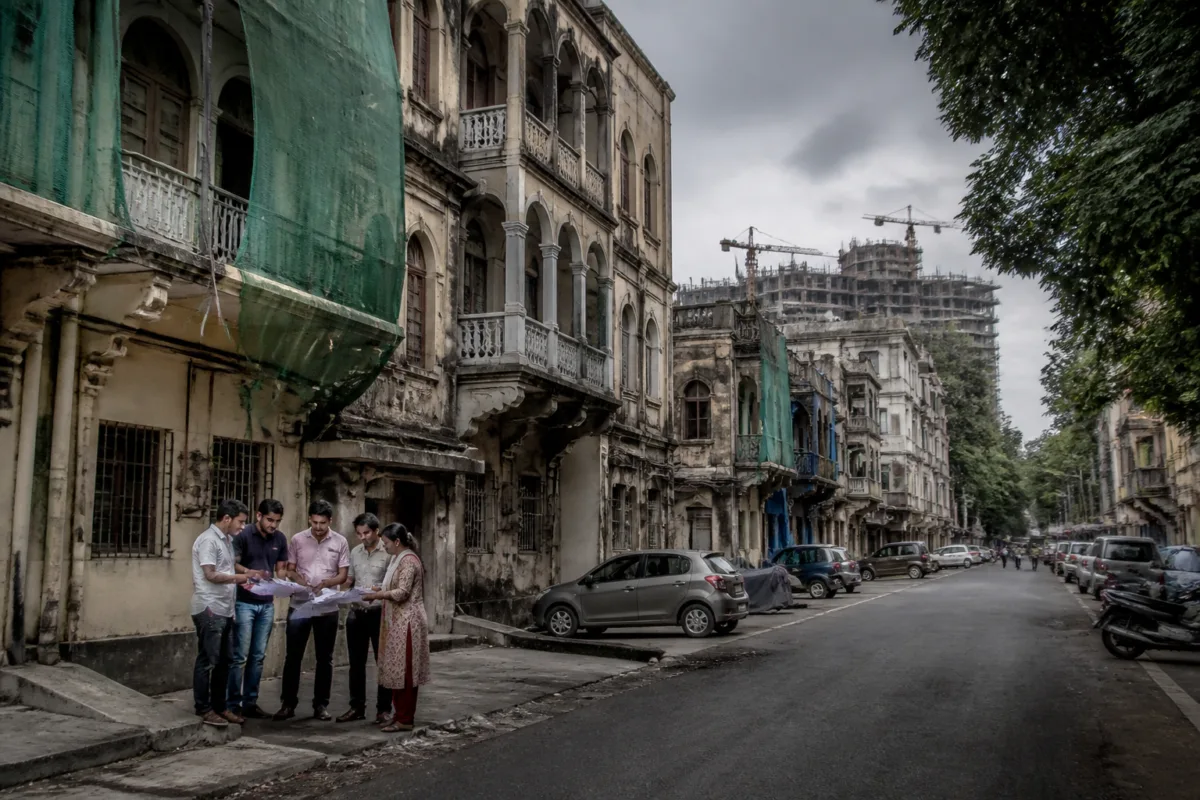
The proposed Floor Space Index (FSI) framework for Pune Cantonment has exposed a larger problem than a disagreement over a planning number: thousands of property owners still do not have clear, predictable rules for rebuilding ageing homes. Residents, civic activists and former Pune Cantonment Board members are asking the Directorate General of Defence Estates (DGDE) to permit a uniform FSI of 2 across civilian areas instead of introducing four categories with different development limits.
The draft framework has been opened for public suggestions and objections by the Defence Ministry. That process gives residents an opportunity to challenge the proposed system, but it also places the responsibility for clarity on the authority preparing the rules. Property owners want the DGDE to explain how each property will be classified, what plot-wise eligibility will mean and under what conditions additional FSI may be granted.
The dispute is therefore not only about whether the final permissible FSI should be 2 or whether it should vary by category. It is about whether residents can understand the development rights attached to their properties before they invest in repairs, reconstruction plans or redevelopment proposals. Without that clarity, the formal opening of public feedback may not resolve the uncertainty that has already delayed rebuilding in Pune Camp.
## Why Pune Cantonment FSI rules matter
FSI determines the amount of built-up area that can be constructed on a plot in relation to its size. In a redevelopment setting, that calculation affects whether an ageing structure can be replaced, how much floor area can be created and whether a project is financially or practically feasible. The proposed framework would link permissible FSI to a four-category system, but the supplied report does not specify the categories or their exact limits.
That missing information is central to the residents’ objection. A category-based system can only be assessed if property owners know the criteria used to place properties in each category. They are seeking disclosure of the classification method, plot-wise eligibility, the conditions for obtaining additional FSI and the reasoning behind the proposed limits. Until these details are available, owners may be unable to determine what kind of redevelopment is possible on their land.
The concern is especially significant because the proposed rules would affect around 2,500 properties in the cantonment area. The number indicates that the issue extends beyond a small group of individual redevelopment applications. It concerns a substantial residential building stock and a common regulatory framework that could influence how properties are repaired, reconstructed or redeveloped over time.
Residents also say that many buildings have been waiting for years for reconstruction. According to the report, several structures require substantial repairs or rebuilding, while restrictions on construction permissions have limited some owners to minor repairs. In such a setting, a new framework that introduces additional categories without clearly explaining the route to approval could prolong existing delays rather than settle them.
## A planning framework must be understandable at plot level
For property owners, a redevelopment rule becomes meaningful only when it can be applied to a specific plot. General references to categories are not enough if residents cannot determine which category covers their property, what FSI is available, what approvals are required and whether additional development potential can be secured.
This is the institutional gap at the centre of the Pune Camp debate. The DGDE is being asked not simply to change the proposed number but to publish the administrative logic behind the number. Residents want to know how decisions will be made before they submit proposals or commit resources. That demand connects FSI regulation with a broader question of governance: whether planning rules are transparent enough for ordinary property owners to use.
The request for a uniform FSI of 2 is partly an argument for predictability. A common standard across civilian areas, residents argue, would avoid differences that could leave similarly placed property owners with different redevelopment opportunities. It would also reduce uncertainty about the starting point for planning a reconstruction project.
However, the supplied material does not establish whether the authority has accepted the demand, whether a uniform FSI is technically or legally feasible, or what the four proposed categories contain. Those questions remain open as the public objection process continues. The available information confirms the residents’ position and the existence of the draft proposal, but not the final policy outcome.
## The safety and housing dimension
The redevelopment question has a direct housing dimension because residents describe many buildings as ageing and in need of substantial repairs or reconstruction. Where permissions permit only minor repairs, owners may not have a clear regulatory pathway to replace a structure that has reached the limits of repair. The report does not provide structural assessments or details of individual buildings, so the condition of the entire housing stock cannot be independently measured from the supplied material.
Even so, the stated conflict between ageing buildings and restricted construction permissions identifies a practical pressure point. A framework that governs redevelopment must account for the difference between routine maintenance and the reconstruction of a building that can no longer be adequately maintained through minor work. If the rules do not make that distinction clear, owners may remain caught between the need to rebuild and the limits of what permissions allow.
The proposed link between plot size and permissible FSI has added to residents’ concern. They fear that some properties could receive more restrictive redevelopment opportunities because of their plot dimensions. The report does not state how plot size would be assessed or how the categories would operate, but the concern shows why plot-wise rules and publicly available criteria are important to the consultation.
For residents, the consequences are likely to be experienced through individual applications: whether a plan can be submitted, how much floor area can be approved, what conditions are attached and how long the process takes. For the authority, the challenge is to create a framework that can be applied consistently across thousands of properties without leaving basic eligibility questions to case-by-case interpretation.
## What the public consultation must clarify
The consultation is the immediate administrative stage in the process. Residents, activists and former Pune Cantonment Board members have used it to oppose the proposed four-category approach and to seek a uniform FSI of 2 for civilian settlements. Their submissions also call for clarity on the criteria used to classify properties and on the conditions for additional FSI.
Those demands point to four areas requiring explanation in the final framework: the definition of each category, the method for assigning individual properties, the baseline FSI available to each category and the circumstances in which additional FSI may be allowed. The source material does not say whether the draft already contains these details in a separate document or whether they remain unclear to residents. That distinction will matter when the objections are considered.
The authority’s response will also determine whether the consultation changes the proposal or merely records opposition to it. A clear final framework would need to show how public objections were examined and how the adopted rules address redevelopment delays. Without such information, property owners may continue to face uncertainty even after the notification process is completed.
The issue also involves the institutional setting of Pune Cantonment. The proposal has been made through the Defence Ministry and is being discussed with reference to the DGDE, while the affected properties are in civilian areas of the cantonment. The supplied report does not detail the respective powers of the Defence Ministry, DGDE or Pune Cantonment Board in approving redevelopment. That institutional division is itself relevant because residents need to know which authority decides classification, grants permissions and resolves objections.
## The larger urban question
Pune Camp’s FSI dispute shows how redevelopment can become difficult when land-use controls, building permissions and institutional responsibilities overlap. The immediate demand is for a uniform FSI of 2, but the underlying requirement is a system that lets residents understand their rights before they attempt to rebuild.
The proposed rules will affect around 2,500 properties, according to the report, making transparency and consistency important beyond individual applications. If the final framework explains categories, plot-wise eligibility and additional FSI in accessible terms, it could provide a clearer basis for redevelopment decisions. If those elements remain uncertain, the new system may add another layer to the delays residents say they have already experienced.
The evidence currently establishes that the draft is open for public feedback, that residents are seeking a uniform FSI of 2 and that concerns centre on ageing buildings, restricted permissions and unclear classification criteria. It does not establish the final FSI limits, the full category definitions, the approval timeline or the authority’s response to the objections. Those are the next facts to watch as the consultation moves forward.

