


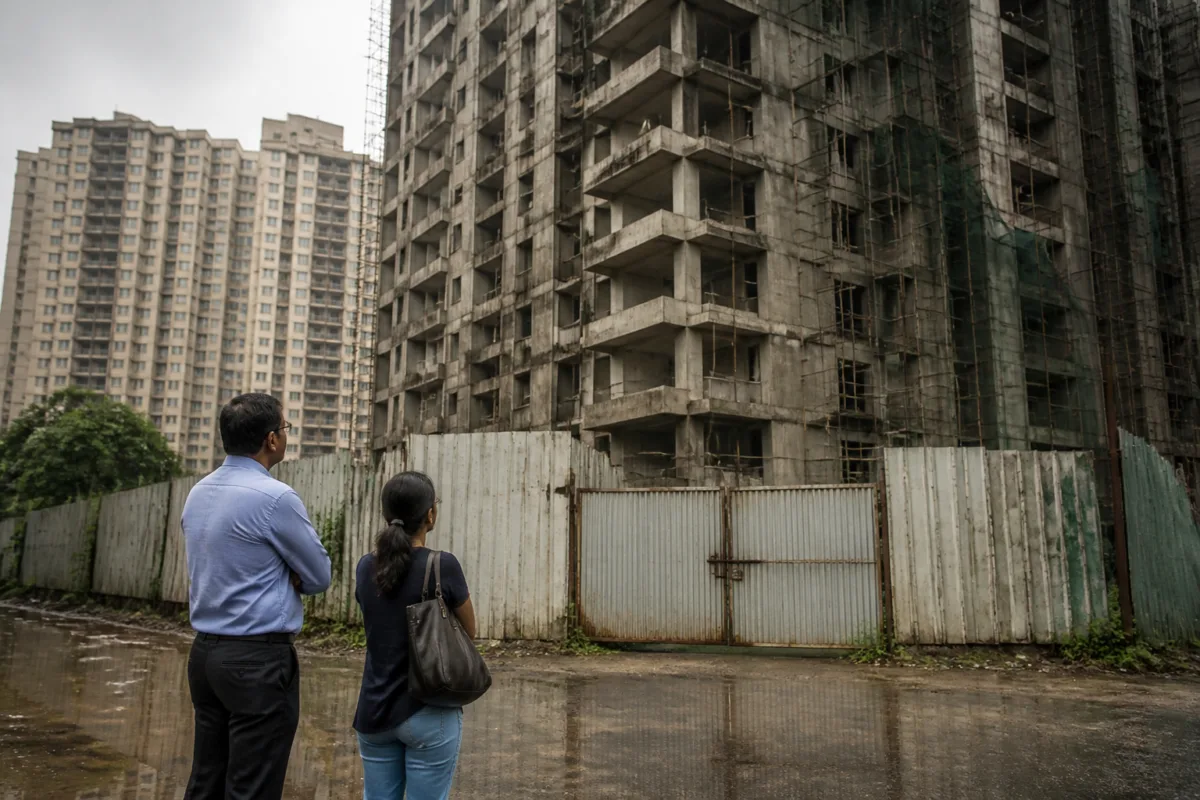
The Bombay High Court’s ruling in favour of two delayed-project homebuyers has placed a significant limit on how developers can use revised possession dates, continued instalment payments and contractual clauses to contest interest claims. The court held that buyers who remain in a project after its promised completion date retain an unconditional right to monthly interest under Section 18 of the Real Estate (Regulation and Development) Act, or RERA.
The dispute concerned an apartment whose sale agreement was signed in 2014 and possession was promised by June 30, 2017. The flat’s stated consideration was Rs 1.95 crore, while the buyers had paid Rs 2.06 crore by the time of their complaint, including amounts towards the consideration, stamp duty, registration charges and applicable taxes. They did not receive possession by the agreed deadline and approached MahaRERA seeking possession and interest for the delay.
The case is important because delayed possession disputes often involve buyers who continue paying instalments while waiting for a project to be completed. Developers may argue that such conduct shows acceptance of revised timelines. The Bombay High Court rejected that interpretation in this case, holding that a buyer’s decision to remain invested in a delayed project does not, by itself, amount to a waiver of the statutory right to interest.
The ruling therefore separates two issues that are frequently combined in project-delay disputes: whether a buyer continues with the contract, and whether the buyer remains entitled to compensation for the developer’s failure to meet the original possession deadline. Under the court’s interpretation, choosing delayed performance does not extinguish the interest entitlement created by Section 18 of RERA.
The institutional path of the dispute also shows how homebuyer claims move through the regulatory and judicial system. In January 2019, MahaRERA directed the developer to hand over the apartment with an occupancy certificate by December 31, 2019. It allowed the buyers to seek interest at a later stage. The buyers then appealed, and in March 2021 the Maharashtra Real Estate Appellate Tribunal directed the promoter to pay interest at the State Bank of India’s highest marginal cost of lending rate plus 2 percent on the amount paid, from July 1, 2017, until possession was handed over. The tribunal also awarded Rs 25,000 in costs.
The developer challenged the tribunal’s order before the Bombay High Court. Its argument was that the buyers had continued paying instalments under revised schedules and had not objected to letters communicating new possession dates. The promoter relied on Section 55 of the Indian Contract Act, which deals with the consequences of accepting delayed contractual performance without notifying the other party of an intention to claim compensation. It also invoked force majeure provisions and the Covid-19 pandemic.
The High Court treated RERA as the more specific law governing the real estate dispute. According to the account of the ruling, the court held that Section 18 gives a buyer who stays with a delayed project an “unqualified absolute right” to monthly interest. The protection could not be made conditional on issuing the notice contemplated under Section 55 of the Contract Act. In the court’s reasoning, RERA, as a special legislation for the real estate sector, prevails over a general contractual provision where the two conflict.
This distinction matters because the practical power in a delayed housing project is rarely balanced. A buyer may have invested substantial savings, paid taxes and registration charges, serviced a home loan or continued meeting instalment demands while having limited ability to force construction to resume. The court’s approach means that continued participation in the project cannot automatically be treated as a voluntary acceptance of indefinite delay.
The ruling also examined the nature of the developer’s communications. The court found that the letters primarily informed buyers about delays and offered assurances about completion. They were not, on the facts reported, evidence of a formal renegotiation that extinguished the buyers’ existing rights. The judgment stated that the revised timelines were framed as information requiring no further acts by the allottees.
That reasoning places importance on the difference between an announcement and a legally compliant extension. The developer’s letters could communicate a changed expectation, but they did not necessarily create a new contractual possession date. The court also noted that, even if the buyers had accepted the revised date, that acceptance would not by itself remove their statutory entitlement to interest under Section 18.
The court’s treatment of the pandemic defence reinforces the importance of the original contractual deadline. The promised possession date was June 30, 2017. The project’s revised completion date under its RERA registration was December 31, 2019. Since the Covid-19 pandemic occurred after both dates, the court held that it did not affect performance of the contract in this dispute. The finding does not establish a universal outcome for every project affected by the pandemic; it addresses the chronology of this particular case.
The decision also dealt with the period from which interest was payable. The court upheld interest from July 1, 2017, the day after the original possession deadline, even though that date preceded the enactment of RERA. This is a significant aspect of the ruling because it links the interest calculation to the contractual default date rather than limiting the buyer’s claim to a later regulatory milestone.
For buyers, the immediate lesson from the ruling is that continuing to wait for possession does not necessarily mean surrendering a claim for delayed-possession interest. The reported legal interpretation also indicates that buyers should preserve agreements, payment records, developer communications and regulatory orders, since the character of revised timelines and the evidence of any formal extension can become central to the dispute.
For developers, the ruling points to a more demanding compliance pathway when project timelines slip. According to the legal explanation cited in the report, formal extension under RERA, rather than letters simply announcing new dates, is the relevant route. The process may involve approval from two-thirds of the allottees and approval from the regulator, as applicable to the project and the requested extension. The ruling therefore treats administrative procedure as more than a technical formality: it determines whether a changed completion date can affect buyer rights.
This is where the case moves beyond a dispute between two buyers and one promoter. Housing projects operate through a chain of contractual promises, regulatory registrations, construction schedules, lender commitments and occupancy approvals. When possession dates move without a corresponding formal process, the uncertainty is transferred to buyers while the project continues to rely on their payments. The court’s decision places greater weight on the registered and contractual obligations that structure this relationship.
At the same time, the ruling’s final legal position is not settled. The developer challenged the Bombay High Court decision before the Supreme Court through a special leave petition filed on July 24, 2026. The report states that an out-of-court settlement was initially being explored, but that the developer later indicated an intention to seek a full-fledged hearing. The Supreme Court’s response will determine whether the High Court’s interpretation remains operative or is modified.
The case thus confirms a strong homebuyer-facing interpretation of Section 18 at the High Court level, while leaving a larger legal question open: how far can general principles under the Contract Act operate in disputes governed by RERA? Until the Supreme Court addresses the challenge, the Bombay High Court ruling remains an important reference point for delayed-possession claims in Maharashtra, particularly where buyers have continued with the project instead of withdrawing from it.

