


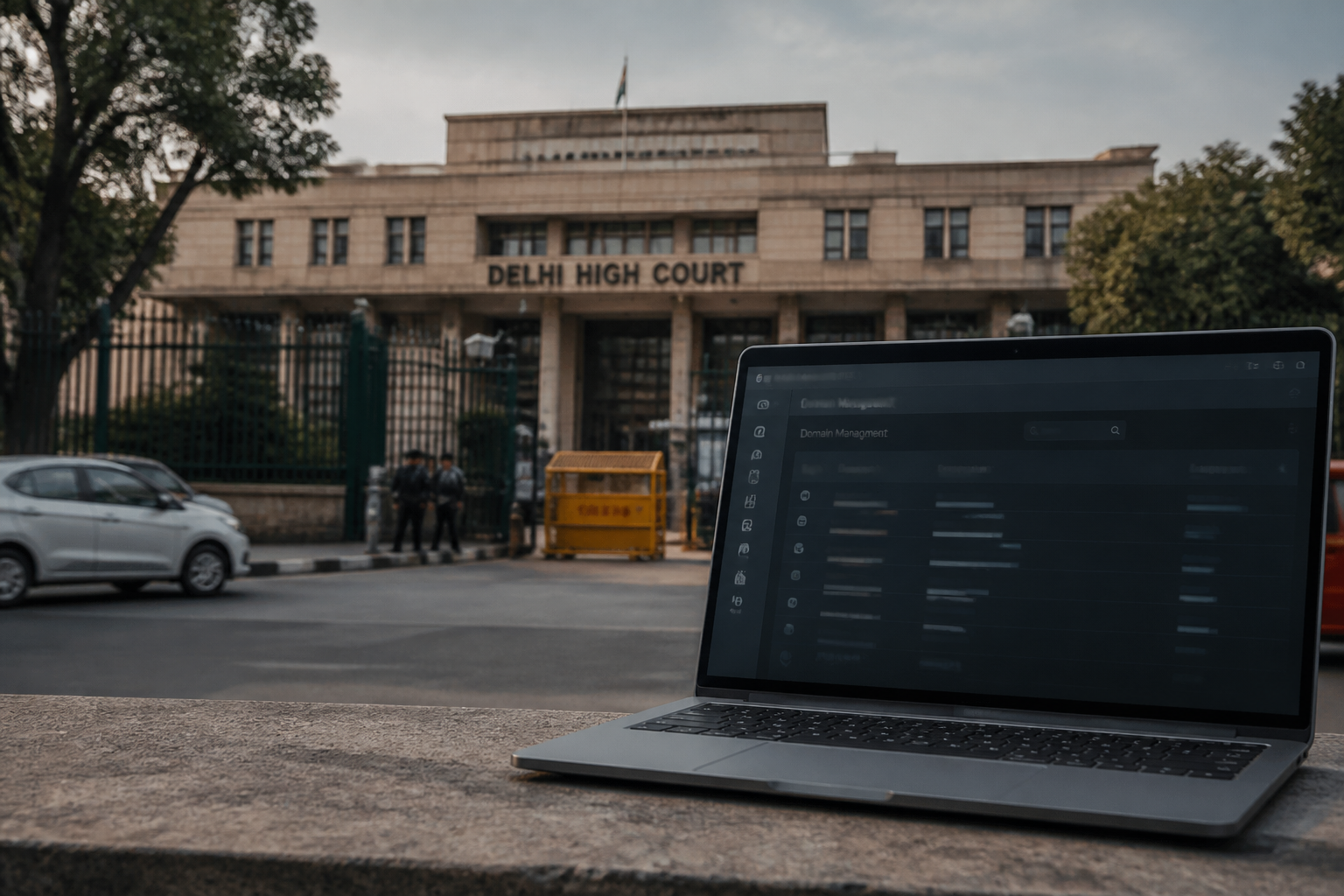
The Delhi High Court’s notice to the National Internet Exchange of India (NIXI) and the Ministry of Electronics and Information Technology over the suspension of chalosansad.in has turned a disputed domain action into a wider question about how India’s internet infrastructure is governed. The case concerns a website documenting a July protest, but its significance lies in the administrative chain behind a .IN domain, the reasons given for disabling it and the procedural safeguards available to its registrant.
The petition was filed by Delhi resident Sriram Viswanathan, who had registered chalosansad.in for one year on July 19. According to the report, the site was a single-page, non-commercial, independently compiled public-information record about the Cockroach Janta Party’s ‘Chalo Sansad’ march, organised on July 20 to protest the NEET-UG paper leak. The website is now available through a mirror domain, chalosansad.com.
Justice Amit Mahajan issued notice to NIXI, the ministry and other respondent parties. The order, as reported, does not decide whether the suspension was lawful. It begins the court’s examination of the petitioner’s challenge and requires the respondents to respond to his allegations and the sequence of reasons cited for disabling the domain.
That sequence is central to the dispute. On July 22, three days after registration, the domain was placed in ‘serverHOLD’ status. This made the website inaccessible or unable to load even though the registration itself remained active. The initial issue identified by NIXI was that the registrant’s address did not match the address on his Aadhaar. Viswanathan said he corrected the error on the same day, but the website was not restored.
The petitioner was subsequently told on July 24 that the domain contained a ‘critical keyword’, although the specific keyword was not identified, according to the report. After he sent a legal notice through his lawyer, Apar Gupta, NIXI responded on August 14 that it objected to the use of the term ‘sansad’. The organisation referred to the .IN Domain Name Policy Framework 2004 and said that names corresponding to ‘Constitutional Authorities’ were reserved.
Viswanathan’s response was that ‘sansad’ did not appear as a reserved term in the publicly available list of names of offices and constitutional authorities. The dispute therefore moved beyond a possible registration-detail error. It became a question of how a domain policy is interpreted, how clearly restricted terms are identified and whether an existing website can be disabled on a basis that was not stated at the time of suspension.
NIXI gave another justification in its September 2 response. It cited the Emblems and Names (Prevention of Improper Use) Act and said that the law bars the use of ‘sansad’ for any ‘colourable imitation’ or for the purpose of a trade, business, calling or profession without prior permission from the Centre. NIXI characterised the use of the word in the domain name as a ‘colourable imitation’ and said that this reason superseded the earlier reference to a ‘critical keyword’.
The changing explanations are the main institutional issue before the court. The petitioner has alleged that the action amounted to ‘a prior restraint upon political speech’, that he was not given an opportunity of hearing before the suspension and that NIXI has defended the decision through ‘mutually inconsistent justifications’. These are allegations in the plea, not findings by the court. NIXI and MeitY will have the opportunity to present their position in response to the notice.
The case also illustrates the unusual role played by domain registries in the functioning of online public information. NIXI is described in the report as a non-profit firm authorised by MeitY and as the organisation that manages registration of .IN domain names. A domain name is not the same as the content hosted on a website, but the domain is often the public route through which that content can be reached. Placing it on serverHOLD can therefore make a site practically unavailable without cancelling the underlying registration.
That distinction matters for administrative accountability. The immediate effect experienced by a visitor is loss of access, while the formal status of the registration may remain active. The decision to suspend access can consequently have an impact that is more visible to the public than the registry action itself. In this case, the petitioner says the website contained publicly sourced documentation of a protest and was non-commercial. The court will have to consider the relevance of those facts alongside the policy and statutory provisions relied on by NIXI.
The dispute further raises the question of how general legal language is applied to domain names. NIXI’s September response relied on the expression ‘colourable imitation’ under the Emblems and Names Act. The petitioner, however, has argued that the term ‘sansad’ was not included in the publicly available reserved-name list under the .IN framework. The supplied report does not indicate how the court will interpret the interaction between the domain policy and the Act, or whether either provision authorises the specific suspension in these circumstances.
The chronology also places procedural fairness at the centre of the case. The registrant says that the address discrepancy was corrected on July 22, the day it was raised, but that the site was not reinstated. He also says that the first explanation identifying a ‘critical keyword’ did not name the keyword, while the later responses relied on different grounds. The court’s notice gives the respondents an opportunity to explain the decision-making process, the sequence of communications and the legal basis for continuing the suspension.
The petitioner has additionally alleged discriminatory treatment because other .IN domain names containing the word ‘sansad’ remain functional. The report does not independently establish how many such domains exist, whether they are comparable in purpose or registration circumstances, or why they have not been suspended. Those questions may become relevant if the court examines whether NIXI applied its stated rules consistently.
At a broader level, the case shows how internet governance intersects with the built and civic environment without being an infrastructure dispute in the conventional sense. Public participation in urban and national institutions increasingly depends on digital channels: websites document protests, publish records and provide access to information outside formal government platforms. When access to a domain is interrupted, the immediate issue may appear technical, but the governing questions concern authority, notice, transparency and the boundaries of administrative discretion.
The case does not establish that NIXI acted unlawfully, nor does the court’s notice determine whether the domain name violated the Emblems and Names Act or the .IN policy framework. What it does establish is that the suspension has been placed before the court with a detailed dispute over the reasons provided and the procedure followed. The next stage will depend on the responses filed by NIXI, MeitY and the other respondents, and on how the Delhi High Court assesses the competing explanations.

