


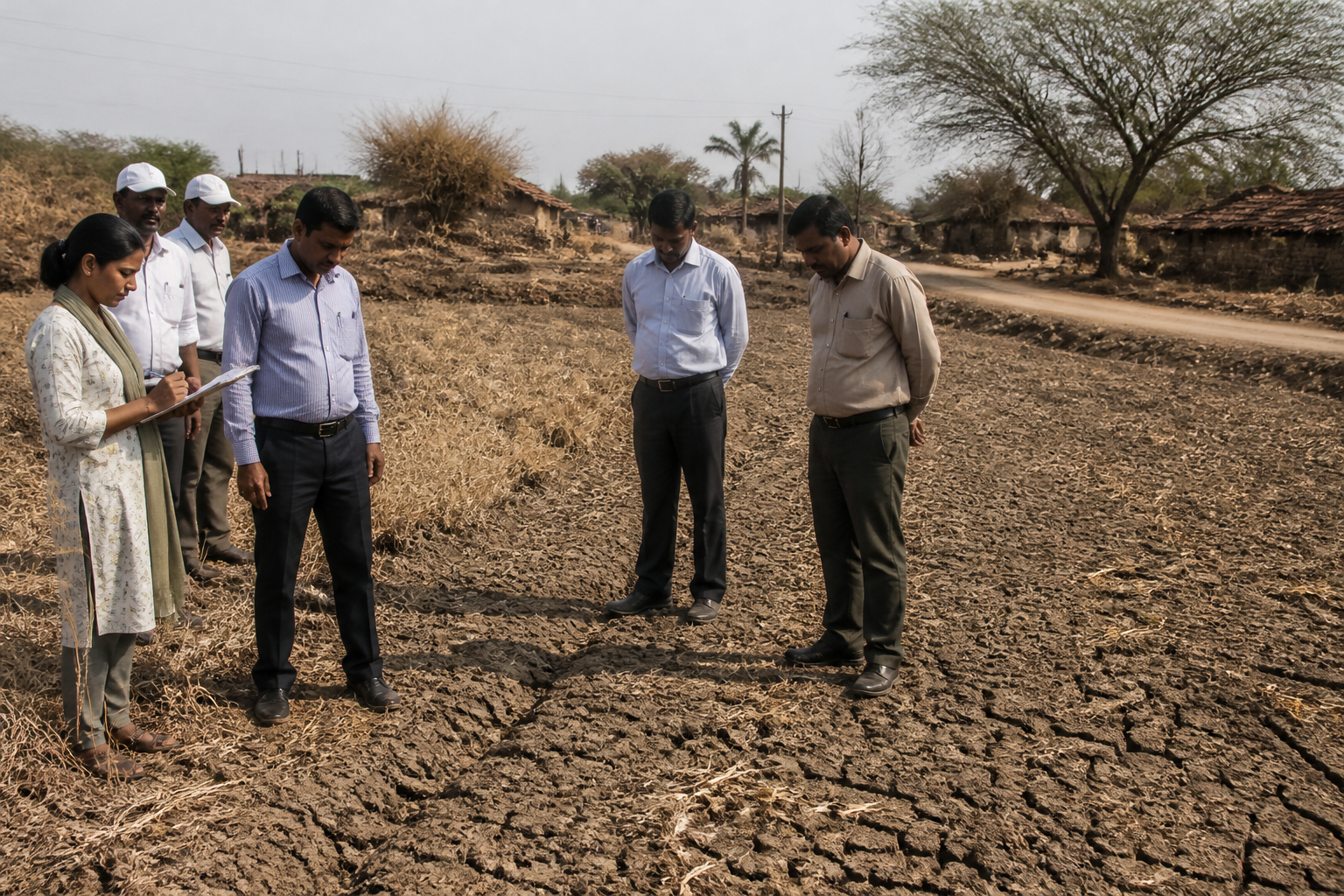
Karnataka’s drought situation has expanded to 226 taluks after nine more areas were added to the affected list, Deputy Chief Minister G Parameshwara said on Wednesday, as the state government prepares a final memorandum seeking financial assistance from the Centre.
Parameshwara, who also holds the Revenue portfolio, said ground-truthing had been completed in the nine newly identified taluks. Assessment under the Trigger-1 criteria is still under way in some of the remaining taluks, and areas that qualify will be taken up for ground-truthing, he said.
The final memorandum is expected to be ready within a week. It will detail drought-related losses across the state and determine the amount of relief sought from the Centre in accordance with the guidelines of the National Disaster Response Fund (NDRF), Parameshwara said.
The state’s request comes amid concerns that existing NDRF norms may not fully reflect the scale of the current drought. Parameshwara said Karnataka had sought around Rs 18,000 crore in drought relief last year, while losses this year had occurred across almost the entire state. The estimated losses could rise further if more taluks meet the criteria for inclusion, he said.
The Deputy Chief Minister said he and Chief Minister D K Shivakumar had urged the Centre to relax the NDRF norms for drought relief. Although the Union Agriculture Minister had assured them that the request would be examined, Karnataka had not received any further response so far, according to Parameshwara.
The process of declaring drought-affected taluks involves assessments against prescribed criteria, followed by ground verification. The state’s memorandum will therefore serve as the formal basis for placing its estimated losses and relief requirements before the Union government. The amount sought will be finalised only after the memorandum is completed.
The drought declaration has consequences beyond the administrative classification of taluks. It determines which areas can be included in the state’s formal demand for disaster assistance and places greater importance on the accuracy and speed of local loss assessments. The ongoing Trigger-1 assessments and ground-truthing will decide whether additional taluks are added to the list.
After the memorandum is finalised, the Karnataka government will decide whether to send a delegation to Delhi to submit it to the Centre. Parameshwara said the delegation could include the Chief Minister, the Deputy Chief Minister and other officials or representatives.
At the same briefing, Parameshwara said the state Cabinet would discuss the Karnataka High Court’s verdict on reservation for Scheduled Castes and Scheduled Tribes at its meeting on Thursday. The Cabinet will decide whether to appeal against the verdict in the Supreme Court or seek the inclusion of the reservation law in the Ninth Schedule of the Constitution.
The High Court on Monday struck down provisions of a 2022 state law that increased reservation for Scheduled Castes from 15 per cent to 17 per cent and for Scheduled Tribes from 3 per cent to 7 per cent. The court held that the enhanced quota breached the 50 per cent ceiling. Further action on the matter will follow the Cabinet’s decision.

