


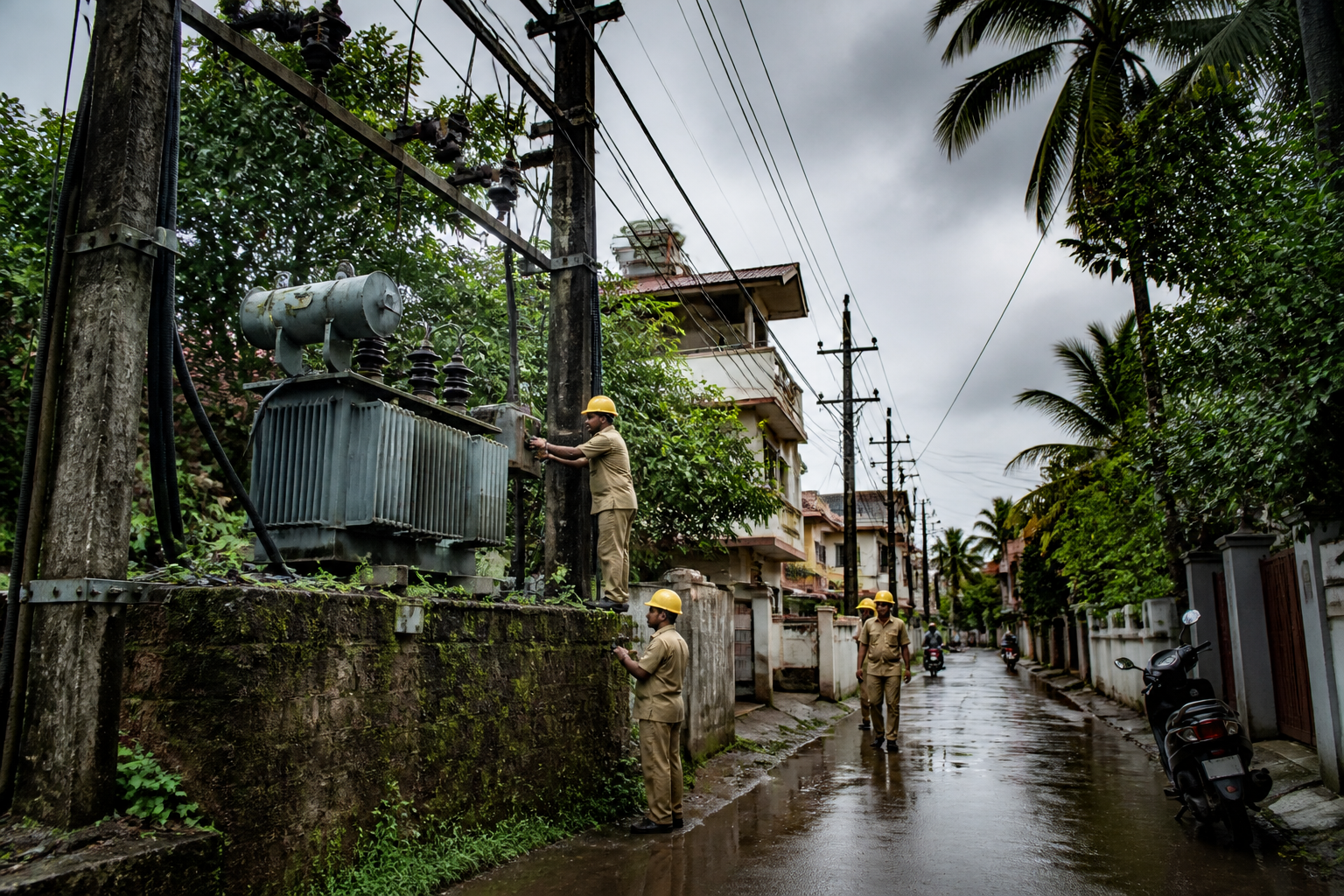
KSEB power purchase costs account for nearly 60% of the Kerala State Electricity Board’s total expenditure, according to electricity minister Sunny Joseph’s statement in the state Assembly. The disclosure brings together three pressures facing Kerala’s electricity system: dependence on purchased power, limited growth in domestic generation and the continuing financial burden carried by the distribution utility.
The figures do not describe a single outage, tariff decision or generation project. They show how the cost structure of a public electricity board can shape the reliability and financial sustainability of an entire state’s power system. KSEB is now assessing electricity demand and market availability in advance, while also preparing a new five-year distribution-sector plan and upgrading ageing network assets.
That combination is significant because electricity reliability is determined by more than the amount of power available in the system. It also depends on the cost at which power is procured, the condition of transformers and lines, the ability of the distribution network to absorb demand and the utility’s financial capacity to maintain and modernise infrastructure. The minister’s statement indicates that KSEB is dealing with all of these questions at the same time.
The most prominent figure is the share of power purchases in KSEB’s expenditure. At nearly 60%, procurement is the board’s largest identified spending pressure in the information presented to the Assembly. The minister said KSEB was assessing the state’s electricity demand and the availability of power in the market in advance to minimise procurement costs.
This approach places forecasting and market timing at the centre of the utility’s financial management. If demand estimates and market availability are assessed before purchases are made, KSEB can attempt to reduce the cost of procuring electricity. The statement does not provide the board’s total expenditure, the volume of electricity purchased, the prices paid or the savings expected from this process. It does, however, establish that power procurement is sufficiently material to shape the board’s overall spending position.
The procurement pressure is connected to the state’s generation profile. Joseph acknowledged that domestic electricity generation in Kerala had increased only marginally over the past decade. The supplied details do not specify the sources of generation, the capacity added or the reasons for the limited increase. They do show that Kerala’s own generation has not expanded significantly in relation to the board’s wider electricity requirements, leaving power purchases as a major component of expenditure.
This is an important distinction in understanding the state’s power system. A distribution utility may be able to improve its network without substantially changing the amount of electricity generated within the state. Conversely, more generation capacity would not by itself eliminate distribution constraints caused by old transformers, ageing lines or cables crossing private properties. The minister’s statement points to both sides of the system: the cost and availability of power, and the physical network that delivers it.
KSEB’s financial position adds another layer to the issue. The state government took over Rs 767.71 crore, or 75% of the board’s loss of Rs 1,023.61 crore, for 2022-23 under the Centre’s additional borrowing scheme. For 2024-25, it took over Rs 494.289 crore, representing 90% of KSEB’s loss of Rs 549.21 crore, under the same arrangement.
These figures show that government support has covered a substantial share of reported losses in both years. The proportion increased from 75% of the loss in 2022-23 to 90% in 2024-25, although the absolute loss cited for 2024-25 was lower. The supplied statement does not explain the reasons for the change in the loss amount or identify how the remaining losses were financed. It does establish that KSEB’s finances are being managed partly through a state-backed borrowing mechanism rather than solely through the board’s own operating position.
The arrangement also places the utility’s expenditure decisions within a wider public-finance framework. When the state takes over a share of KSEB’s losses through an additional borrowing scheme, the financial condition of the electricity board becomes linked to the government’s borrowing and budget-management choices. The statement does not quantify the long-term liabilities created by the arrangement, but it indicates that KSEB’s losses have required a significant government response.
Alongside power procurement, KSEB is seeking to recover outstanding dues and reduce administrative expenditure. These measures address two different parts of the utility’s finances. Recovering dues is intended to improve the flow of revenue owed to the board, while reducing administrative expenditure targets its internal cost base. Neither the amount of outstanding dues nor the savings expected from administrative reductions was provided in the Assembly disclosure.
That absence matters when assessing the utility’s financial turnaround. The statement identifies the areas in which KSEB is acting, but it does not establish the scale of the potential improvement. The proportion of spending devoted to power purchases, the losses taken over by the state and the limited growth in domestic generation remain the clearest indicators of the structural pressures described by the minister.
The next five-year distribution-sector plan is expected to cover 2027-28 to 2031-32. The current scheme covers 2022-23 to 2026-27, meaning the board is preparing the next planning period before the existing one ends. The supplied material does not set out the plan’s proposed expenditure, targets, financing structure or geographic priorities. Its preparation nevertheless signals that KSEB is treating distribution modernisation as a multi-year infrastructure programme rather than a series of isolated repairs.
The network measures mentioned by the minister include replacing ageing transformers and power lines, installing aerial and underground cables, and relocating lines that cross private properties where they pose risks of power disruptions or accidents. These interventions address different physical and administrative problems within the distribution system.
Transformers and power lines are core network assets, so replacing ageing equipment is an infrastructure-renewal measure. Aerial and underground cables represent different approaches to carrying electricity through the built environment. Relocating lines that cross private properties addresses both operational risk and the complexity created when essential infrastructure occupies or passes through privately held land. The minister linked these actions to improved reliability and fewer interruptions.
For residents, the practical measure of the electricity system is not only the board’s expenditure or loss. It is whether supply is available when needed and whether interruptions are frequent, prolonged or difficult to resolve. The statement does not provide outage-frequency data, consumer-level reliability indicators or a comparison between districts. It does say that the modernisation measures are intended to reduce interruptions and prevent disruptions or accidents associated with vulnerable network assets and lines crossing private properties.
The absence of detailed performance data limits what can be concluded about the success of the current distribution programme. KSEB has identified the assets being replaced or modified, but the supplied information does not state how many transformers or kilometres of lines are involved, how much of the network remains ageing or when the work will be completed. The next five-year plan could become the framework through which those targets are specified, although its details have not yet been announced in the material available.
The central urban and infrastructure question is therefore how Kerala can maintain reliable electricity while managing the cost of purchased power and the capital requirements of network renewal. The minister’s statement does not present a single solution. Instead, it describes a set of linked administrative responses: forecast demand and market availability, recover dues, reduce administrative costs, manage losses through government support and invest in distribution assets.
These responses also reveal the division of responsibilities within the electricity system. KSEB is responsible for procurement decisions, revenue recovery, internal expenditure management, distribution planning and network upgrades. The state government has assumed a substantial share of reported losses under the additional borrowing scheme. The Centre’s borrowing framework provides the mechanism through which that support is recognised. The Assembly is the forum in which the minister disclosed the financial and operational position.
What remains unclear is how these interventions will affect the cost of electricity, the board’s future losses and consumer-level reliability. The supplied information does not include tariff details, procurement contracts, generation additions, demand forecasts, outage statistics or the financial targets of the upcoming distribution plan. It would therefore be premature to treat the announced measures as evidence of a completed turnaround.
The evidence does establish the scale and character of the challenge. Nearly 60% of KSEB’s expenditure is tied to power purchases; domestic generation has risen only marginally over the past decade; the state has taken over large shares of reported losses for two financial years; and the board is preparing a new five-year plan while replacing ageing distribution infrastructure. Kerala’s electricity debate is consequently not only about generation capacity. It is also about procurement discipline, public-finance support, revenue recovery and the condition of the network that connects power to homes and other users.
The next substantive milestone will be the preparation and eventual detailing of KSEB’s distribution-sector plan for 2027-28 to 2031-32. Its targets, funding arrangements, asset-replacement priorities and reliability measures will determine how far the board’s response moves from broad commitments to measurable infrastructure and financial outcomes.

