


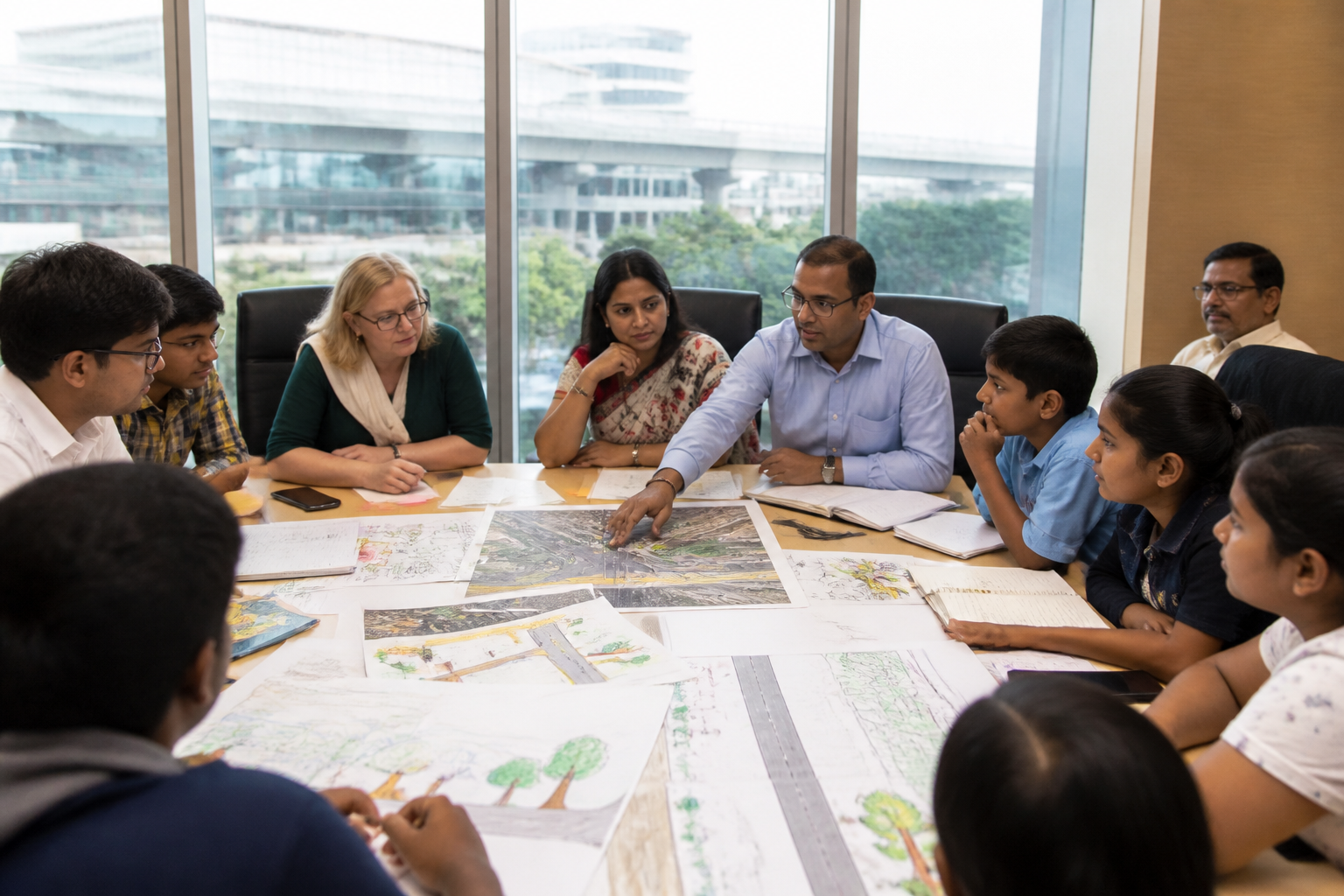
Cyberabad Municipal Corporation (CMC), in partnership with UNICEF India, has launched a child-friendly urban governance initiative that will involve children and adolescents in planning streets, parks, schools, public spaces, mobility systems and essential services across the city. The initiative was outlined during a session titled ‘Junior Citizens: A Child-Friendly and Safe Cyberabad’ held on Friday.
A Child Rights Secretariat Cell was inaugurated at the CMC head office in Gachibowli to provide an institutional platform for coordination on child rights and child-friendly urban governance. The cell is intended to support coordination on issues affecting children and help incorporate their needs into city planning and development.
CMC Commissioner G Srijana said in a press release that the proposed approach would recognise children and adolescents as “Junior Citizens”. Their perspectives would be considered in planning decisions involving streets, parks, schools, public spaces, mobility, essential services and safety, according to the statement.
The programme envisages structured, zone-wise consultations with children in Serilingampally, Kukatpally and Quthbullapur. These consultations are expected to gather suggestions on local urban conditions and identify priorities that differ between the three zones.
The proposed consultation process will cover safe school routes, pedestrian infrastructure, parks, public spaces, water and sanitation, mobility and community safety. The CMC said the priorities emerging from the consultations would be tailored to each zone, indicating that the initiative is intended to connect child-rights planning with local civic infrastructure and service needs.
The launch places children within the municipal planning process rather than treating them only as users of public services. The stated scope extends from physical infrastructure, such as pedestrian routes and parks, to essential services and safety measures. However, the material supplied for the announcement does not specify the consultation schedule, the number of children to be involved, the decision-making process for evaluating their suggestions or a timeline for implementing identified priorities.
UNICEF India Deputy Representative Jesper Moller and other UNICEF officials attended the event. The CMC’s next stated step is to undertake the proposed zone-wise consultations in Serilingampally, Kukatpally and Quthbullapur, with the findings intended to inform child-friendly urban planning and development.
