


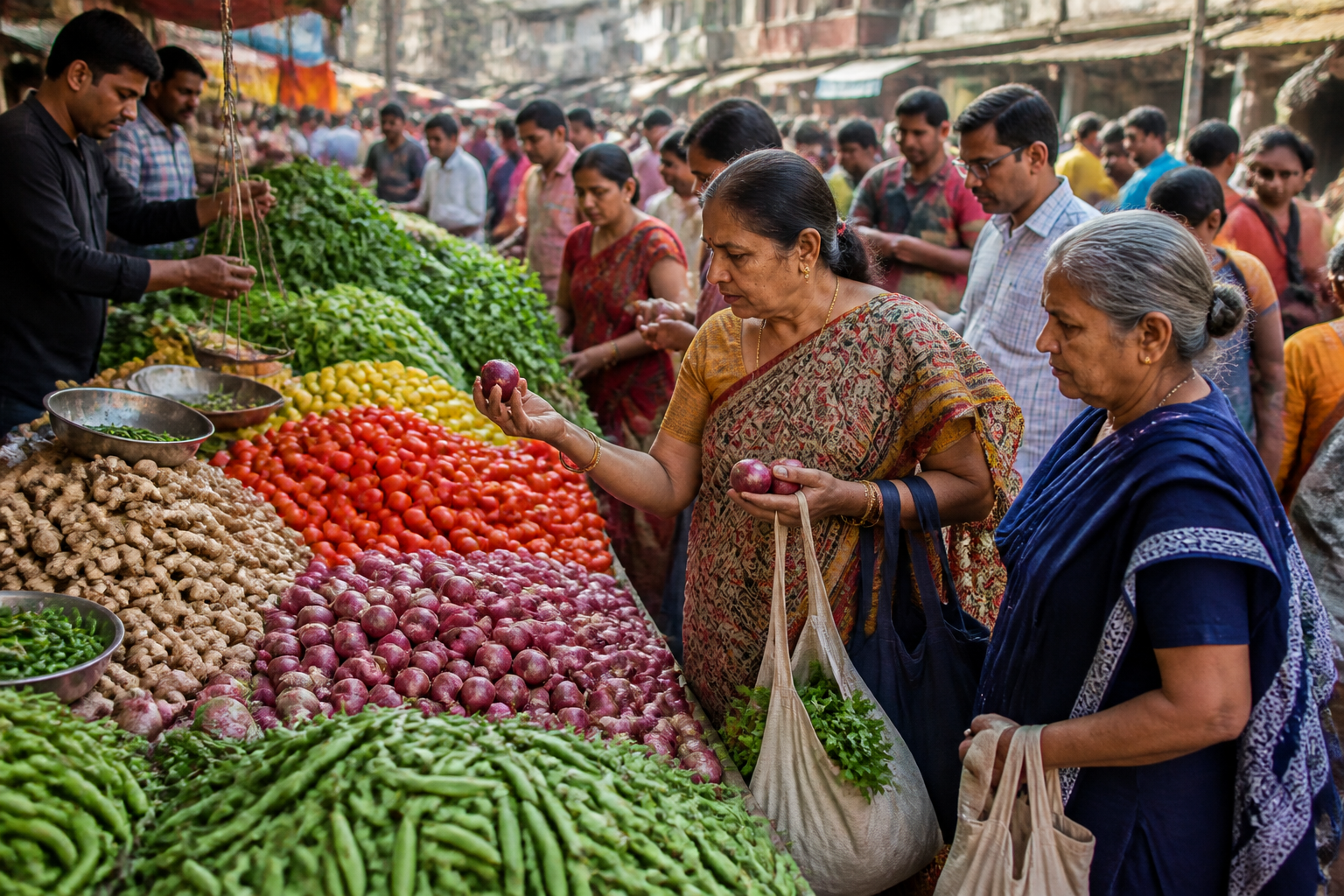
Ahmedabad vegetable prices have risen sharply during the Navratri festival period after wholesale market arrivals fell by up to 25%, pushing several commonly used vegetables to Rs 80-100 per kg and making household food budgets harder to manage.
According to local traders cited by Gujarat Samachar – Ahmedabad, reduced supply and increased demand have driven prices higher in the city’s retail markets over the past few days. Traders attributed the lower arrivals to seasonal changes and crop damage, while saying that prices may not ease substantially until fresh supplies begin reaching wholesale markets.
Peas and lemons have recorded the steepest increases, with both selling for up to Rs 200 per kg. Ginger is being sold at Rs 150-180 per kg. The prices have affected both household kitchens and hotels, where peas and other vegetables are regularly used in meals and prepared dishes.
Several other vegetables have also crossed levels that are putting pressure on routine household purchases. Ridge gourd, bitter gourd and fenugreek leaves are selling at Rs 80-100 per kg. Brinjal, cauliflower, carrot and coriander have reached Rs 80-90 per kg, according to the report.
Cucumber and onion are being sold at around Rs 70 per kg. The rise in onion prices has been particularly significant, with the vegetable increasing from around Rs 20-30 per kg to Rs 70 per kg. Cabbage and tomatoes are available at Rs 40-50 per kg, while potatoes are selling at about Rs 40 per kg.
The price movement illustrates how changes in wholesale supply can quickly affect urban retail markets. A decline in arrivals reduces the quantity available to retailers, while festival demand increases purchases by households and food businesses. The resulting pressure is reflected in the retail prices paid by consumers, even when the disruption begins outside the city’s markets.
Consumers have responded by cutting back on purchases, the report said. Some households are reducing the quantity of vegetables bought or adjusting their regular menus as the cost of essential items rises. Homemakers quoted in the report said that managing kitchen expenses had become more difficult and that vegetable budgets were requiring nearly twice the earlier spending.
The situation also highlights the dependence of urban households on a continuous supply chain linking farms, wholesale markets, retailers and consumers. When crop damage or seasonal changes reduce arrivals, the effect is transmitted quickly to city residents, particularly those with limited flexibility in their monthly budgets.
Local traders said that significant relief is unlikely until new arrivals begin in the wholesale market. The timing and scale of that fresh supply will determine whether retail prices begin to moderate, according to the market assessment reported by Gujarat Samachar – Ahmedabad.
