


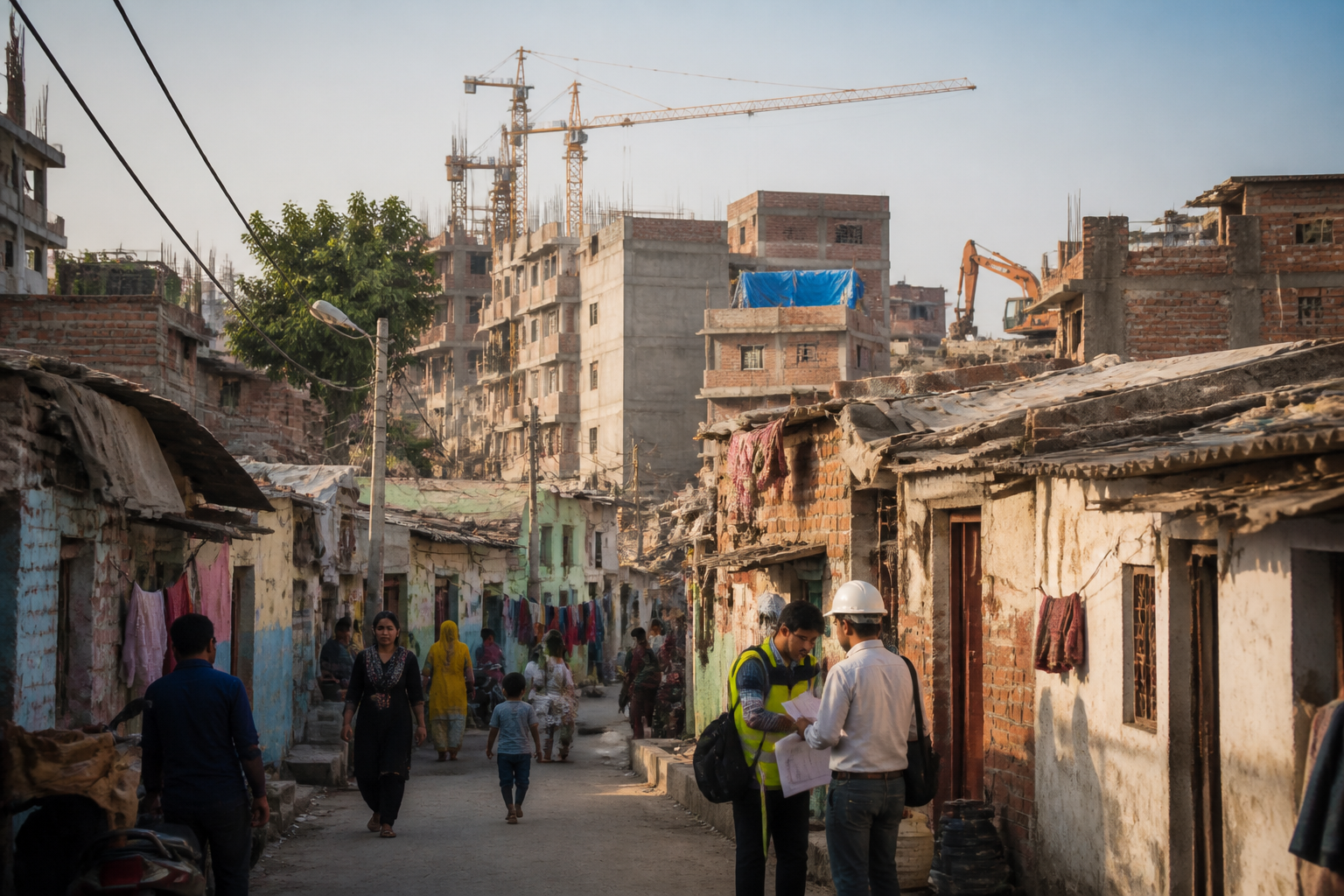
The Delhi Development Authority has begun the process of rehabilitating 45 jhuggi-jhopri clusters in situ, covering 21,229 families under the city’s Master Plan-2047. The first phase will involve 15 projects whose feasibility will be assessed before detailed rehabilitation plans are prepared.
The DDA has invited proposals to appoint three consultants for preparing the feasibility reports. The agencies will study the rehabilitation requirements in each cluster, the development potential of available land, infrastructure needs, financial viability and the most suitable implementation model.
The 45 clusters together occupy around 135.74 acres, according to the DDA. The authority estimates that the proposed projects could benefit more than 100,000 people by providing improved housing and basic services at or near their existing locations.
In-situ rehabilitation means rebuilding housing at the present site rather than relocating residents to a distant settlement. The approach is intended to reduce displacement and preserve residents’ access to existing employment, schools, public transport and neighbourhood networks. The source report does not specify the final housing designs, eligibility conditions, construction timelines or the number of dwelling units to be built.
The feasibility studies will also examine whether the redevelopment sites can accommodate commercial spaces along with new residential stock. The DDA said this could improve land use in the clusters while creating additional space for housing and commercial activity. The extent of any commercial development, however, will depend on the findings of the studies and subsequent project approvals.
The initiative is part of the broader rehabilitation provision in Delhi’s Master Plan-2047. The plan covers more than 650 JJ clusters and around 1.7 million residents, making the 45-cluster exercise an initial step in a much larger housing and redevelopment programme.
The DDA said the feasibility reports would provide the technical and financial basis for deciding how the projects should be structured and implemented. They are also expected to assess the infrastructure required for the redeveloped sites, including the services needed to support existing and future residents.
The process was initiated on the directions of Delhi Lieutenant Governor Taranjit Singh Sandhu. The immediate next step is the appointment of consultants and preparation of the 15 feasibility reports. The source report does not provide a deadline for completing the studies or confirm when construction will begin.
