


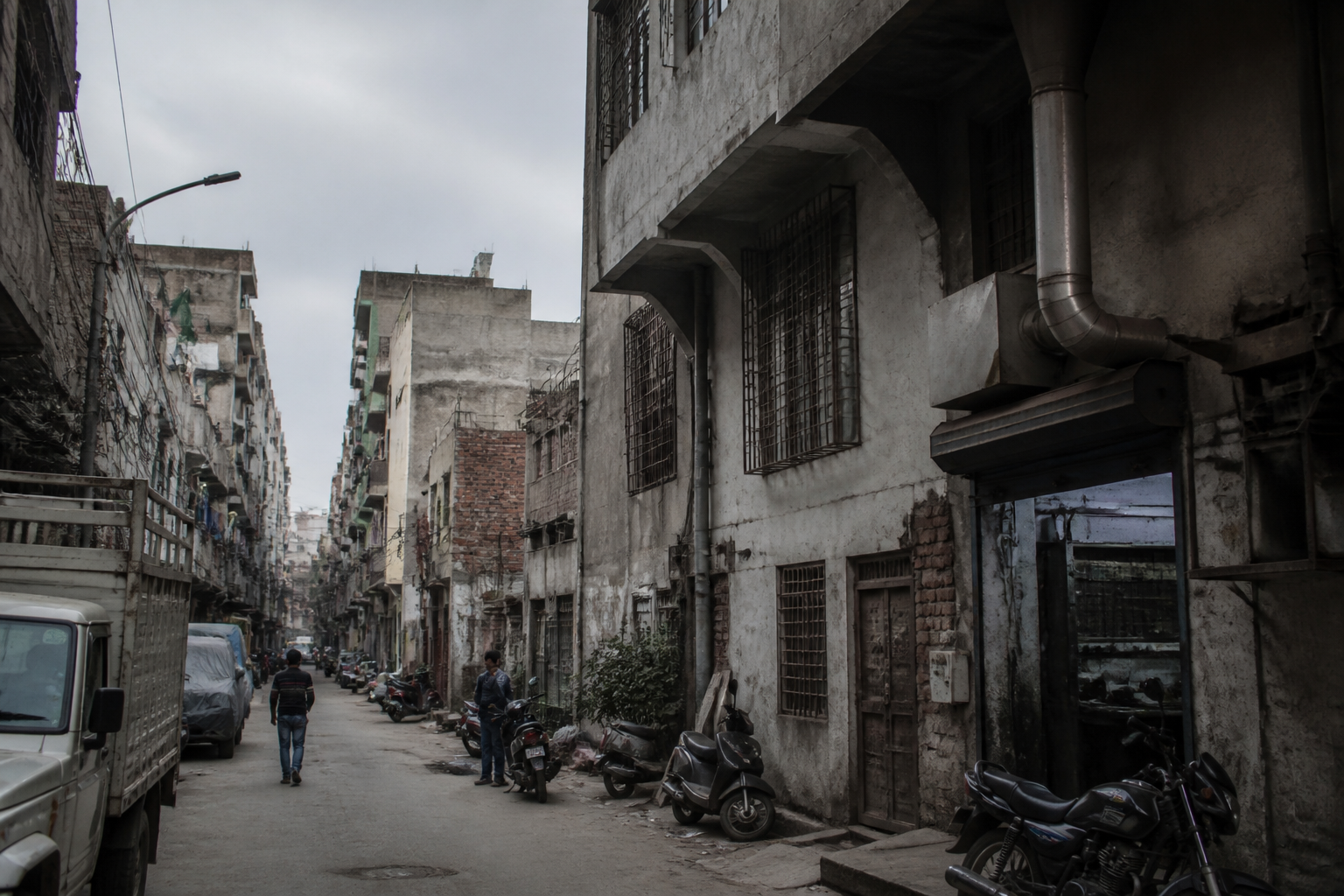
The National Green Tribunal’s decision to impose costs of Rs 10,000 each on members of a joint committee is more than a procedural rebuke. It reveals how an environmental complaint in a Delhi neighbourhood moved through several public agencies without the mandated factual report being filed on time. The case concerned alleged industrial operations from residential premises in Gali No. 1, Bahubali Extension, Karkardooma, where the applicant claimed exposure to hazardous emissions and persistent nuisance.
The tribunal’s order dated September 30 followed a failure to comply with directions issued on April 28. The committee had been given two months to verify the factual position, examine compliance with environmental norms and submit an action taken report. It comprised representatives of the member secretary of the Delhi Pollution Control Committee, the district magistrate and the commissioner of the Municipal Corporation of Delhi.
That structure is important. The complaint did not fall within the responsibility of one agency alone. Alleged industrial activity in a residential area can involve land-use enforcement, municipal regulation, pollution control and district administration. The joint committee was intended to bring these responsibilities together. Instead, according to the tribunal, the report was not submitted even after the two-month deadline, prompting the applicant to file an execution application seeking compliance with the original order.
The NGT then directed the committee to file the report again on August 31. By the time of the September 30 order, more than five months had passed since the original direction and about one month since the subsequent order. The tribunal said it was expressing displeasure over the non-compliance and the unnecessary adjournments caused by the delay.
The institutional problem exposed by the case is therefore not simply that an inspection report was late. It is that a legal direction requiring coordinated administrative action did not produce a documented outcome within the prescribed period. For residents, the distinction between a pending inspection and completed enforcement is consequential. Until the factual position is established and action is recorded, the alleged activity may continue without a publicly demonstrated resolution.
The original application alleged that full-fledged industrial operations were being conducted from residential premises in Karkardooma in violation of environmental norms. The applicant, described as an immediate neighbour, claimed direct and continuous exposure to hazardous emissions. The reported symptoms included breathing discomfort, irritation of the eyes and throat, headaches and persistent nuisance.
These allegations remain claims made before the tribunal; the supplied report does not establish whether the alleged operations were ultimately confirmed by the committee. That unresolved factual position is precisely why the NGT had ordered verification and an action taken report. The delay consequently affected not only administrative procedure but also the process through which the residents’ environmental concerns were meant to be tested.
The tribunal linked the matter to constitutional obligations. It emphasised that the right to clean and healthy air or environment is a fundamental right under Article 21 of the Constitution of India. It also referred to Article 48A, under which the state and its instrumentalities have an obligation to take measures for the protection and improvement of the environment.
By invoking these provisions, the NGT placed the committee’s delay within a broader framework of public duty. The officials were not treated as private parties dealing with an ordinary deadline. The tribunal said that, as instrumentalities of the state, the committee members were expected to discharge their constitutional obligation and ensure that the fundamental right to clean and healthy air was not violated.
This reasoning gives the order significance beyond the amount of the penalty. Rs 10,000 per member is limited as a financial sanction, but the tribunal’s message concerns the enforceability of environmental directions. The NGT said that non-compliance with its orders was serious and that compliance by the respondents, subject to the right of appeal, was essential to maintaining and enforcing the environmental rule of law.
The case also shows the practical importance of execution proceedings. The applicant did not return to the tribunal merely to repeat the original allegation. An execution application was filed because the direction to verify and report had not been carried out within the stipulated period. That mechanism converted an administrative delay into a fresh question of institutional compliance before the tribunal.
The committee arrangement illustrates another recurring challenge in urban governance: responsibility is distributed, but accountability can become diffuse. The DPCC is associated with pollution-control functions, the MCD with municipal administration, and the district administration with its own statutory responsibilities. The tribunal’s order identifies all three institutional channels through the composition of the committee, but the supplied material does not specify which step caused the delay or whether any agency had accepted primary responsibility for coordinating the report.
That missing detail matters because a joint committee can improve coordination only if it has a clear reporting process, a designated lead agency and an enforceable internal timeline. The NGT’s order establishes that the committee as a whole failed to meet the deadline, but it does not, in the supplied account, explain the internal reasons for the delay. Nor does it record the final factual findings on the alleged industrial operations.
The DPCC counsel requested that the costs be waived in the larger interest of environmental justice. The tribunal declined that request. Its refusal indicates that the tribunal viewed procedural compliance itself as part of environmental justice. A complaint about pollution cannot be meaningfully addressed if the agencies assigned to verify it do not complete the task ordered by the adjudicating authority.
There is also a direct neighbourhood dimension. The allegation concerns industrial activity located within residential premises, rather than an isolated dispute over a distant industrial estate. If established, such activity could raise questions about the compatibility of operations with surrounding homes and the adequacy of local enforcement. But the immediate evidence available in the supplied report stops at the allegation, the claimed health and nuisance impacts, the tribunal’s directions and the delay in reporting.
That boundary is important for interpreting the order. The NGT has penalised the committee members for failing to comply with its directions; it has not, on the basis of the supplied material, made a final finding that the alleged industrial operations were established or that the reported symptoms were medically caused by them. The tribunal’s intervention therefore concerns both environmental protection and the integrity of the fact-finding process.
The next stage is consequently administrative as well as legal. The committee was directed to submit the report, and the costs were ordered to be paid to the applicant once deposited by the members. The report should establish the factual position, assess the relevant environmental norms and record any action taken. Until those steps are documented, the original neighbourhood complaint remains unresolved in the public record.
The Karkardooma matter demonstrates why environmental enforcement in cities depends on more than regulations or tribunal orders. It depends on agencies acting within time, sharing responsibility clearly and producing verifiable records. The NGT’s penalty confirms the consequences of failing to do so. What remains to be established is whether the delayed committee report will now provide the factual answer that the tribunal originally sought and whether that answer will lead to effective action on the ground.

