


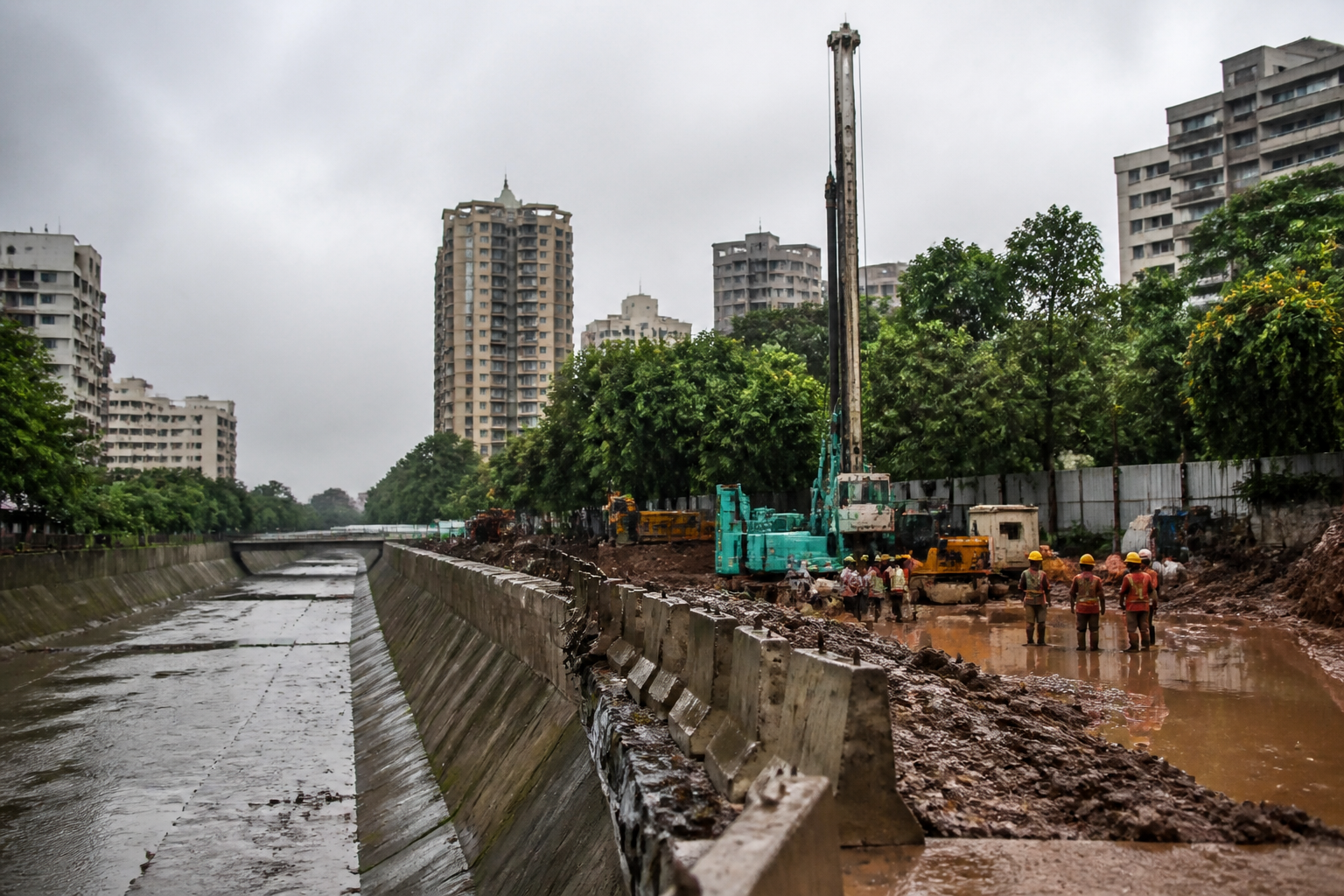
Work on Mumbai’s long-delayed Mogra pumping station in Andheri is expected to begin in October after the Brihanmumbai Municipal Corporation secured the required permissions, according to senior civic officials cited by Loksatta. The project is intended to reduce waterlogging in Andheri and parts of the western suburbs during heavy rain.
The stormwater pumping station has remained stalled for around five to six years because of various pending issues. Once construction begins, the project is expected to take three years to complete and become operational, the report said. The civic administration has not indicated an earlier commissioning timeline.
The proposed facility is located on the Mogra nullah in Andheri, an area that repeatedly faces water accumulation during intense monsoon spells. Mumbai’s drainage system is affected by the city’s coastal geography and by high tides, which can restrict the discharge of rainwater through outfalls. During high tide, the outfalls have to be closed to prevent seawater from entering the city, limiting the natural drainage of stormwater.
The Mogra project forms part of a wider municipal effort to address this problem through stormwater pumping stations. The BMC took up the programme at eight locations based on recommendations from the BRIMSTOWAD report and the Chitale Committee. Six of these facilities — at Haji Ali, Irla, Lovegrove, Cleveland, Britannia and Gazdarbandh — have already been constructed and brought into operation, according to the report.
Mogra is one of the remaining locations where the planned pumping infrastructure has not yet been completed. Its delay has left the Andheri area dependent on the existing drainage network during episodes of heavy rainfall and high tide. The pumping station is therefore intended to support the movement of accumulated rainwater when gravity-based drainage is constrained.
The announcement does not mean that the western suburbs will immediately be free of flooding. The station is expected to take three years to construct and commission, and the report does not provide details on the project’s pumping capacity, construction cost, contractor, tender status or the specific roads and neighbourhoods covered by its drainage catchment.
For residents, the next confirmed milestone is the start of construction in October. The project’s effectiveness will ultimately depend on the completion of the station, its integration with the Mogra nullah and the wider stormwater network, and its operation during periods when intense rainfall coincides with high tide. The BMC’s stated timeline is that the facility will become operational three years after construction begins.
