


Odisha’s tourism strategy is moving beyond the established Bhubaneswar-Puri-Konark circuit, but its success will depend on whether the state can build the airports, hospitality capacity, trained workforce and visitor infrastructure needed to support a much larger tourism economy. The state government has identified 15 destinations for development and is linking the expansion to its ambition of growing the economy from around $180 billion to $500 billion by 2036 and $1.5 trillion by 2047.
The scale of the target makes tourism more than a promotional sector. It turns tourism into an infrastructure and urban development question. New destinations require transport connections, accommodation, public services, safety systems and coordinated administration. They also require investment to move beyond established centres without creating disconnected tourism enclaves that lack the capacity to manage visitors, workers and local economic activity.
At the Odisha Travel Bazaar, Chief Secretary Anu Garg told The Times of India that the state expected tourism to play an important role in achieving sustained double-digit economic growth. The government has also set a target of generating one crore jobs by 2047, with 25% expected to come from tourism. These targets place employment, hospitality and visitor services at the centre of the state’s long-term economic planning.
The immediate investment signal is substantial. According to Garg, the state received investment intents for 181 projects worth Rs 11,500 crore, with around 14,000 rooms planned. The figures indicate a proposed expansion of hotel and hospitality capacity, but they are not the same as completed projects. The gap between an investment intent and an operating hotel will depend on land, approvals, finance, construction, utilities, transport access and the ability to recruit and retain workers.
That distinction is particularly important because the plan is designed to spread tourism beyond the state’s most established destinations. The government has identified Kolab, the Buddhist circuit, Similipal and Hirakud among the destinations it wants to develop alongside the Bhubaneswar-Puri-Konark circuit. Garg said letters of intent had been received from every district, including Boudh, Deogarh and Sonepur, for hotels and tourism properties.
This geographic expansion could distribute investment more widely, but it also creates a more complex governance task. A concentrated tourism circuit can rely on relatively established services and travel patterns. A dispersed network of destinations requires multiple districts to coordinate land, roads, airports, permissions, policing, accommodation standards, environmental management and emergency response. The source report does not establish how these systems will be coordinated, but the proposed destination model makes that institutional question unavoidable.
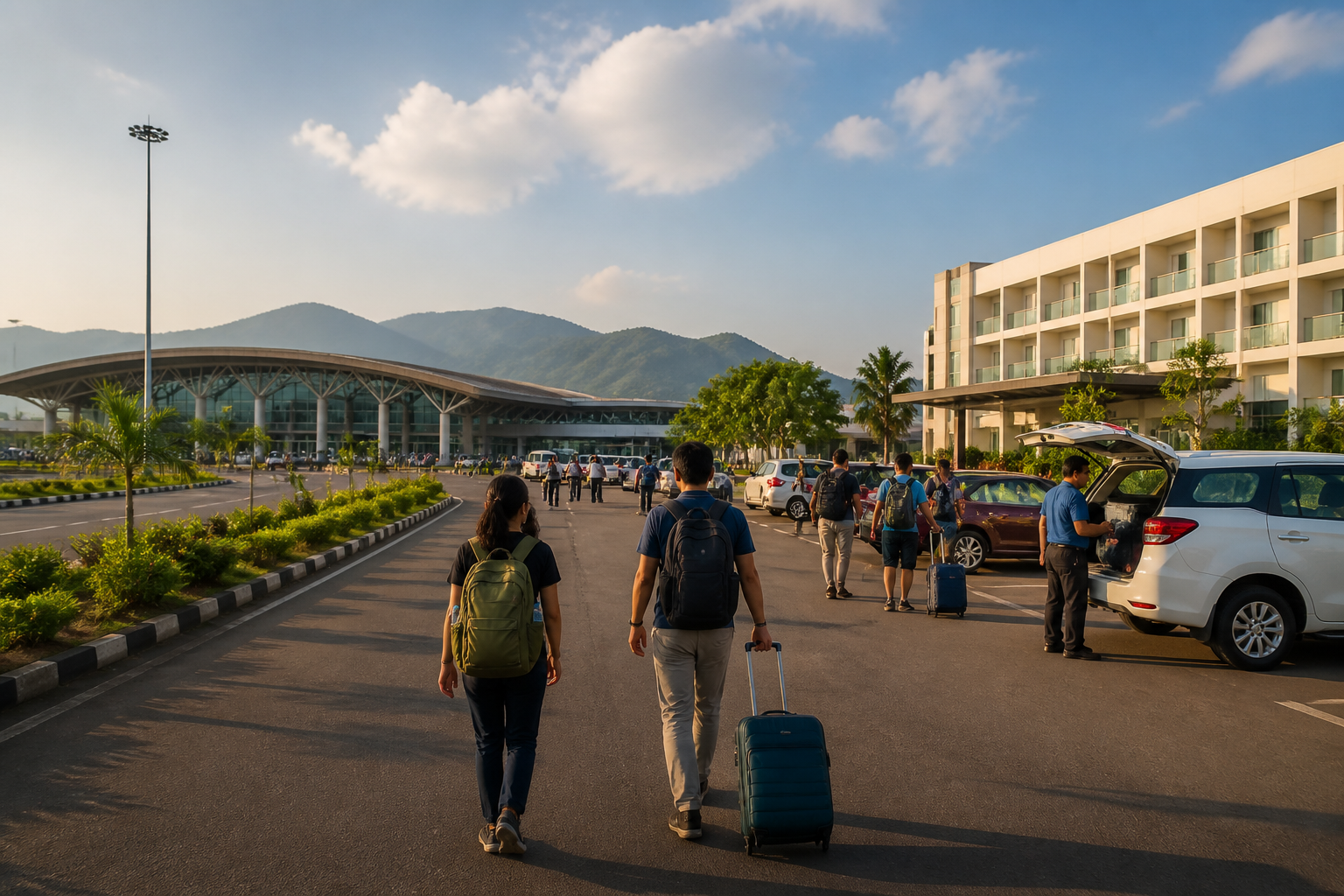
Air connectivity is being positioned as the cornerstone of the strategy. The state government said clearances for Puri international airport were in place and that it hoped the Airports Authority of India would begin work soon. It also cited the expansion of Jharsuguda airport, the development of the SAIL airport in Rourkela as a commercial airport, the extension of the runway at Jeypore and the possible use of the Amarda airstrip in Mayurbhanj.
These projects point to a network approach rather than reliance on a single gateway. Better air access could reduce the distance between emerging destinations and national or international travellers. But airport capacity alone does not create a tourism economy. Visitors also need reliable onward connections, accommodation, public amenities and clear information about how to reach destinations after landing. The government’s own emphasis on connectivity therefore extends beyond runways and terminals to the wider travel chain.
The proposed tourism products also show an attempt to broaden demand. Garg said Odisha was focusing on experience-led tourism, including hot-air ballooning, trekking routes, water sports, nature experiences and religious tourism around the Jagannath Temple. The government has tied up with the Aero Club of India for hot-air ballooning, while the Indian Mountaineering Federation is helping identify new trekking routes.
This diversification matters because the state is not presenting tourism only as a pilgrimage or heritage economy. It is seeking to combine religious, adventure, nature and outdoor experiences, particularly to attract younger travellers. Each category, however, carries different infrastructure and safety requirements. Water sports need trained personnel and emergency systems. Trekking routes require access management and visitor safety. Adventure activities need operating standards and suitable sites. The strategy therefore expands not only the tourism product but also the regulatory responsibilities of the state.
The workforce plan reflects that operational challenge. The proposed 14,000 rooms would create demand for hospitality workers, while the government is preparing through the hospitality unit of the World Skill Centre. It is also creating a trained cadre of lifeguards for beaches and water-sports sites through a specialised training centre. A special tourist police force is under consideration, with government clearance expected, according to the chief secretary.
These measures suggest that the government recognises tourism growth as a service-delivery issue rather than only a construction or marketing exercise. Hotels need trained staff, but destinations also need people responsible for safety, visitor assistance and enforcement. The proposed tourist police force and lifeguard training indicate an effort to create dedicated institutional capacity as the number and variety of tourism sites increase.
The workforce numbers also reveal the scale of the challenge. The government expects 25% of one crore jobs targeted by 2047 to come from tourism, which would amount to 25 lakh jobs if the target is achieved. The supplied report does not provide a current tourism employment baseline or a detailed timeline for reaching that figure. It does, however, show that the state is connecting long-term economic targets with specific training institutions and occupational needs.
The investment pipeline and workforce strategy are closely linked. New hotel rooms can increase accommodation capacity, but hotels and tourism properties cannot function at scale without trained employees. Similarly, new attractions may not produce sustained visitor activity without transport, safety and destination management. The proposed development model will therefore be judged not only by the number of projects announced, but by whether investment, skills and public infrastructure advance together.
There is also a clear shift in the geography of Odisha’s tourism policy. The established Bhubaneswar-Puri-Konark circuit remains central, particularly because of the state’s religious tourism base and the importance of the Jagannath Temple. At the same time, the government is trying to create a larger map of destinations that includes western, southern and northern parts of the state. The references to Hirakud, Similipal, Kolab and the Buddhist circuit suggest an effort to connect different types of landscapes, heritage and visitor experiences.
For cities and towns, such expansion could bring demand for hotels, transport services, food businesses, guides, local retail and construction. It could also place pressure on local roads, water supply, waste management and public spaces. The source material does not provide capacity assessments for these services, so the likely effects cannot be quantified from the announcement alone. What is clear is that tourism investment will interact with local urban systems rather than operate separately from them.
The same applies to airport-led development. Commercial aviation links can improve access to emerging destinations, but they also alter the geography of investment. Areas near airports may attract hotels and other properties, while destinations farther away will depend on surface transport and coordinated itineraries. Odisha’s plan includes several airport and runway projects, but the report does not specify their timelines, capacities or funding arrangements. Those details will be important in assessing whether the proposed tourism network can function as an integrated system.
The state’s $1.5 trillion economic goal by 2047 gives the tourism announcement a long horizon, while the 181 investment intents provide a more immediate measure of private-sector interest. Between these two points lies the implementation process: converting intent into construction, construction into operating capacity and operating capacity into jobs and visitor spending. The announcement establishes the direction of travel, but not yet the full delivery record.
Odisha’s tourism push therefore represents a test of coordinated urban and regional development. It combines destination planning, airport expansion, hotel construction, skills training, safety and policing. The strategy’s strength lies in recognising these elements together. Its next test will be whether the proposed projects receive clear implementation pathways and whether new destinations gain the public infrastructure required to support sustained activity.
The evidence currently confirms a significant expansion plan: 15 destinations, proposed hotel investment intents worth Rs 11,500 crore, around 14,000 planned rooms, multiple aviation projects and new training initiatives. It does not yet establish how many projects will be completed, when the airport works will begin or how local infrastructure will be upgraded. Those milestones will determine whether Odisha’s tourism ambition becomes a broader economic network or remains primarily a pipeline of proposals.
