


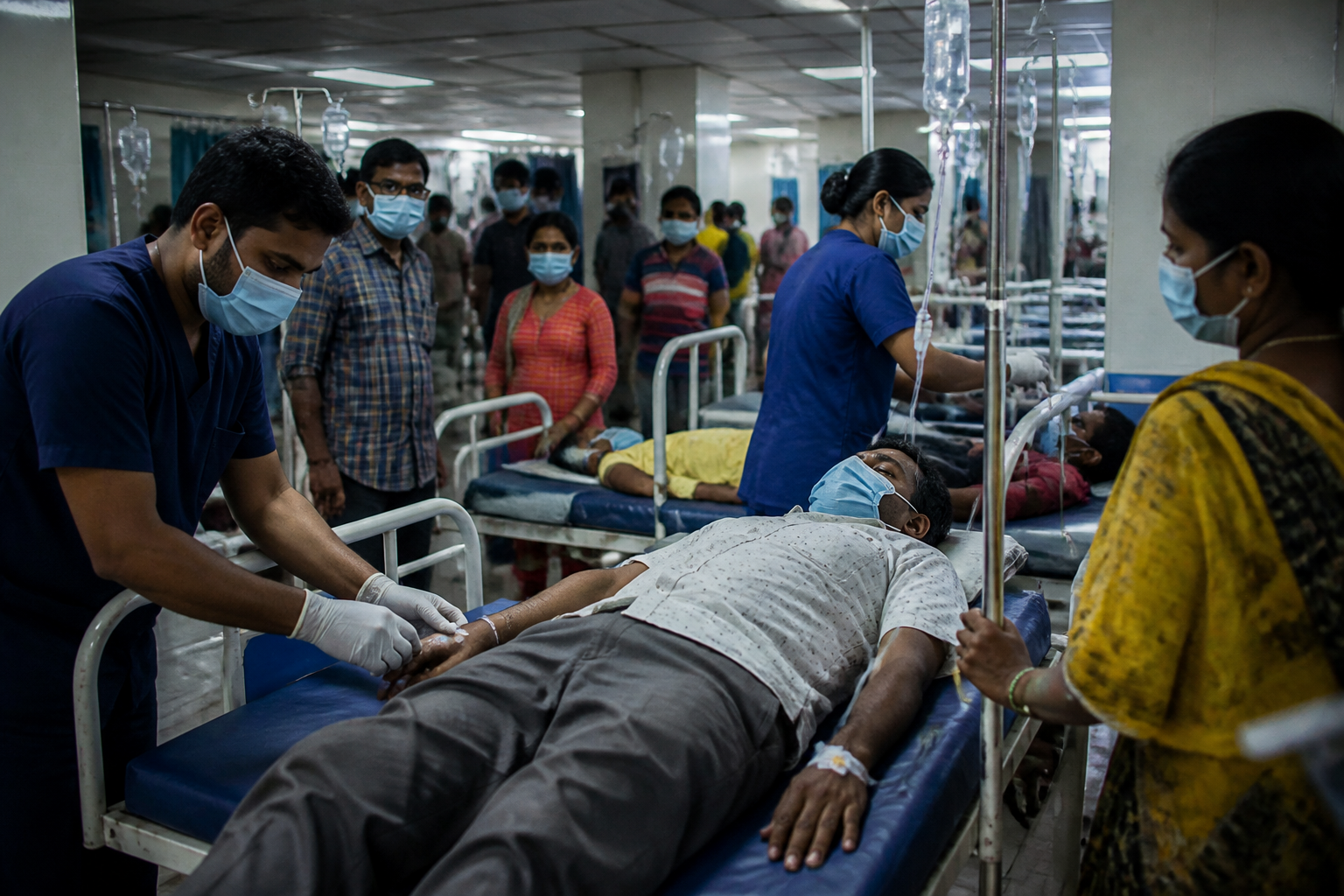
Norovirus cases are being reported across hospitals and outpatient departments in Kolkata, with patients arriving with severe vomiting, diarrhoea, dehydration, abdominal cramps and gastroenteritis. At least three hospitals have reported confirmed or clinically similar cases, including patients who required intensive care and intravenous fluid treatment.
Manipal Hospital Dhakuria admitted four patients over the last two weeks. Two of them were treated in the ICU after developing severe dehydration and vomiting, while the other two had milder symptoms but still required admission. The first two patients also experienced kidney-related complications, according to Sayan Chakrabarty, an infectious diseases physician at the hospital. All four patients had loose motion and dehydration, and the two more seriously affected patients required intravenous fluids. They have since recovered.
At BP Poddar Hospital, three patients were admitted during the last week, while 47 people were treated in the outpatient department over the past fortnight with symptoms suggesting norovirus infection. The admitted patients included two elderly people whose fluid loss was significant enough to require intravenous correction.
Peerless Hospital has reported 12 patients who tested positive for norovirus, including two children. Bhaskar Narayan Chaudhury, the hospital’s chief microbiologist, said several other patients had similar symptoms but were not tested. He said children are more frequently affected by norovirus, although adults have also been treated at the hospital in the past.
Charnock Hospital has also received several patients with similar symptoms over the past week. Nishant Agarwal, head of the hospital’s emergency department, said two or three patients were admitted with diarrhoea, high fever, loose motion, dehydration and severe stomach cramps.
Norovirus causes acute inflammation of the stomach and intestines and is commonly known as stomach flu or food poisoning. Physicians said symptoms generally develop rapidly, within 12 to 48 hours of infection. Anti-secretory medicines may be required in some cases to reduce stool output, while severe fluid loss can require hospital-based intravenous treatment.
The cases reported by the hospitals include patients across age groups, with children, adults and elderly people among those treated. Abhijit Aich Bhaumik, a consultant physician at BP Poddar Hospital, said renal complications can occur in patients who already have impaired kidney function. The risk is linked to significant fluid loss associated with vomiting and diarrhoea.
Norovirus is highly contagious and commonly spreads through contaminated food. Outbreaks are also more frequently reported during winter. The hospitals’ accounts indicate that the current clinical burden is being managed through emergency treatment, admissions, testing and outpatient care, with the most serious cases requiring correction of dehydration and monitoring for complications.
