


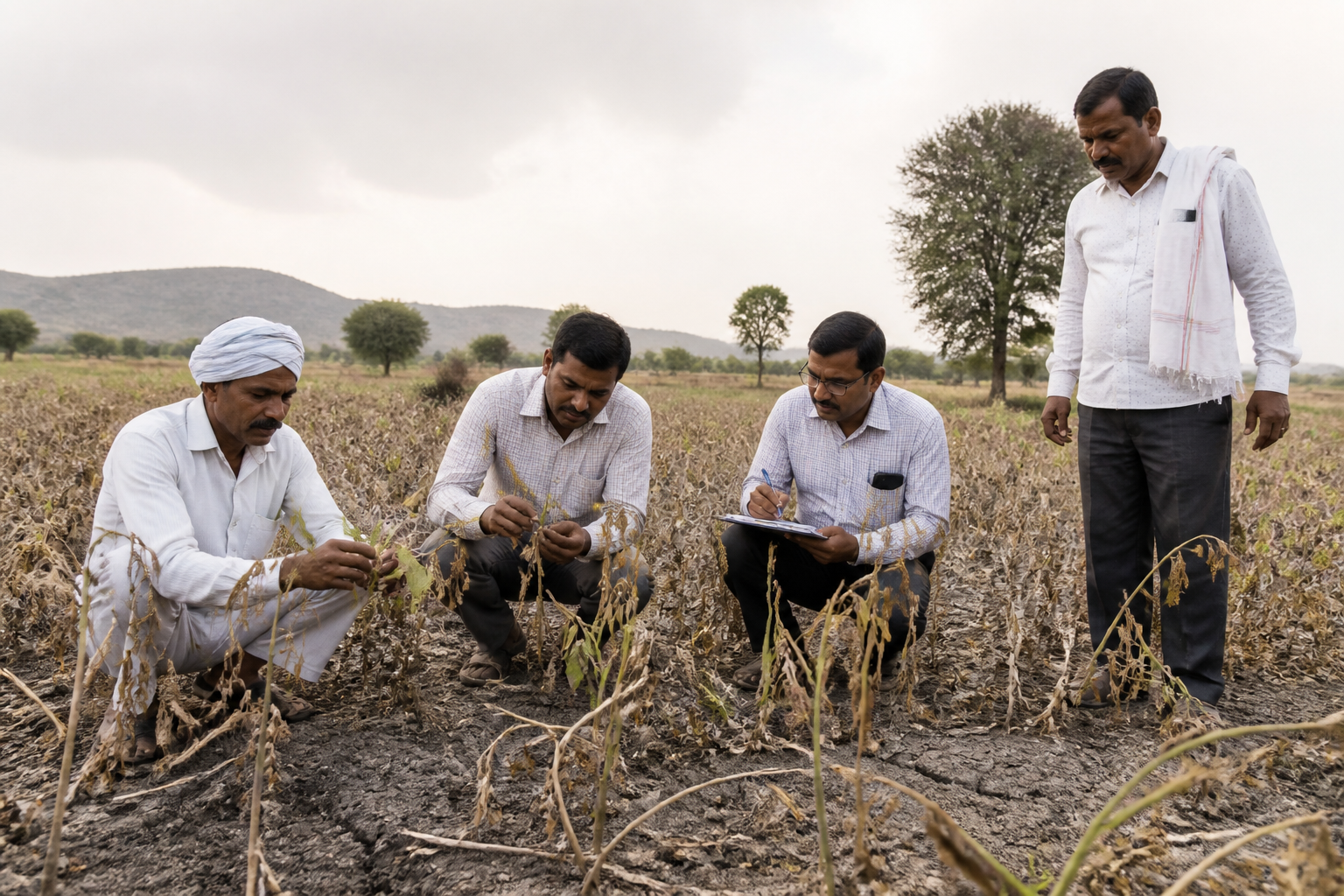
Nashik’s crop damage assessment has begun across 10 drought-hit talukas after rainfall in the affected areas fell to between 43% and 63% of normal levels, with agriculture officials estimating that average kharif yields could decline by more than 40% this season.
Officials from the state agriculture and revenue departments are conducting panchanamas to record crop losses in the affected areas. The exercise is expected to be completed within a week, after which a detailed report will be submitted to the state government. The findings will be used to determine the extent of losses and assess relief and assistance for affected farmers.
The talukas included in the assessment are Malegaon, Baglan, Kalwan, Nandgaon, Surgana, Igatpuri, Peth, Sinnar, Yeola and Deola. They form part of the state’s Trigger-1 drought list, which includes areas affected by prolonged dry conditions and an erratic monsoon season.
Nashik district received 71% of its average rainfall between June and September, according to the report. The rainfall deficit was sharper in the 10 drought-affected talukas, where precipitation ranged from 43% to 63% of normal levels. Despite the rainfall shortfall, farmers cultivated 6.51 lakh hectares during the current kharif season, compared with the district’s average sowing area of 6.40 lakh hectares. The current acreage represents 101.68% of the normal area.
Maize, soybean and paddy account for nearly 80% of Nashik’s total kharif acreage. Maize is the largest crop, covering 47.81% of the sown area, followed by soybean at 17.43% and paddy at 15.46%.
Agriculture officials estimate that soybean could be the worst affected crop, with yields likely to fall by around 50%. Maize and paddy yields are each expected to decline by about 35%. The exact extent of crop losses will be established only after the field-level assessment is completed.
Mahesh Vethekar, deputy director of the state agriculture department’s Nashik district office, said the panchanamas were being conducted on a “war footing”. He said the exercise would continue even on holidays and that around 20% of the assessments had been completed. The department expects to finish the process within a week before forwarding its report to the state government.
