


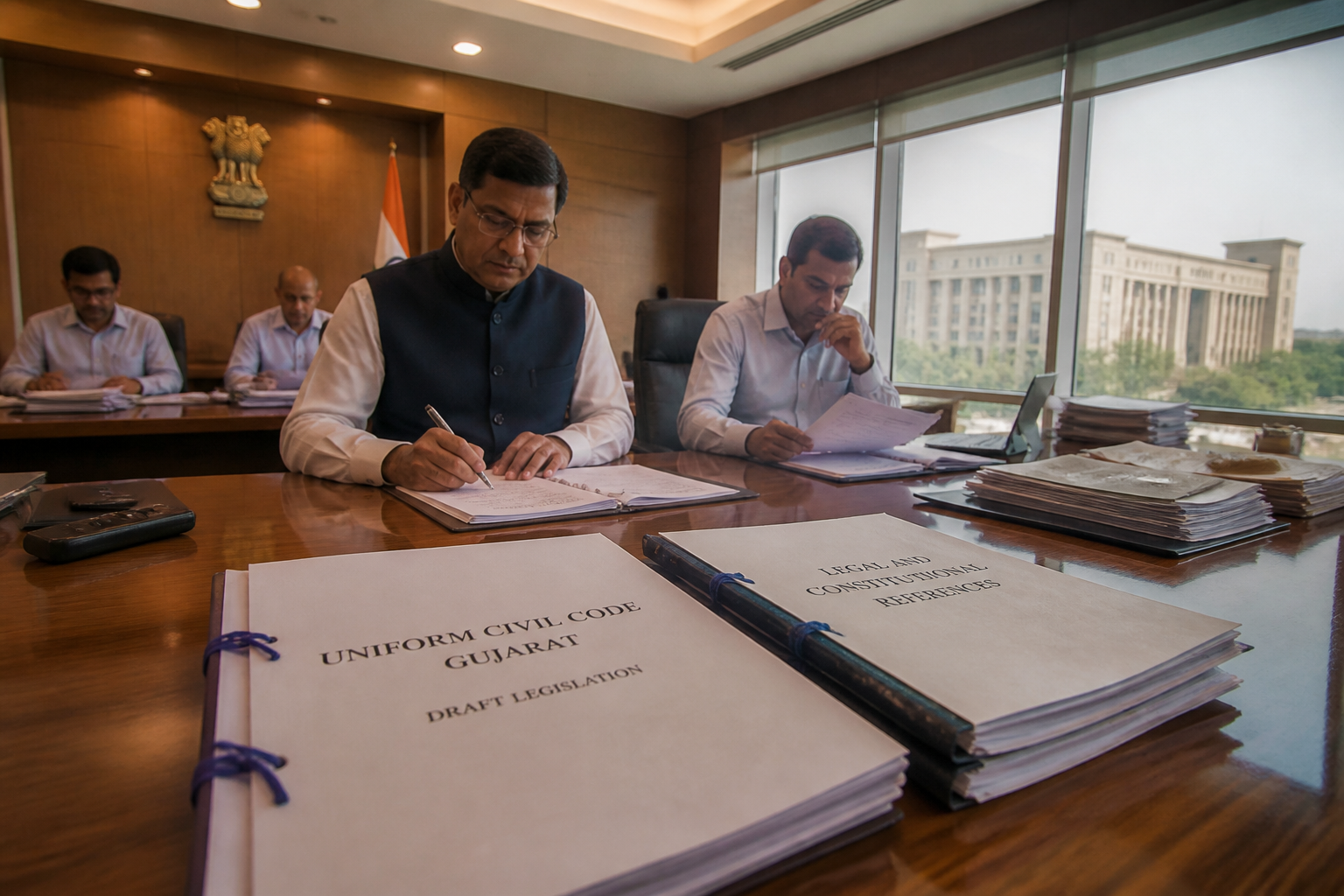
Gujarat’s Uniform Civil Code (UCC) Bill, 2026, has received the assent of President Droupadi Murmu, clearing the legislative hurdle for the state to introduce a common framework governing marriage, divorce, succession and live-in relationships. The law will come into force after the Gujarat government drafts and notifies the rules needed for its implementation.
Gujarat is set to become the second state after Uttarakhand to implement a codified common set of personal laws. Government sources cited by Times of India said the departments concerned would begin preparing the detailed rules following the presidential approval. The rules will determine how the provisions of the legislation are applied by state authorities and residents.
The Gujarat Assembly passed the Bill on March 24 following a debate of around seven hours. It was introduced a week after a committee headed by retired Supreme Court judge Justice Ranjana Desai submitted its final report on implementing a UCC in the state. The committee had been constituted in February 2025 to examine the need for a common civil code and recommend a framework for Gujarat.
The legislation provides for mandatory registration of marriages and divorces. Violations can attract penalties of up to Rs 10,000. Once the new law comes into force, the Gujarat Registration of Marriages Act, 2006, will be repealed.
The Act also makes registration of live-in relationships compulsory and requires formal notification when such relationships end. Children born from live-in relationships will be recognised as legitimate under the legislation. Women abandoned by live-in partners will be entitled to seek maintenance, according to the provisions reported by Times of India.
The law prohibits polygamy and provides for imprisonment of up to seven years for marriages obtained through force, coercion or deceit. A divorce not granted through a court decree can attract a jail term of up to three years. The Act also permits remarriage after divorce without conditions, removing requirements associated with practices such as halala, according to the report.
Members of Scheduled Tribes are excluded from the legislation. Their customary rights are protected under the Constitution, and the Gujarat law will not apply to them.
The implementation will now move from legislation to administration. State departments will have to frame the rules, establish the procedures for registration and enforcement, and communicate the requirements to residents and local authorities before the Act becomes operational. The date on which the law will take effect has not yet been announced.
The Bill has also drawn constitutional objections. Rights activist Shamshad Pathan, who made representations before the UCC panel, told Times of India that the legislation conflicts with constitutional provisions, particularly Articles 25 to 30. He argued that uniformity could be achieved only through a code applicable across the country rather than through separate state laws.
The Gujarat government has said the legislation was drafted after consultations with various sections of society. The immediate next step is the preparation and notification of the rules required to bring the Act into force.
