


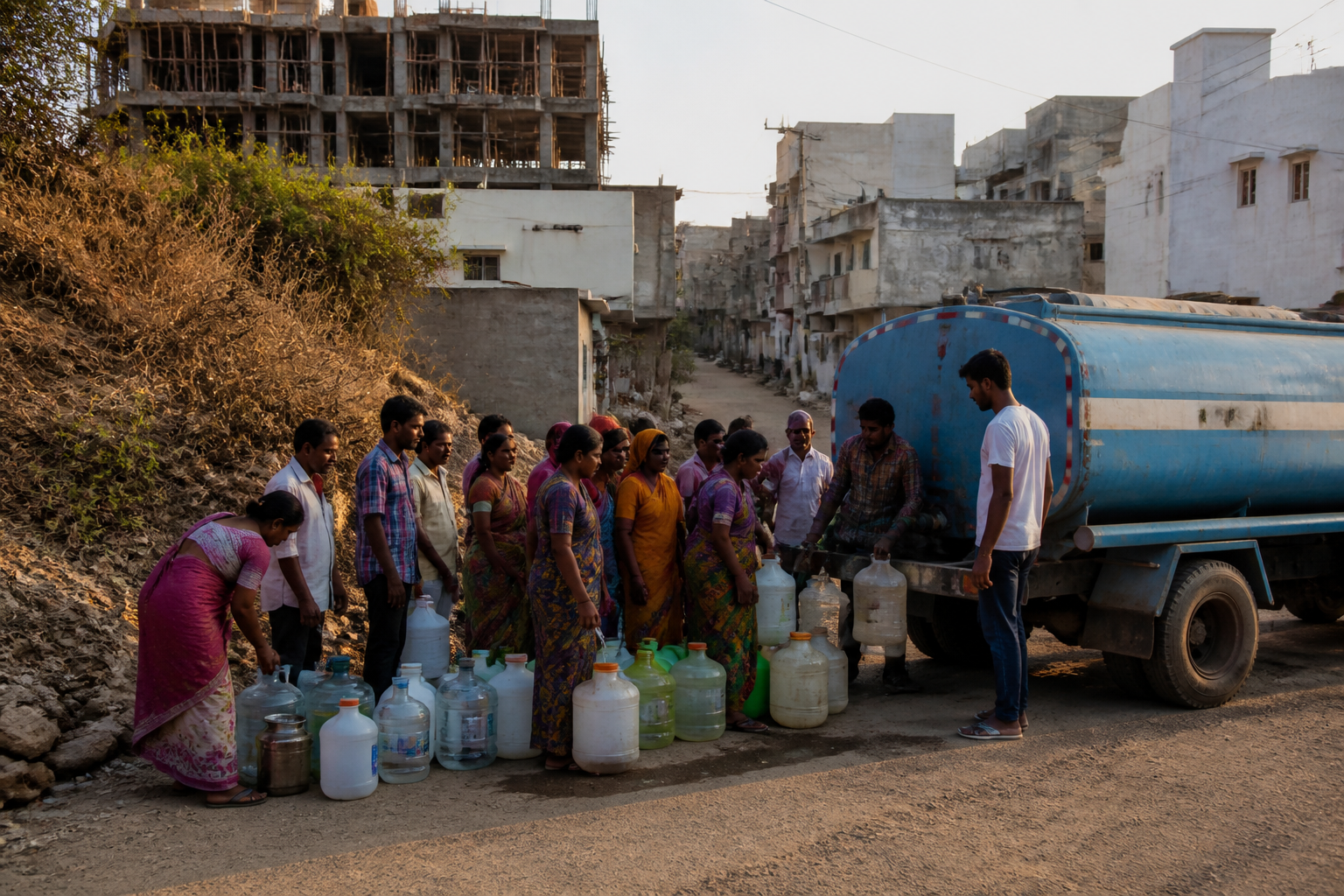
Maharashtra is considering a 10 per cent cut in urban water supply and restrictions on construction in water-scarce areas as the state responds to drought, an 18 per cent monsoon rainfall deficit and worsening agrarian distress. The proposals were discussed at the first meeting of the state Cabinet sub-committee on drought mitigation on Tuesday, according to a report by The Indian Express.
Revenue Minister Chandrashekhar Bawankule said the Water Resources Department had been asked to examine the feasibility of reducing urban water supply by 10 per cent. He said a decision would be taken soon. “Water scarcity is a reality. A decision on water cuts will be taken soon,” Bawankule said.
The state government declared drought in 265 of Maharashtra’s 358 tehsils last week. It is also reconsidering the drought status of around 10 to 15 talukas that did not meet the prescribed Trigger-1 threshold. Officials have been directed to re-examine physical ground reports and other assessment criteria. Chandwad, Mudkhed and parts of Chandrapur, Bhandara and Gondia are among the areas being considered for review.
In drought-hit areas, drinking water and cattle fodder will receive priority, the government said. Village ponds and percolation tanks will be reserved for drinking water. The planned order of water allocation is drinking water first, followed by fodder crops, Rabi crops and sugarcane.
Environment Minister Pankaja Munde directed officials to halt the construction of individual and commercial buildings in areas facing water scarcity. The government also asked authorities to avoid works such as cement roads and other projects that could lead to unnecessary water consumption. The proposed restrictions could affect local construction activity, although the report did not specify the areas, duration or enforcement mechanism for the measures.
The government is also examining whether recovery of agriculture loans can be suspended. Bawankule directed Chief Secretary Rajesh Agrawal to consult the Reserve Bank of India on whether a circular could be issued for suspending loan recoveries. Farmers are to receive assistance, while officials have been instructed to obtain farmers’ signatures on crop damage assessment reports.
At the district level, “war rooms” will be set up under the direct supervision of District Collectors to coordinate drought-relief measures. Talathis, Gram Sevaks and Agriculture Officers have been asked to remain in their respective areas. District Collectors have also been told to make greater use of corporate social responsibility funds for drought-related works.
The state has allocated Rs 6,728 crore under its employment guarantee programme, VB-G RAM G, for works intended to generate employment and strengthen rural infrastructure. Employment Guarantee Minister Bharat Gogawale said the programme would support water conservation, agriculture-related facilities and other rural infrastructure projects. The government has identified 375 types of works, with the stated aim of creating local employment while building assets that can help mitigate water scarcity.
A three-member committee of secretaries has been formed to examine the emerging fodder shortage. It will study fodder-management measures adopted by states such as Rajasthan and work out arrangements to ensure livestock supplies over the next three to four months. The Water Resources Department’s feasibility assessment and the government’s decision on urban supply cuts are the next immediate steps.
