


Telangana has tightened oversight of its oil palm expansion programme, with Agriculture Minister Tummala Nageswara Rao warning companies that districts allotted to them could be withdrawn if their performance is found unsatisfactory. He also ordered an audit of fresh fruit bunch collection centres and directed officials to accelerate sapling distribution and drip irrigation approvals.
The directions were issued during a surprise inspection of the Oilfed headquarters and a review meeting with officials. Tummala said the annual target was to bring two lakh acres under oil palm cultivation across the state. He warned that Oilfed would not be exempt from action if farmers’ interests were compromised.
The minister’s intervention follows reports of irregularities at fresh fruit bunch collection centres, which receive harvested oil palm produce from growers. He ordered a comprehensive audit of all such centres and said strict action would be taken against those found responsible for violations. The supplied report does not specify the nature or scale of the alleged irregularities.
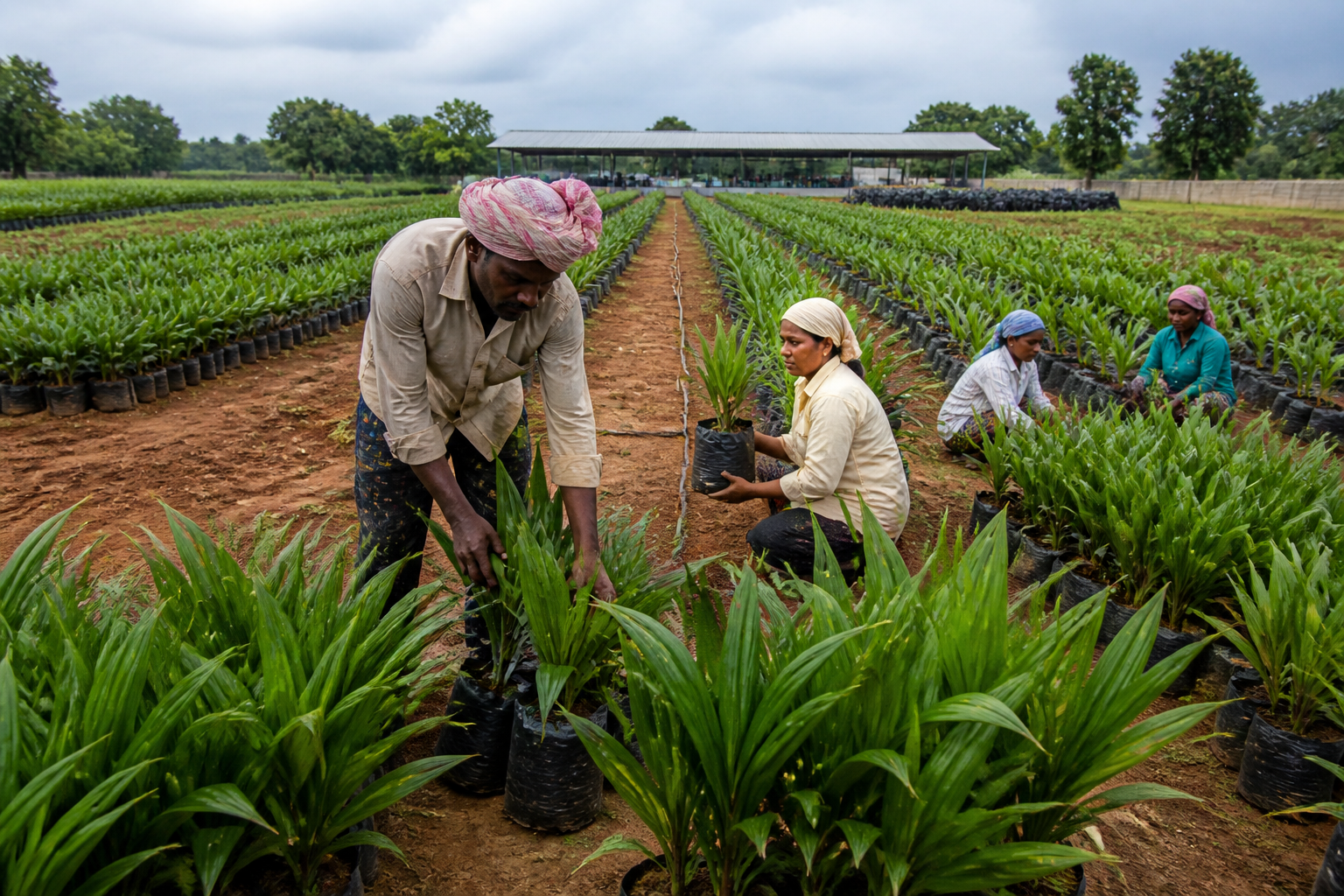
Officials told the minister that 47 lakh oil palm plants were available in 45 nurseries across Telangana. Of these, 9.5 lakh plants were ready for distribution, while another 12 lakh plants are expected to become available over the next three months. So far this year, 17.5 lakh plants have been supplied to farmers.
Tummala directed officials to monitor plant distribution daily so that supplies match farmers’ demand without delays. He also instructed them to immediately clear pending applications for drip irrigation, an important input for establishing and maintaining plantations. The report does not provide the number of pending applications or the districts in which delays have been reported.
The minister’s directions place the state’s oil palm expansion under pressure on two linked fronts: increasing the area brought under cultivation and ensuring that the support system around farmers functions effectively. Sapling availability, irrigation approvals and collection-centre operations are all part of the chain connecting planting decisions with the eventual processing of harvested fruit.
Tummala separately directed officials to ensure that oil palm processing mills at Ashwaraopet, Apparaopet and Narmetta operate at full capacity. He also ordered the completion by next year of six other mills that are currently under construction. The report does not identify the locations, capacities or implementing agencies for those six projects.
The state’s approach therefore combines expansion targets with tighter monitoring of private and public entities responsible for supporting cultivation. Companies operating in allotted districts now face the possibility of losing those areas if their performance is judged inadequate, while officials have been tasked with tracking nursery output, distribution and irrigation clearances more closely.
The next steps identified in the minister’s directions are the audit of all fresh fruit bunch collection centres, daily monitoring of sapling distribution, clearance of pending drip irrigation applications and the completion of six processing mills by next year.
