


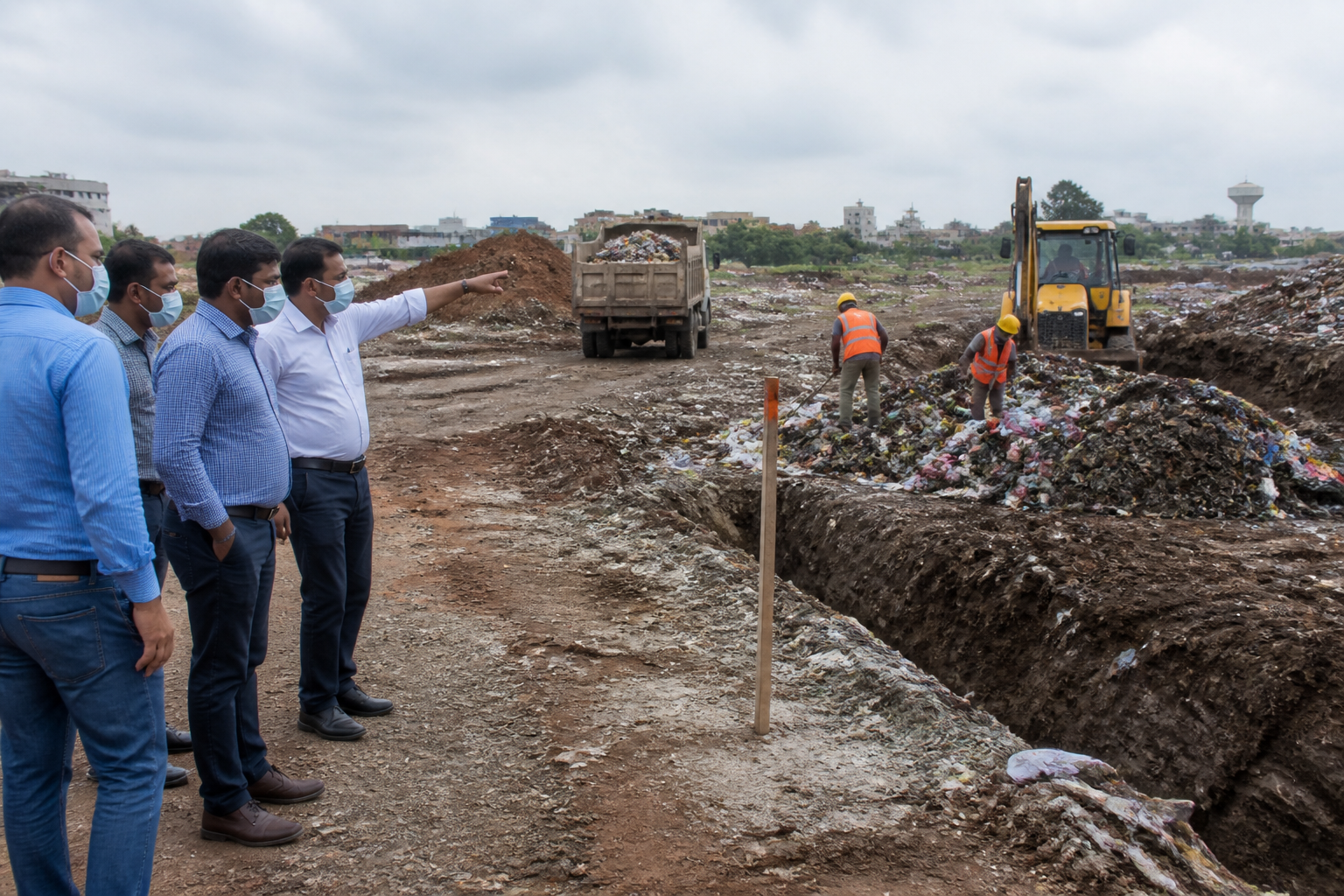
Work on Ramgarh’s proposed solid waste processing plant has accelerated after Deputy Commissioner Rituraj directed officials to clear legacy waste from the project site at Murramkala within 72 hours, allowing boundary wall construction and other preliminary works to begin.
The deputy commissioner inspected the trenching ground on the outskirts of Ramgarh on Monday along with Vivek Singh, chief executive officer of the Ramgarh Cantonment Board. Officials from the civic bodies and the concessionaire agency were asked to speed up the removal of waste from the area identified for the facility.
The proposed solid waste plant will process municipal waste generated by the Ramgarh Municipal Council and Ramgarh Cantonment Board areas. According to municipal executive officer Ajmal Hussain, the facility will have a processing capacity of 120 tonnes a day.
The two civic bodies currently generate around 100 tonnes of municipal waste daily, officials said. The planned capacity would therefore cover the volume presently generated across the municipal and cantonment areas, subject to the facility becoming operational and receiving the required preliminary and project clearances.
Rituraj said the plant would support the scientific processing and management of solid waste from the two civic bodies. The project is proposed to be implemented in public-private partnership mode involving the Centre, the Jharkhand government and the implementing agency, Hussain said.
The immediate challenge is the removal of both fresh and legacy waste from the trenching ground. Legacy waste refers to waste accumulated over time at an existing disposal site and must be cleared before construction and related site works can proceed. Officials have not provided a commissioning date for the plant.
Singh said drone videography of the trenching ground would be conducted to create a clear record of the site’s current condition. He added that the shifting of fresh and legacy waste would be carried out in an organised and scientific manner.
The 72-hour instruction is intended to make the identified area available for boundary wall construction and other preliminary works. Further progress will depend on the completion of site clearance and the subsequent implementation of the public-private partnership project by the participating authorities and agency.
