


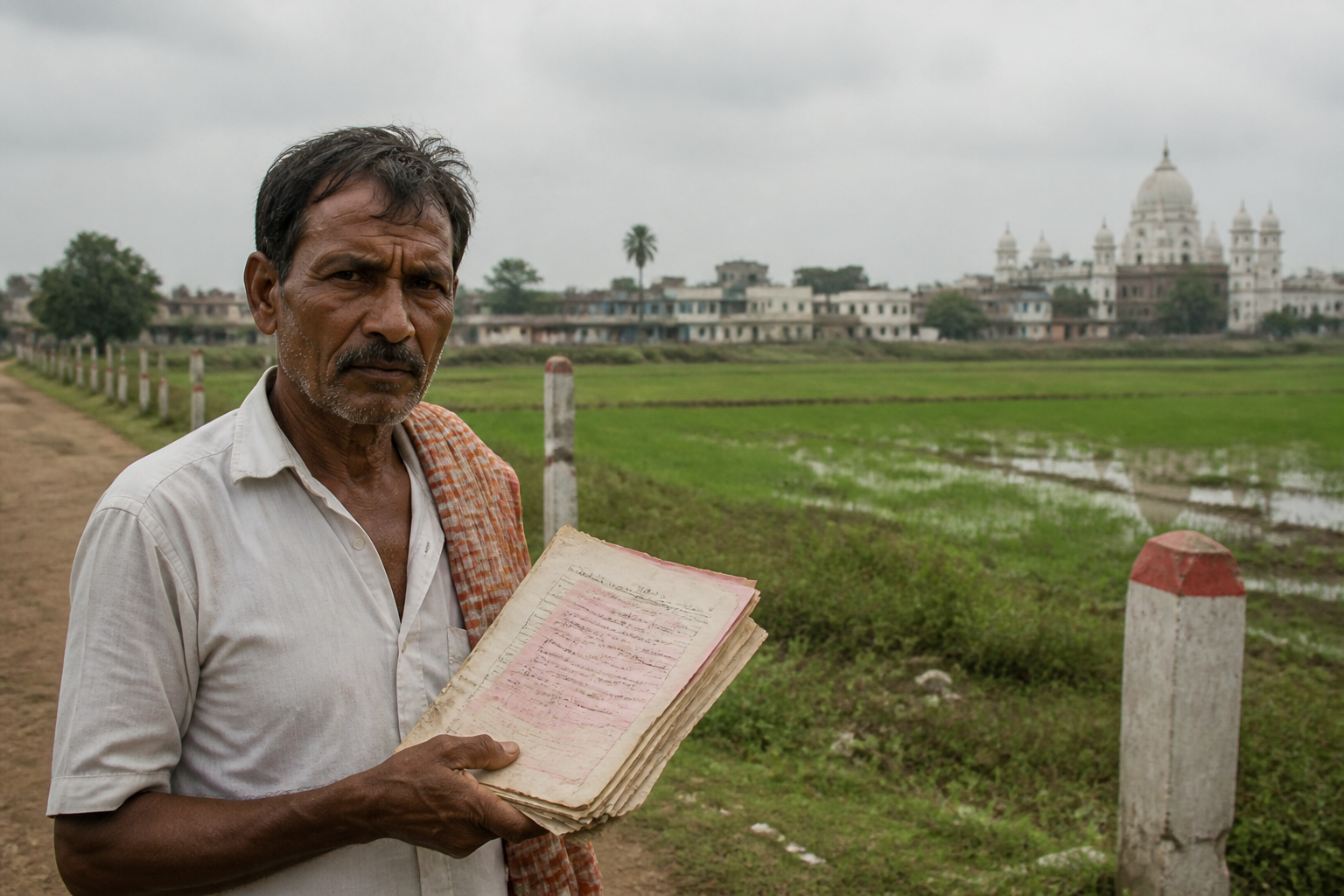
The Orissa High Court has directed the Odisha government to clarify the status of Record of Rights disputes involving Ekharajat Mahal lands in 36 villages of Khurda district, a move that could affect the property rights and land transactions of long-standing cultivators.
A division bench comprising Chief Justice Harish Tandon and Justice Chittaranjan Dash issued the direction on September 18 while hearing a public interest litigation filed by the Jatni-based Purbatana Ekharajat Mahala Raiyat Surakhya Committee. The petition concerns land records for plots that were part of the historic estate associated with Lord Jagannath.
The court has asked the state government to file an affidavit within two weeks clarifying whether a Special Revisional Court constituted to adjudicate disputes over Record of Rights entries on a camp basis is still functional. The matter is scheduled to be heard next on October 14.
Ekharajat Mahal comprised estate lands whose revenues were traditionally used to meet the daily ritual expenses of the Jagannath Temple in Puri. The estate covered 156 villages in present-day Khurda district. Generations of raiyats cultivated the land and paid land revenue, creating a long administrative and tenancy history around the properties.
According to the report placed before the court, the plots in the 156 villages were initially vested with the state government, while tenant farmers were recognised as legitimate holders paying revenue to the state from 1974. During land settlement exercises conducted between 2000 and 2012, rights were recorded in favour of tenants in 120 villages. The remaining 36 villages were not included in that exercise.
The plots in those 36 villages were later recorded in the name of the Shree Jagannath Temple Managing Committee. The change has remained disputed because it affects the property rights and ability to transact of residents who have cultivated or occupied the land for generations.
Senior advocate Lalatendu Samantaray, appearing for the petitioners, argued that there was no justification for excluding the 36 villages after the government had undertaken corrections to the Record of Rights entries in 120 villages. The petitioners are seeking clarity on why the process was not extended to the remaining villages.
The temple administration relied on the Shri Jagannath Temple Act, 1955, and contended that it provides a forum for people aggrieved by land entries. The bench questioned that position in view of the reported creation of a separate Special Revisional Court. The judges observed that if the statutory forum was already available, there would have been no reason to create the special mechanism.
The state’s counsel was unable to tell the bench whether the Special Revisional Court remained operational. The government’s affidavit is expected to clarify the status of that mechanism and the administrative route available to residents contesting the entries. The court will take up the matter again on October 14.
