


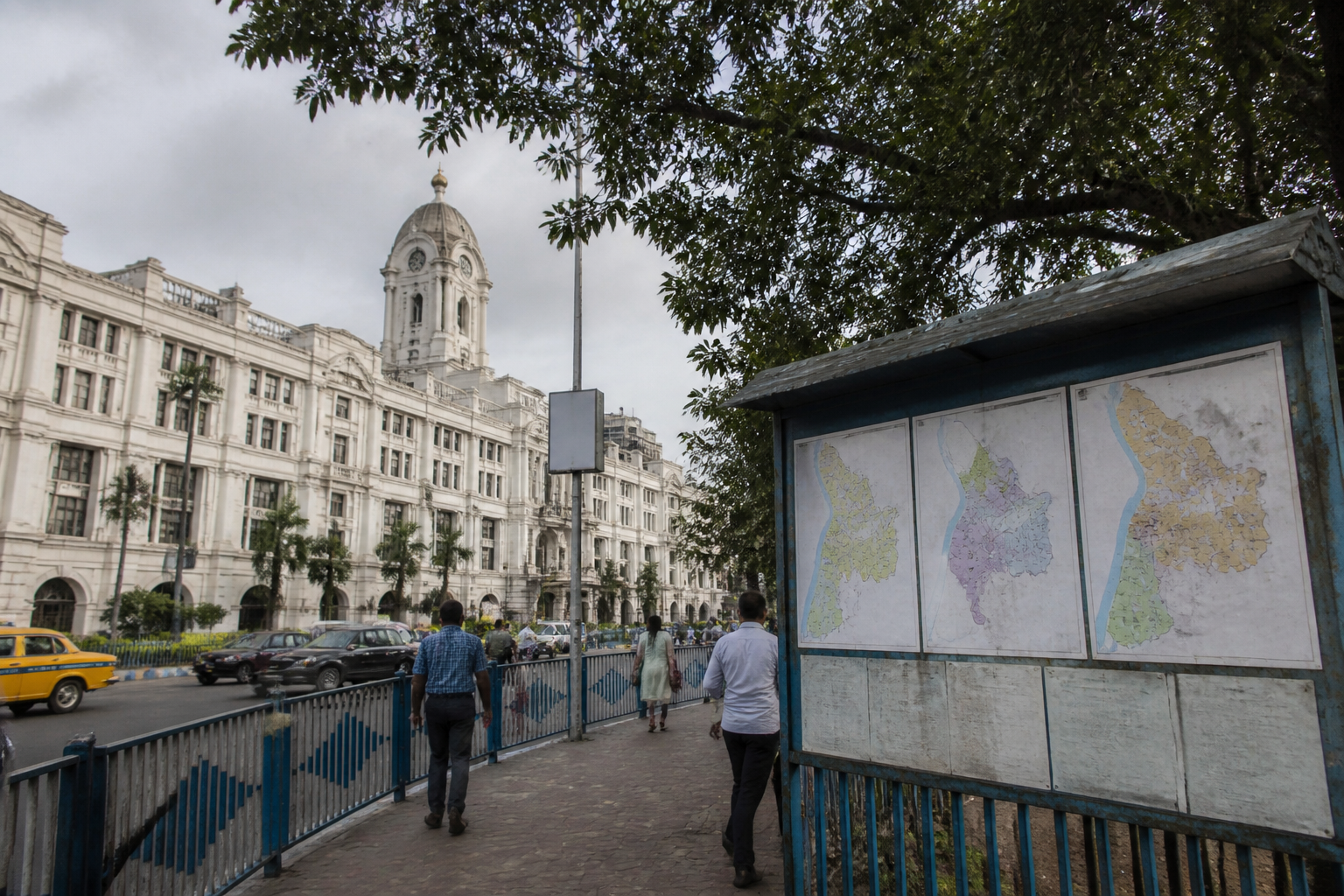
A dispute over KMC ward reservation has brought the mechanics of municipal representation in Kolkata into focus, with opposition parties alleging that the proposed allocation of seats for women has not followed the requirements of the municipal law. Their complaint is not limited to one ward: it questions whether the reservation process is producing repeated restrictions on candidature in some areas while leaving other wards designated for general representation for long periods.
The allegations were made in letters sent to Kolkata Municipal Corporation Municipal Commissioner and Administrator Smita Pandey by the Pradesh Congress, Kalighat Trinamool and Left parties, according to a report by Sangbad Pratidin – Kolkata. The parties have objected to both the proposed ward reorganisation and the pattern of women’s reservation. They have also alleged that the municipal administration and the urban development department have not followed the legally prescribed arrangement for seat reservations.
The report identifies four wards as examples. Old Ward 9, which became new Ward 17 after reorganisation, was proposed to be reserved for women in 2005, 2015, 2021 and again in 2026. Old Ward 18, now new Ward 20, was included in the women’s reservation category in 2015, 2021 and 2026. Old Ward 6, now new Ward 8, was similarly reserved in 2015, 2021 and 2026. In north Kolkata, old Ward 3 became new Ward 11 after delimitation and was reported to have been reserved for women in 2021 and 2026.
These examples matter because reservation is not only a numerical exercise. It determines who can contest from a ward in a particular election cycle and who must wait or seek another constituency. The parties opposing the proposed arrangement argue that repeated reservation of the same wards can prevent male candidates from contesting there while also denying women in wards that remain in the general category an opportunity to benefit from reserved representation. Those claims remain allegations made by the political parties and have not been independently established in the supplied report.
The dispute therefore turns on the rotation principle behind municipal reservation. A reservation system that repeatedly selects the same wards can create a very different political geography from one that distributes reserved seats across the city. The former may produce continuity in the allocation but can also limit the pool of potential candidates in affected wards. The latter requires a transparent method that residents and political parties can understand and verify. The report does not provide the full reservation roster, the statutory formula or the official explanation for how the 2026 wards were selected. That missing material is central to resolving the dispute.
The legal and administrative question is separate from the political claims surrounding it. Pradesh Congress general secretary Ashutosh Chattopadhyay alleged that the current municipal administration and the urban development department had failed to follow the reservation arrangement required under the municipal law. Baishwanar Chattopadhyay, president of the south Kolkata unit of Mamata Trinamool, reportedly made a similar allegation. The Left parties, according to the report, are preparing to approach the court over the issue.
The complaint also extends to the process followed after objections were raised. The Congress and Kalighat Trinamool have alleged that proposed spot visits and public hearings were not given adequate importance by the municipal administrator. If accurate, that would make the controversy broader than the allocation of reserved wards. It would raise questions about whether affected residents and political stakeholders had a meaningful opportunity to examine the draft arrangements and challenge errors before they were finalised.
Public hearings and local inspections are important in delimitation exercises because ward boundaries and reservation categories operate together. A ward may change its number or composition after reorganisation, as happened in the examples cited in the report. Without a clear public record linking old and new ward numbers, residents may struggle to understand whether a reservation pattern has genuinely rotated or merely followed the same geographical area under a new number. The supplied report lists some old-to-new ward changes but does not include the complete map, population data or draft notification.
That information gap is significant. Ward reservation decisions need to be assessed against the official list, the applicable statutory provisions and the administrative record showing how the rotation was calculated. Political parties have presented selected ward histories to support their objections, but the report does not reproduce the government’s response or the complete citywide data. As a result, the available evidence establishes that a formal dispute exists and that specific ward-wise objections have been raised; it does not independently establish that the entire reservation exercise violated the law.
The issue also illustrates how municipal restructuring can affect representation beyond boundary lines. When old wards are renumbered or reorganised, continuity becomes difficult to track. Residents may know their former ward number but not immediately identify its new designation. Candidates and political organisations must also determine whether a reservation decision applies to the same community, a substantially altered constituency or a newly configured area. A transparent cross-reference between old and new wards is therefore essential to public scrutiny, although the report does not say whether such a document has been published.
At the institutional level, the controversy involves at least three layers of responsibility: the municipal administration handling the ward process, the urban development department alleged to have oversight of the legal framework, and the political parties and residents seeking to challenge the draft arrangement. The role of the municipal commissioner-cum-administrator is especially important because the complaints were addressed to Smita Pandey. The report does not state whether the administrator has replied, ordered a review or published a revised reservation schedule.
The reported decision by the Left parties to consider court action could move the dispute from the administrative process into judicial scrutiny. Any such case would be expected to focus on the statutory basis of the reservation, the method used to rotate seats, the treatment of objections and the procedural validity of the delimitation exercise. At the time of the report, however, the supplied material describes a plan to approach the court rather than a filed petition or court order.
For Kolkata, the larger urban question is whether municipal electoral rules are being administered in a way that is predictable, auditable and understandable to residents. Reservation is intended to widen representation, but its effect depends on the method of allocation and the quality of public disclosure. Repeated reservation of a ward may be lawful or unlawful depending on the governing rules and the underlying data; the available report does not provide enough documentary material to decide that question.
What the dispute confirms is that ward reorganisation is not merely an administrative renumbering exercise. It can alter electoral opportunities, candidate eligibility and the relationship between residents and their elected representatives. The next decisive developments are the municipal administration’s response to the complaints, publication of the complete ward-wise reservation record, the handling of proposed spot visits and public hearings, and any court filing by the Left parties. Those records will determine whether the allegations reflect a procedural error, a lawful but contested allocation, or a wider failure of transparency.
