


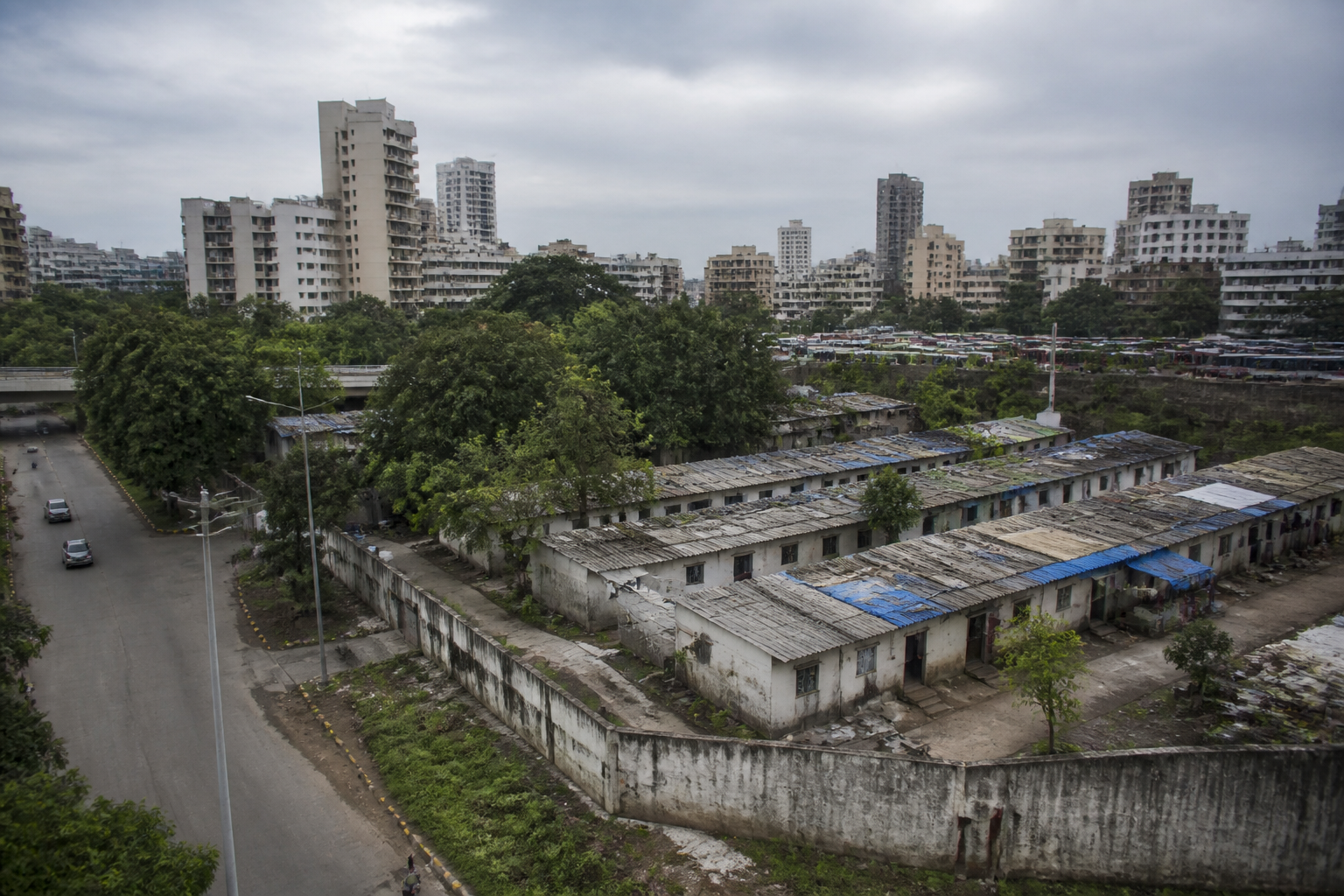
A one-acre Brihanmumbai Municipal Corporation plot near the Santacruz subway has become the centre of a long-running dispute over public land, temporary transit accommodation and stalled slum rehabilitation. The land was allotted for two years to house 176 eligible residents during a rehabilitation process, but the transit structures have remained in place for 25 years, according to a report by Loksatta – Mumbai.
The immediate issue is not simply whether the plot can now be returned to the civic body. It is why land described as temporary remained tied up for a quarter of a century, while the wider rehabilitation scheme itself continued to leave hundreds of residents without permanent homes. The episode also raises questions about how the municipal corporation and the Slum Rehabilitation Authority monitor land handed over for redevelopment-linked rehabilitation projects.
According to the report, the plot is located in the Daulatnagar area of Santacruz West, near the subway. Part of the site was associated with a BEST bus depot, while another portion had been reserved for a development road. The land had also been affected by encroachments. A slum rehabilitation scheme for the area received approval in 2000, with the stated objective of rehabilitating approximately 4,000 slum residents.
The scheme resulted in eight rehabilitation buildings being constructed in the Lohianagar area. These buildings accommodated only about 900 residents, the report said. In addition, a separate one-acre municipal plot near the Santacruz subway was used to construct temporary transit accommodation for 176 slum residents.
That arrangement was supposed to be limited to two years. Instead, the transit accommodation continued to be occupied for 25 years. The prolonged use meant that the municipal plot, which had been made available for a specific temporary purpose, was not returned to the civic body within the stated period.
The numbers show the incomplete nature of the original rehabilitation process. Around 4,000 residents were expected to be rehabilitated under the scheme, while eight buildings accommodated approximately 900. The report also stated that the rehabilitation of around 650 slum residents remained pending. The supplied report does not establish how the remaining residents were distributed between different locations or what specific administrative or legal obstacles prevented their rehabilitation.
This gap is central to understanding the land dispute. A transit camp is normally linked to the period between displacement and permanent rehabilitation. When that transition extends for decades, temporary accommodation becomes a de facto settlement. The land remains unavailable for its original civic or planning purpose, while residents continue to live without the certainty that permanent rehabilitation is meant to provide.
In this case, the municipal plot was not described as land permanently transferred for housing. It was reportedly handed over for only two years. The continued occupation therefore reflects a failure of time-bound land management as well as an unresolved housing process. The report does not indicate that the residents occupying the transit structures were responsible for the delay. Instead, it says that the civic body and the Slum Rehabilitation Authority did not act to vacate the camp and return the plot.
The institutional responsibilities are divided. The municipal corporation owns or controls the land and is responsible for protecting its public assets. The Slum Rehabilitation Authority oversees the rehabilitation framework under which the temporary accommodation was created. The rehabilitation scheme, however, did not produce a clear resolution within the period linked to the original land allotment. The result was an administrative space in which the transit camp continued without the intended hand-back of the plot.
The matter became more complicated when the Slum Rehabilitation Authority reportedly issued a notice for biometric surveying of the residents living in the transit accommodation. A biometric survey can be part of the process of identifying or verifying beneficiaries, but in this case the notice was issued after the temporary camp had already remained on the land for 25 years. The report presents this as a development that could have extended or formalised the occupation of land that was supposed to be returned to the municipality.
The supplied report calls the proposed rehabilitation activity on the municipal plot a bogus scheme and describes the episode as a scam that was exposed after intervention by local BJP corporator Sunita Mehta. Those descriptions are allegations or characterisations in the source report, not findings of a court or an established investigation in the material available here. What is established from the report is that the biometric-survey notice prompted local scrutiny and that the K-West municipal ward office subsequently began following up with the Slum Rehabilitation Authority.
That follow-up is significant because it shifts the question from a single site dispute to the management of public land used in rehabilitation projects. A municipal plot reserved for a road, transport-related use or public amenity can acquire a different status once it is used for temporary housing. The longer the temporary arrangement continues, the more difficult it becomes for the owning authority to recover the land, particularly when residents have lived there for generations or when the permanent rehabilitation process remains incomplete.
The Santacruz case also illustrates the administrative consequences of incomplete rehabilitation. The original plan was linked to encroachments affecting land associated with a BEST bus depot and a development road. The rehabilitation scheme was intended to address the housing needs of affected residents while enabling the wider land-use arrangement to proceed. But with approximately 650 rehabilitations still pending, the housing objective and the land-management objective both remain unfinished, according to the report.
There is no evidence in the supplied material that the proposed hand-back has already taken place. The report says that the transit accommodation will be vacated and that the plot will be transferred back to the municipal corporation. It also says that the K-West ward office has begun pursuing the matter with the Slum Rehabilitation Authority. The next stage therefore depends on coordination between the civic ward office, the authority responsible for the rehabilitation scheme and the residents living in the transit structures.
The episode exposes a basic weakness in project governance: temporary land use was not matched by a functioning exit mechanism. A two-year allotment should ordinarily have had a recorded expiry, a rehabilitation milestone, a responsible officer or agency, and a process for resolving delays. The report does not specify whether such monitoring mechanisms existed, whether they were reviewed, or why they failed. Those unanswered questions are important because the same institutional pattern can recur wherever public land is used for temporary transit accommodation.
The case also shows why rehabilitation cannot be measured only by the construction of buildings. Eight buildings and accommodation for about 900 residents may represent physical progress, but the scheme remained incomplete if hundreds of intended beneficiaries were still awaiting rehabilitation and a temporary camp remained occupied after its approved period. The physical delivery of buildings, the verification of beneficiaries, the relocation of residents and the release of public land are separate milestones. Treating one as proof of overall completion can conceal unresolved obligations.
For residents, the uncertainty has two sides. Those living in the transit camp have remained in temporary accommodation for 25 years, according to the report. Their continued occupation indicates that permanent rehabilitation has not been completed for them. For the municipal administration, the same delay has meant that a one-acre plot could not be returned for the purpose for which it was reserved or otherwise managed. The supplied material does not state what immediate use the BMC intends for the land after it is vacated.
The Santacruz dispute therefore leaves three issues to be monitored. First is whether the transit accommodation is actually vacated and the plot formally handed back to the BMC. Second is how the pending rehabilitation of approximately 650 residents is addressed. Third is whether the biometric survey is withdrawn, revised or incorporated into a legally and administratively clear rehabilitation process.
The report confirms a long delay, incomplete rehabilitation and renewed civic follow-up. It does not establish that the alleged bogus scheme has been finally investigated or that any person has been found liable. Until the authorities publish a clear account of the land allotment, beneficiary status, pending rehabilitation and hand-back process, the one-acre Santacruz plot will remain an example of how temporary rehabilitation arrangements can become permanent administrative failures.
