


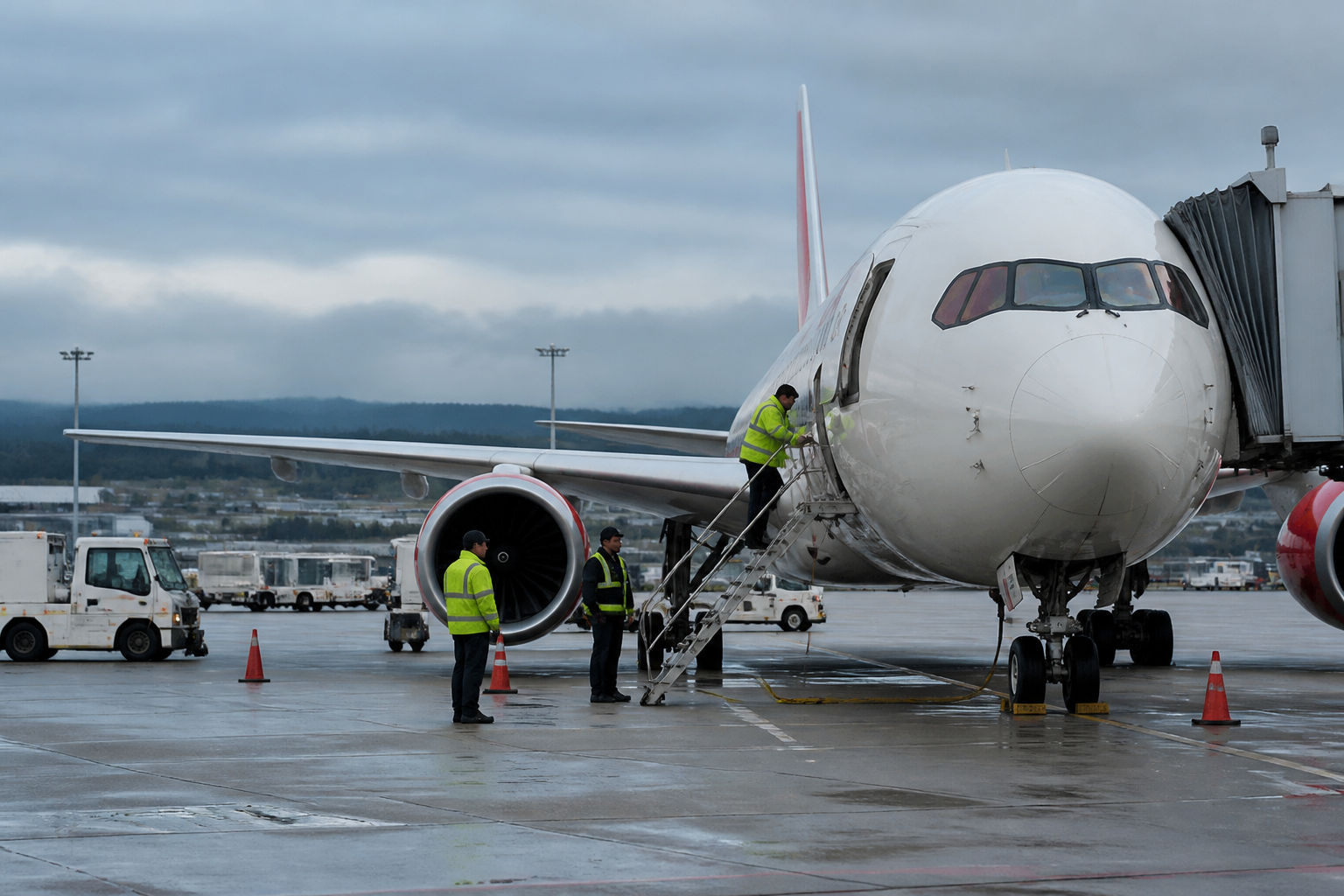
The removal of an Air India pilot from a Zurich-bound aircraft after authorities detected alcohol before take-off is more than an individual disciplinary case. It exposes a difficult operational question for international aviation: how consistently can an airline detect and prevent safety violations when the regulatory testing environment changes across airports and jurisdictions?
The incident occurred on September 6, when Zurich ground-handling staff reportedly noticed that the pilot smelled of alcohol and alerted local authorities. The pilot was removed before departure, and subsequent sobriety tests indicated blood alcohol content above the permissible limit for pilots. Flight AI 151 from Zurich to Delhi could not operate as scheduled, according to the Economic Times report.
The Swiss Federal Office of Civil Aviation, or FOCA, confirmed to the newspaper that it had taken action against the pilot under Swiss regulations and informed India’s Directorate General of Civil Aviation. FOCA said the DGCA, as the competent authority of the state of the operator, would be responsible for further handling of the case.
That division of responsibility is central to understanding the incident. The immediate intervention took place in Switzerland because the alleged violation was detected at Zurich Airport and involved a flight departing from there. The broader regulatory response, however, falls substantially on the Indian system because Air India is an Indian operator and the DGCA oversees the airline’s compliance with applicable aviation rules.
The result is a layered safety chain involving airport personnel, the airline, the foreign aviation regulator and India’s aviation regulator. The chain worked at one important point: ground staff identified a concern before departure. But the fact that the concern was raised by airport personnel rather than through a recorded pre-flight test also highlights a gap in how safety controls operate on international sectors.
Where the testing system becomes uneven
The report states that pilots operating flights originating from India are subject to mandatory pre-flight drug and alcohol tests. On flights departing from foreign airports, testing typically happens after landing. That difference does not necessarily mean that overseas departures lack all safeguards, but it creates a materially different control environment at the point when a flight is about to begin.
A pre-flight test is designed to identify a risk before an aircraft leaves the ground. A post-landing test, by contrast, may be useful for compliance monitoring or investigation but cannot prevent the specific flight from operating if the violation occurred before departure. In the Zurich case, the intervention came through observation by ground-handling staff and action by Swiss authorities before take-off.
This makes the incident relevant beyond the conduct of one pilot. It raises a process question about whether airlines operating from foreign airports have equally visible and reliable mechanisms for detecting alcohol or drug violations before departure. The supplied report does not establish how Air India conducts testing at Zurich or whether a test was scheduled there. It does establish that the pilot was detected by authorities after ground staff raised an alert.
Air India and IndiGo are described as maintaining zero-tolerance policies under which even a minor trace of alcohol constitutes a violation. Air India’s spokesperson said the airline maintained a zero-tolerance policy on safety and regulatory violations, and that confirmed breaches were dealt with firmly under regulatory requirements and company policy.
A zero-tolerance rule is only as effective as the system that detects and enforces it. In operational terms, that system includes testing protocols, reporting channels, crew supervision, airport coordination, documentation, disciplinary processes and regulator follow-up. The Zurich episode places each of those links under scrutiny without, by itself, proving that the airline’s entire safety system failed.
## The significance of internal reporting
Air India officials told the Economic Times that the Zurich incident was reported by the airline’s own staff and argued that this indicated the safety-monitoring system was functioning. An airline official said there would be “some bad apples” and that responsible colleagues were expected to report dereliction of duty.
That defence points to an important distinction in safety management. A mature safety culture is not one in which no violation ever occurs. It is one in which warning signs are recognised, employees can report them, intervention happens before harm occurs, and the organisation responds consistently and transparently.
The Zurich case contains evidence of one part of that model: staff noticed a possible problem and authorities acted before departure. It does not establish whether the incident was detected through a routine internal safeguard, informal observation or a combination of both. Nor does the report provide the outcome of the DGCA’s case against the pilot.
The distinction matters because an organisation can have strong individual reporting while still having weaknesses in formal controls. Reliance on a colleague noticing the smell of alcohol is not equivalent to a documented pre-flight testing regime. At the same time, the fact that staff reported the concern demonstrates that frontline intervention can prevent a potentially serious operational risk from progressing.
The report also cites a senior Air India captain, speaking anonymously, who described a growing disconnect between management and cockpit crew. The captain said senior management was pursuing growth while pilots were not receiving sufficient attention. Air India officials rejected the broader implication by pointing to the reporting of the Zurich incident and to measures intended to strengthen engagement with flight crew.
These contrasting accounts reveal a governance challenge for an airline undergoing organisational change. Management priorities such as fleet expansion, network growth and financial performance must coexist with the slower, less visible work of maintaining professional standards, fatigue support, wellbeing systems, training and regulatory compliance. The supplied material does not quantify the extent of any management-crew disconnect, but it identifies the issue as a concern raised by a senior pilot.
A safety culture under institutional pressure
The incident comes as Air India prepares for a leadership transition involving incoming CEO Tewolde Gebremariam. The report says that building a safety culture has been identified as a priority for the incoming chief. It also places the Zurich episode alongside other recent cases involving Air India staff, including one in which a pilot allegedly operated an aircraft under the influence of drugs.
Those cases are not identical, and the report does not provide enough information to assess whether they resulted from a common organisational cause. But their inclusion in the same account explains why the incident has wider significance for the airline’s management. Repeated individual breaches can become an institutional concern when they raise questions about training, supervision, reporting, enforcement and the credibility of internal rules.
Air India officials said the airline had increased leadership engagement with flight crew, expanded fleet-specific sessions on health, wellbeing and professional responsibilities, and introduced additional support mechanisms. These steps indicate that the airline is responding through a combination of communication, training and employee support.
The effectiveness of those measures will depend on how they connect to enforceable operating procedures. Safety briefings and leadership engagement can reinforce standards, but they cannot replace testing, clear accountability and consistent action after a violation. The Zurich incident will therefore be assessed not only by the sanction imposed on the pilot, but also by whether the airline and regulators clarify how similar risks are to be identified at foreign departure points.
## Why the regulatory handoff matters
The FOCA-DGCA handoff illustrates how aviation safety is governed across borders. A foreign regulator can intervene when an aircraft is at its airport and can apply local rules to conduct occurring there. The operator’s home regulator retains a wider role in examining the airline’s systems and determining further action under the operator state’s framework.
This arrangement creates a need for timely information-sharing. FOCA said it had informed the DGCA, while the DGCA asked Air India to strengthen its safeguards. The report does not state the final findings of the Swiss action or the DGCA process, so the accountability outcome remains incomplete.
The timing is also significant because the DGCA is set to face an audit by the US Federal Aviation Administration. The report says an adverse outcome could result in restrictions on Indian carriers’ American operations. It does not establish that the Zurich incident would determine the audit result, but it places the episode within a broader period of scrutiny for India’s aviation oversight and airline compliance.
For regulators, the core issue is not simply whether an airline has a written zero-tolerance policy. It is whether the policy is implemented consistently across domestic and international operations, whether violations are detected before they affect safety, and whether enforcement produces a documented corrective response. Those questions apply to the regulator as much as to the airline.
The Zurich episode therefore sits at the intersection of individual conduct and institutional design. The pilot was removed before departure, the flight was not operated as scheduled, and the case was referred across regulatory authorities. Those are established facts in the supplied report. What remains to be established is the complete chain of testing, notification, investigation and disciplinary action.
For Air India, the next test is whether the incident leads to a clearer and more consistent safety-control framework for flights originating outside India. For the DGCA, it is whether oversight can demonstrate that international operations are covered by safeguards capable of detecting violations before take-off. Until the regulator and airline disclose the outcome of their respective processes, the Zurich case remains both an individual enforcement matter and a visible test of the safety culture Air India says it is building.
